
Last updated November 14, 2026
 Wrought iron
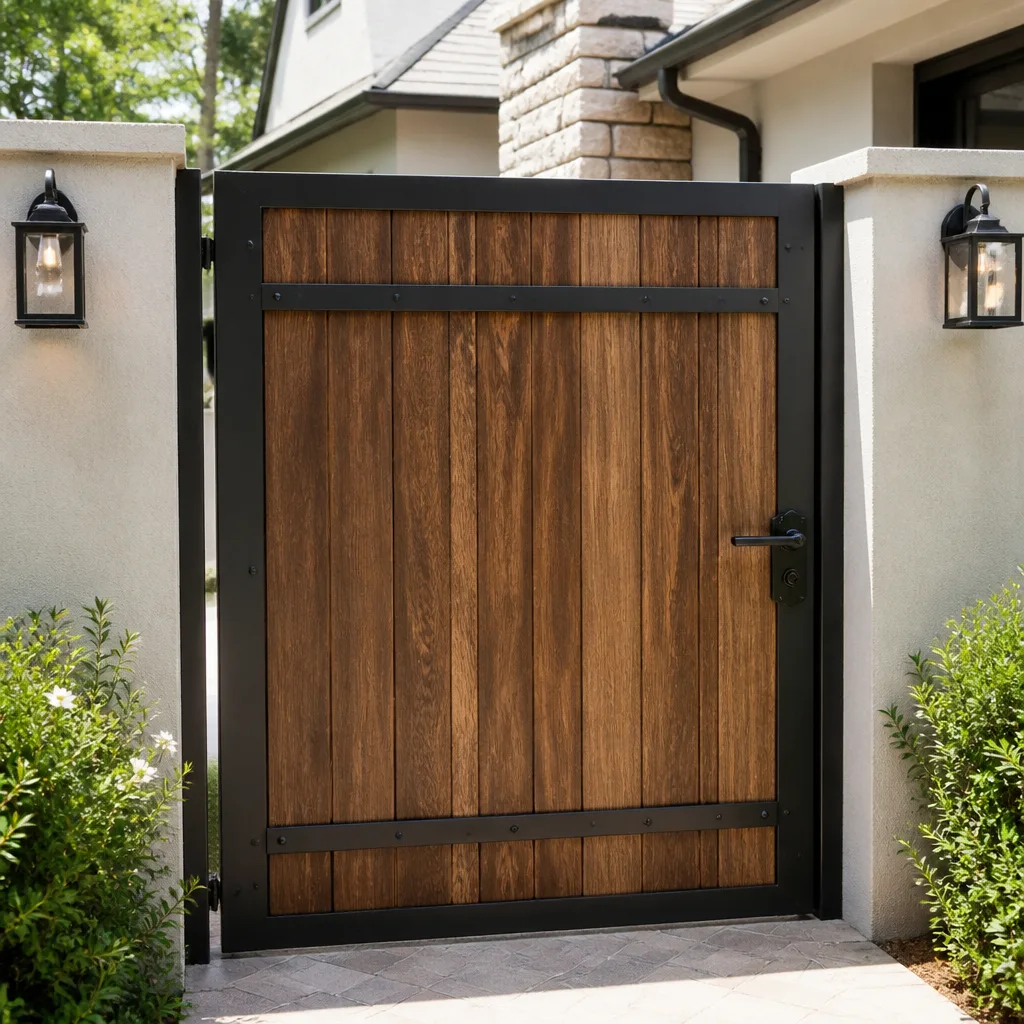 Wood & steel frame
 Farm & ranch
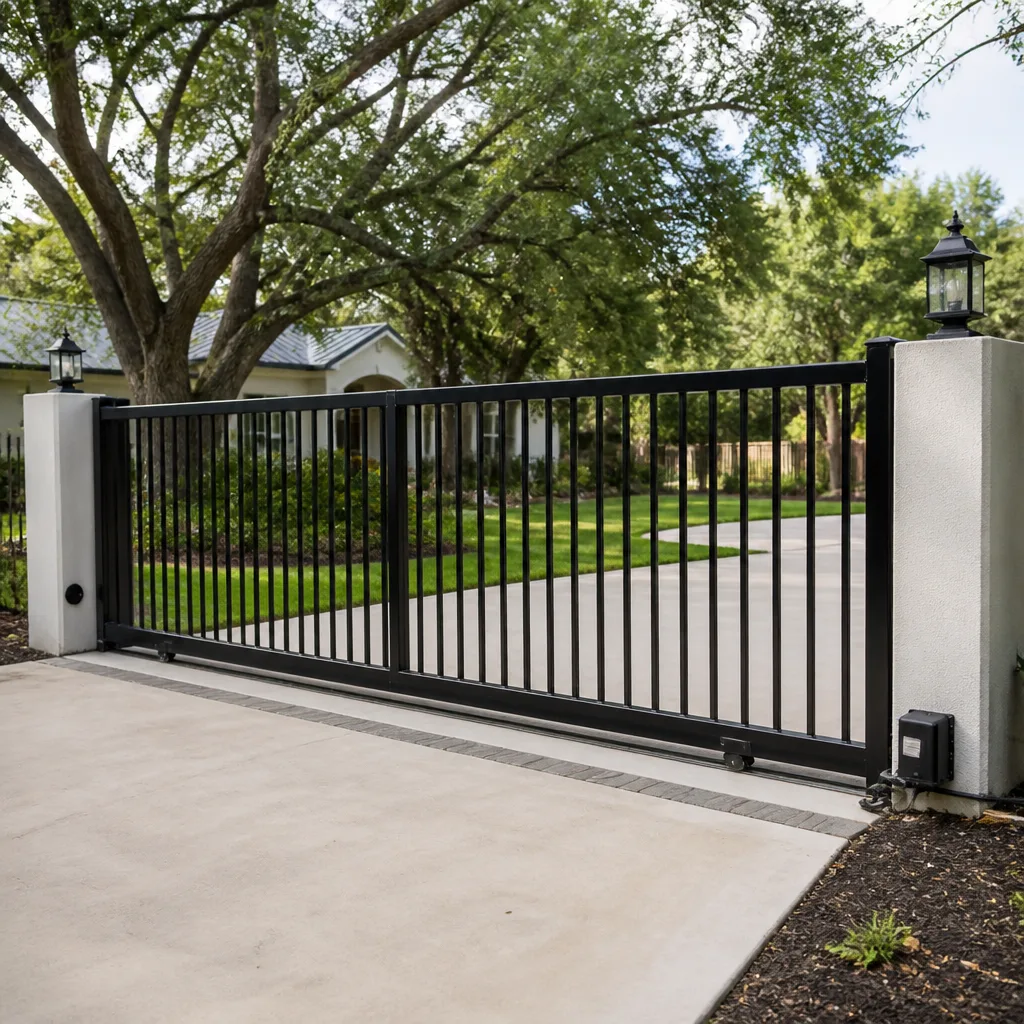 Sliding driveway gates
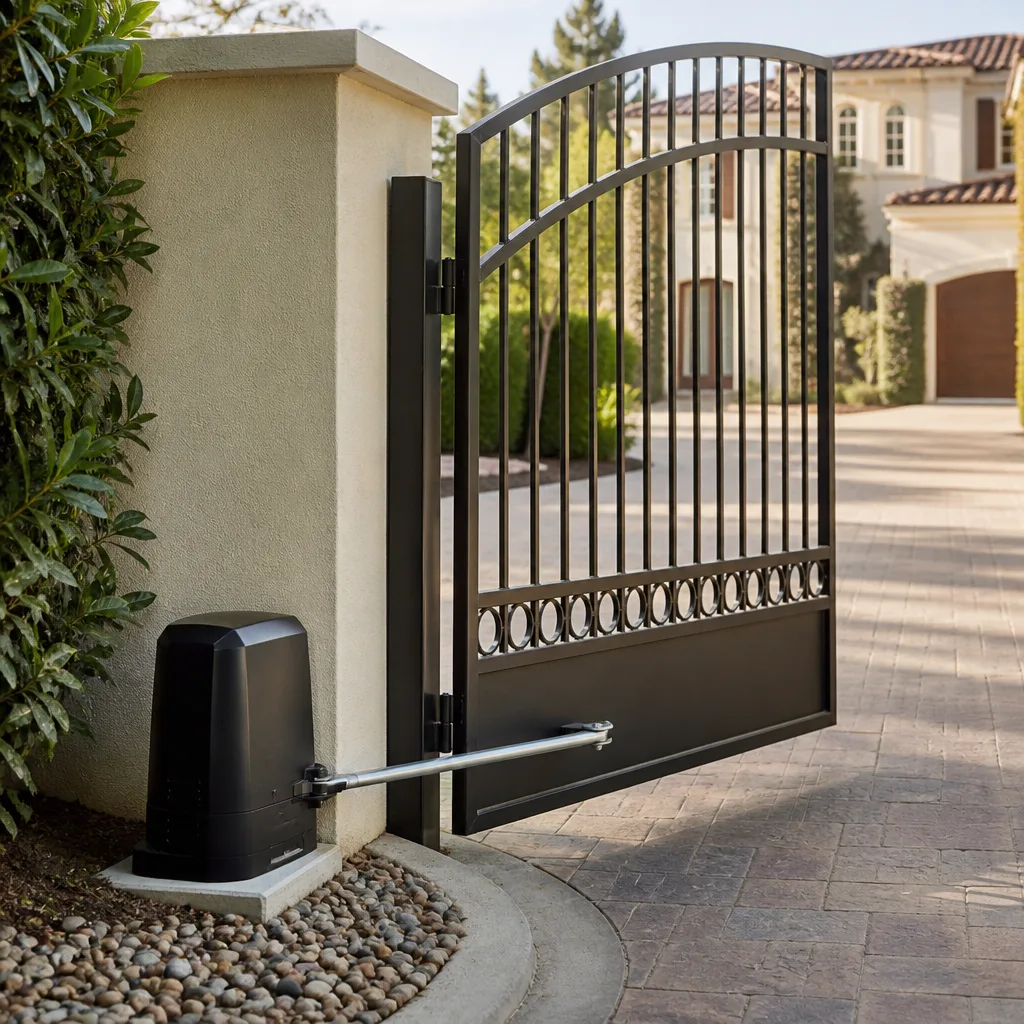 LiftMaster operators
Free on-site gate assessment - hinges, posts, and your LiftMaster or Nice gate operator checked before anything is quoted
The assessment is free and the quote is the invoice.
Get your free estimateGate Repair Permits, Codes & Inspections in Rochester, NY: What You Need to Know
Most gate repairs in Rochester need no permit at all. That fact gets repeated so often that homeowners stop asking questions, and the second half of it gets lost: a repair that touches the electrical system, replaces a motor, or shifts the gate’s footprint can land in permit territory without anyone noticing. The line isn’t obvious, and it doesn’t announce itself. It sits quietly between “we’re just fixing a hinge” and “we’re adding a circuit,” and plenty of well-meaning installers cross it by accident. This guide maps where that line actually falls, how HOA rules stack on top of municipal code, what an inspector looks for on an electric gate, and how unpermitted work surfaces years later during a home sale. If you own or manage a gate in Rochester, this is the context you want before the work starts.
Quick Answer
Mechanical gate repair in Rochester generally requires no permit, but motor replacement, electrical panel upgrades, new post footings, and any change to a gate’s size, location, or design usually do. Electric gate operator work falls under electrical permitting rules, and in Monroe County many towns add their own layer on top of city code. When in doubt, call the local building department with your address before the work begins, not after.
Styles & brands we work with
- Wrought iron
- Wood & steel frame
- Farm & ranch
- Sliding driveway gates
- LiftMaster operators
Table of Contents
- Why Gate Repair Sits in a Permitting Gray Zone
- What Actually Triggers a Permit in Rochester
- What “Like-for-Like” Replacement Really Means in New York
- How HOA Rules Layer on Top of Municipal Code
- The Electrical Side: Operators, Panels, and Safety Edges
- What an Inspector Is Actually Looking For
- How Unpermitted Gate Work Surfaces at Resale
- Remediation Options When Work Was Never Permitted
Why Gate Repair Sits in a Permitting Gray Zone
Ask three people whether gate work needs a permit and you’ll get three answers. A fence company will say no. An electrician will say it depends. A code official will ask you a dozen questions before answering. None of them are wrong. The confusion comes from the fact that a gate is two things at once: a structure (with posts, footings, and panels, governed by zoning and building code) and, when it’s automated, an electrical appliance (governed by electrical code). Where your specific job falls depends entirely on which of those two identities you’re touching.
New York State’s Uniform Fire Prevention and Building Code sets the baseline for construction and alteration, and municipalities across Monroe County adopt and enforce it locally. A gate that’s part of a property’s built environment is treated like other site improvements. But the moment an operator, control board, or power run is involved, you’re also in electrical territory, and that’s a separate permitting discussion entirely. That double identity is why the answer to “does my gate repair need a permit?” is always “depends what you’re repairing.”
The part most homeowners miss: adding an automatic operator to an existing manual gate is almost never a like-for-like swap. You’re adding electrical equipment, possibly a new circuit, and safety devices that didn’t exist before. That’s a different project than replacing a rusted hinge, and most towns will treat it that way if they find out after the fact.
We work on gates across the Rochester area, and the pattern is consistent. Homeowners who call their building department early save themselves a headache. Homeowners who assume “it’s just a repair” often don’t find out there was an issue until years later. That said, we don’t decide permit questions for you, and we won’t guess at what your town requires. We’ll tell you which parts of a job are electrical and which are mechanical, so you know exactly what to ask about.
What Actually Triggers a Permit in Rochester
Here’s the practical breakdown, and it’s the same across most of Monroe County, though every municipality has its own reading of the rules. If you’re doing work in Brighton, Greece, Irondequoit, Webster, or Pittsford, confirm with that town’s building department directly. The categories below are the ones that consistently move a gate job from “repair” to “permitted project.”
Typically no permit required
- Replacing hinges, rollers, latches, or handles with matching parts
- Adjusting a gate that’s sagging or dragging due to settling
- Repairing or replacing a mechanical closer on a manual gate
- Replacing a control board, remote receiver, or keypad on an existing operator
- Swapping a gate motor with an identical model in the same location
- Routine troubleshooting and wiring repair within an existing circuit
Usually requires a permit
- Installing a new automatic operator on a gate that was previously manual
- Running new electrical service or a new dedicated circuit to a gate operator
- Upgrading or replacing the electrical panel serving the gate
- Setting new posts or footings, or moving the gate’s location
- Changing the gate’s width, height, or opening direction
- Adding a new gate where none existed before
- Any change to a commercial or access-control gate system serving multiple users
The middle ground is where it gets tricky: replacing a failed operator with a different model. If the new unit draws more power, needs a different circuit, or changes where the safety edges mount, it’s no longer a straight replacement. We’ve seen that distinction matter. When a homeowner upgrades from a basic Mighty Mule opener to a heavier-duty LiftMaster or DoorKing system, the electrical requirements usually change, and that’s when the electrical permit question comes up.
A simple way to think about it
- Is the work mechanical only, matching existing parts? Usually no permit.
- Does the work touch the electrical system, motor, or power run? Ask your building department about an electrical permit.
- Does the work change the gate’s size, location, or structure? Likely a building or zoning permit.
- Does the work affect the property line, setback, or sight lines? Check zoning before anything else.
- Is the gate part of a shared driveway or HOA common area? Start with the HOA, then the town.
When in doubt, one phone call to your town’s building department resolves it faster than any internet search. Give them your address, describe the work in plain language, and ask what they require. They’d rather answer that call now than issue a stop-work order later. If you’re not sure which half of the job falls where, our gate repair team can walk you through it before we touch anything.
What “Like-for-Like” Replacement Really Means in New York
“Like-for-like” sounds simple until you try to apply it to a brand swap. The phrase refers to replacing something with an identical or functionally equivalent item in the same location, same footprint, same purpose. In New York, that exemption is commonly what keeps small repairs and straight replacements from triggering a permit. The problem is that “same purpose” and “same footprint” get stretched fast when the new part isn’t actually identical.
An example: a homeowner replaces a failed Ghost Controls operator with a new Ghost Controls unit of the same model. Same brand, same location, same wiring, same safety edges. That reads like a like-for-like replacement in most jurisdictions. Now swap that Ghost Controls unit for a heavier DoorKing system because the gate’s been dragging and the homeowner wants more torque. Same location, yes, but different power draw, possibly a different circuit, and different safety requirements. That’s not like-for-like anymore, and if something goes wrong later, it’s the kind of change an inspector will notice.
Where brand swapping causes problems
- The new operator needs a dedicated circuit the old one didn’t
- Safety edge or photo-eye wiring changes because the new unit is incompatible with the old accessories
- The new motor changes the gate’s swing or slide speed enough to alter code-required safety behavior
- The new unit is taller or wider, changing the enclosure or housing footprint
- The new system uses a different control board with different remote and keypad requirements
None of these are reasons to avoid an upgrade. They’re reasons to be honest about whether the job is a replacement or an installation. If it’s an installation, treat it like one. Get the permit. Get the inspection. That record matters later. In our experience, homeowners who understand this distinction up front avoid the awkward moment of discovering the work wasn’t classified correctly.
We’re familiar with how different brands behave when swapped, and we’ll tell you which jobs are truly like-for-like and which have moved into new-installation territory. That’s a conversation we have every week. What we won’t do is pretend a heavier-duty operator on the same circuit is the same job as a direct replacement, because it isn’t.
How HOA Rules Layer on Top of Municipal Code
An HOA can be stricter than the city. That’s the short version, and it’s the version a lot of homeowners learn the hard way. Municipal code sets the floor; an HOA sets a sometimes higher ceiling. If your gate is in a planned community, especially in Gates, Pittsford, or Penfield, the HOA’s architectural rules govern what you can do even when the town would happily issue a permit for it.
What an HOA typically controls
- Materials, colors, and finishes visible from the street
- Gate height, style, and design consistency with neighboring lots
- Operator brand consistency where access control is unified across the community
- Setback and sight-line requirements that may exceed the town’s minimums
- Approval of any new installation or design change before work begins
- Which vendors are approved to work on common-area systems
The tricky part is sequence. If you get an HOA approval and skip the town permit, or get the town permit and skip the HOA, you can end up with a gate you legally can’t use in one case and a fine in the other. The safer order is usually: HOA first (because their rules can force a design change that affects the town permitting), then the town, then the work.
Picture a homeowner in a Pittsford development who wants to swap a plain swing gate for a heavier ornamental design. The HOA has a design review board that has to approve the look. The town has zoning rules about setbacks and sight lines. And the heavier gate may need a stronger operator than the old one, which pulls in the electrical permit question. Three separate reviews, three separate approvals, and if any one of them is skipped, the whole project can stall.
For property managers, the sequencing matters even more because common-area gates often serve multiple owners. Changing the access control system or the operator brand usually needs HOA board approval, then the town’s sign-off, and often a vendor who’s familiar with the existing system. If your community runs FAAC or BFT hardware, that brand experience narrows the installer pool considerably.
We work inside HOA rules frequently because we’re gate-only specialists. If your community has approved vendor requirements or a design review, mention it when you call and we’ll factor that into what we can help with.
The Electrical Side: Operators, Panels, and Safety Edges
This is where the permitting question bites hardest. An automatic gate is powered equipment, and powered equipment has electrical requirements that don’t care whether the homeowner thought of the job as a repair. Motor replacement, control board replacement, new wiring, panel upgrades, and safety device changes all sit on the electrical side of the line, and electrical work in New York is regulated for a reason.
Here’s the part where we’re going to be direct: electrical work on a gate operator involves live power, stored energy, and safety devices that exist specifically to prevent a gate from crushing someone. If any of that isn’t handled correctly, the failure can be serious. We don’t recommend homeowners attempt operator wiring, panel work, or safety edge installation themselves. Ever. That’s not about protecting our business; it’s about the fact that gate operators are unforgiving equipment, and the consequences of a bad connection aren’t cosmetic.
What you should understand instead is what the electrical scope usually includes, so you can have an informed conversation with your building department and with whoever does the work:
- Power run: the dedicated circuit that feeds the operator, often buried and often the piece that determines whether a permit is needed
- Control board: the low-voltage brain of the operator, usually replaceable without a permit
- Motor: the high-voltage component; replacement often raises the electrical permitting question
- Safety edges and photo-eyes: required safety devices that stop or reverse the gate if something’s in the way
- Battery backup: increasingly common on residential systems, and its wiring has to be done right
- Panel upgrades: if the existing panel can’t support the new load, this becomes a distinct electrical project
We’re experienced with how different brands handle this. Ghost Controls is popular on residential swing gates because of its battery-friendly design. Mighty Mule is common on light residential applications. DoorKing is the standard for heavier access control. Each one has different power and safety requirements, and each one gets treated a little differently by code officials.
If your gate is failing, the first question we ask is whether we’re touching the electrical side. If we are, we’ll be clear about it and recommend that permit questions go to your building department. Our electric gate repair work is a named, focused service specifically because the electrical side is where gates fail most often and where the risk is highest.
What an Inspector Is Actually Looking For
An electrical inspector looking at a gate operator isn’t trying to catch you out. Their job is to verify the installation is safe and matches what was permitted. If you’ve done the work properly and the paperwork is in order, the inspection is usually routine. Here’s what they’ll look at, in roughly the order they’ll look at it.
- The permit itself. First stop is the paperwork. If the scope of the work doesn’t match the permit description, that’s a red flag and often the entire reason for a follow-up visit.
- Power source and circuit. The inspector verifies the operator is fed by the circuit listed on the permit, with correct wire sizing and protection. Cross-connected or improvised power is a fail.
- Disconnect means. There has to be a way to cut power to the operator safely. An inspector will check for it.
- Safety devices. Photo-eyes, safety edges, and any required reversing equipment need to be installed, functional, and correctly wired. This is one of the most common spots where a DIY install fails.
- Grounding and bonding. If the gate is metal, grounding matters for both safety and equipment life. It’s often skipped, and it’s often checked.
- Clearance and obstruction. The inspector wants to see that the gate’s travel path is clear and that children or vehicles can’t be caught between the gate and nearby structures.
- Documentation. Manufacturer instructions, the model number, and any required label or placard are typically reviewed or noted.
The pattern we see across Rochester is that inspections fail more often on safety devices than on the motor installation. Homeowners and even some installers treat safety edges as optional. They aren’t, and inspectors know it. If a gate has been operating for years without them, and you replace the operator, that’s exactly the moment the safety question becomes relevant.
For commercial systems using DoorKing or similar access control hardware, the inspection scope is usually broader, because the gate serves multiple users and often needs a way to operate safely during a power failure. If you manage a commercial or HOA gate, plan for a longer review window.
How Unpermitted Gate Work Surfaces at Resale
Here’s the part that catches homeowners off guard. Unpermitted gate work doesn’t often cause problems while you’re living in the house. The gate works. Nobody asks questions. Then you list the property, a buyer’s inspector walks the property, and the gate comes up. Whether it actually blocks the sale depends on what the inspector flags and how the buyer responds, but it’s almost always a source of delay, negotiation, and cost.
The pattern tends to go one of two ways:
- A missing permit shows up on the title or property record. Many towns keep permit history with the property record, and a title search or municipal search can reveal that work was done without a permit.
- An inspector flags the work on a walk-through. An electrical inspection without documentation, or a gate that’s clearly been added or substantially modified, can prompt a request for proof of permit.
When either of those happens, the seller has to produce paperwork they don’t have. The options at that point are limited: pull a permit retroactively (if the town allows it, and many do for work that’s already complete), have the work inspected and brought up to current code, remove the work, or negotiate with the buyer. All four cost money and time. None of them are as cheap as simply pulling the permit before the job.
We’ve seen this happen to homeowners who genuinely didn’t know they needed a permit, and that’s an important point. In most cases the person doing the work wasn’t trying to cut a corner. They just didn’t realize the operator replacement or the added circuit crossed into permit territory. That’s why the guide exists.
If you’re buying or selling a home in Rochester with a gate and you’re not sure of the permit history, get it checked before you list. And if you’ve just bought a home with an older gate, having a qualified technician look at it is a smart early move. Call (866) 942-8010 and we can assess the condition. We answer 24/7. Fast dispatch from 7am to 7pm, Sunday through Friday.
Remediation Options When Work Was Never Permitted
If you’ve discovered unpermitted gate work on your property, don’t panic. The situation is almost always fixable, and the fix doesn’t have to mean ripping the gate out. The right option depends on how recent the work is, what was installed, and what your town will accept. Here’s how the options usually stack up.
1. Apply for a retroactive permit
Most municipalities allow a permit to be pulled after the fact, provided the work can be verified as compliant. You’ll typically need documentation of what was installed (model, specs, wiring details) and an inspection to confirm it meets current code. If the work was done correctly and simply never permitted, this is usually the cleanest path.
2. Bring the work up to current code
Sometimes the work can’t be documented to current standards because the equipment is older or the installation isn’t compliant. In that case, a technician upgrades the non-compliant elements, then the town inspects the upgraded system. This is common with older gate operators that predate current safety device requirements.
3. Remove and replace
In rare cases, the work is so far outside code that removal and replacement is the only path. This is uncommon with gates but does happen when an installation is unsafe in a way that can’t be corrected. It’s the most expensive option, and it’s usually a last resort.
4. Disclose and negotiate at sale
If you’re mid-sale and the unpermitted work is discovered, one option is to disclose it and negotiate the cost with the buyer. It’s not the cleanest resolution, but it’s sometimes practical. Buyers vary in how they respond, and a documented plan to remediate helps.
Which option makes sense depends on your specific situation and your town’s rules. We can assess the equipment and tell you what needs correction, and we’ll be honest about whether the existing system is salvageable. That’s the conversation we prefer to have: repair or replace, and here’s the reasoning. Call (866) 942-8010 and we’ll set up a time to look.
Common Mistakes to Avoid
- Assuming “repair” means “no permit.” A repair becomes a permitted project the moment it touches the electrical system, replaces a motor, or changes the gate’s footprint. Ask your building department which side of that line your job falls on before the work begins, not after.
- Skipping the HOA. In Gates, Pittsford, and Penfield, HOA architectural rules often run stricter than the town’s code, and a permit that satisfies the town won’t necessarily satisfy the HOA. Get both approvals in the right order.
- Treating a brand swap as a like-for-like replacement. A different brand of operator often needs a different circuit, different safety devices, and possibly a new permit. An identical model in the same location is usually a clean replacement; a heavier-duty upgrade isn’t.
- Installing safety edges as an afterthought. Electric gate inspectors flag missing or non-functional safety devices more often than any other issue. Treat them as required equipment, because they are.
- Ignoring footing and post work. Setting new footings or moving a post is construction work, and in most Monroe County towns that triggers a building permit. It’s easy to miss because the visible work feels minor.
- Not keeping paperwork. The permit, the inspection record, and the equipment documentation matter years later when you sell. Keep them with the property records, not in a drawer you’ll forget about.
- Hiring a generalist to sidestep the process. A contractor who doesn’t know gate permitting rules may tell you no permit is needed when one is. A gate-only specialist knows which jobs sit near that line and will say so plainly.
See the difference
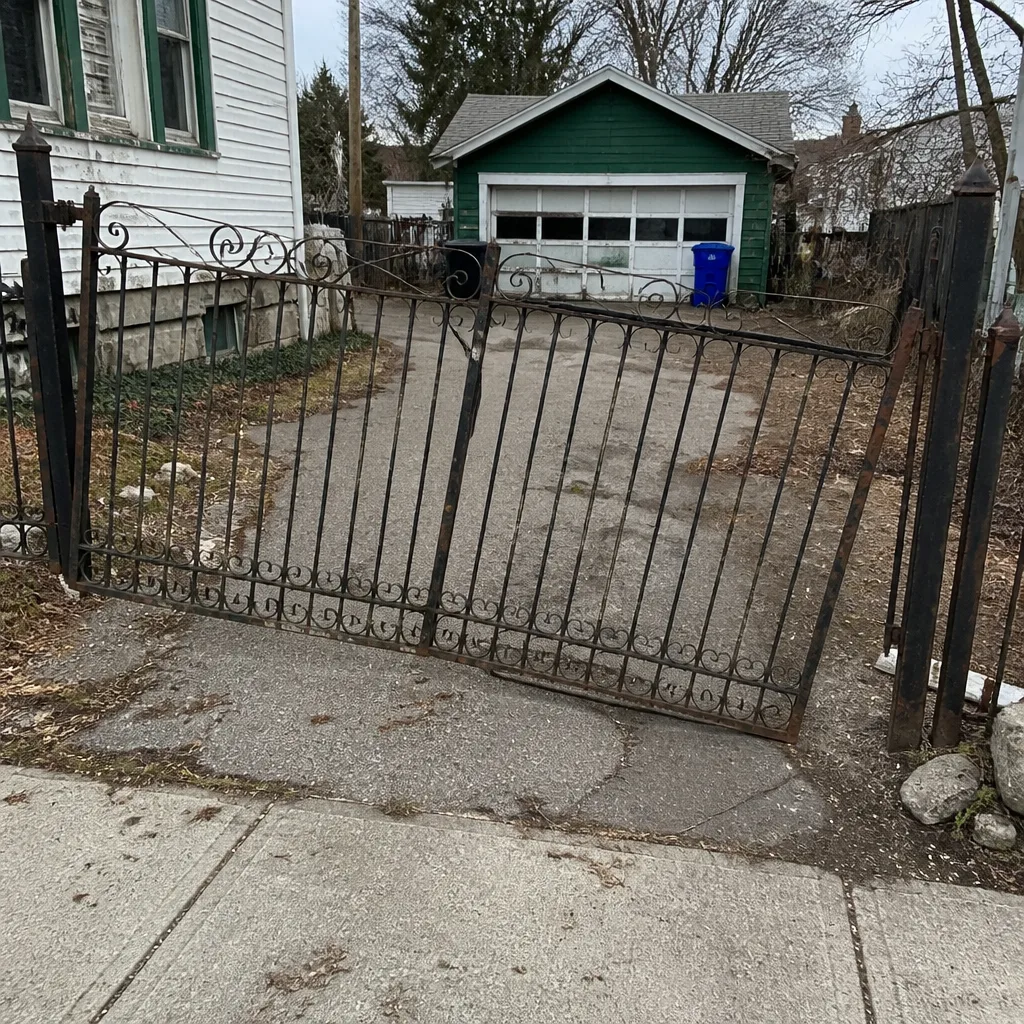 Before
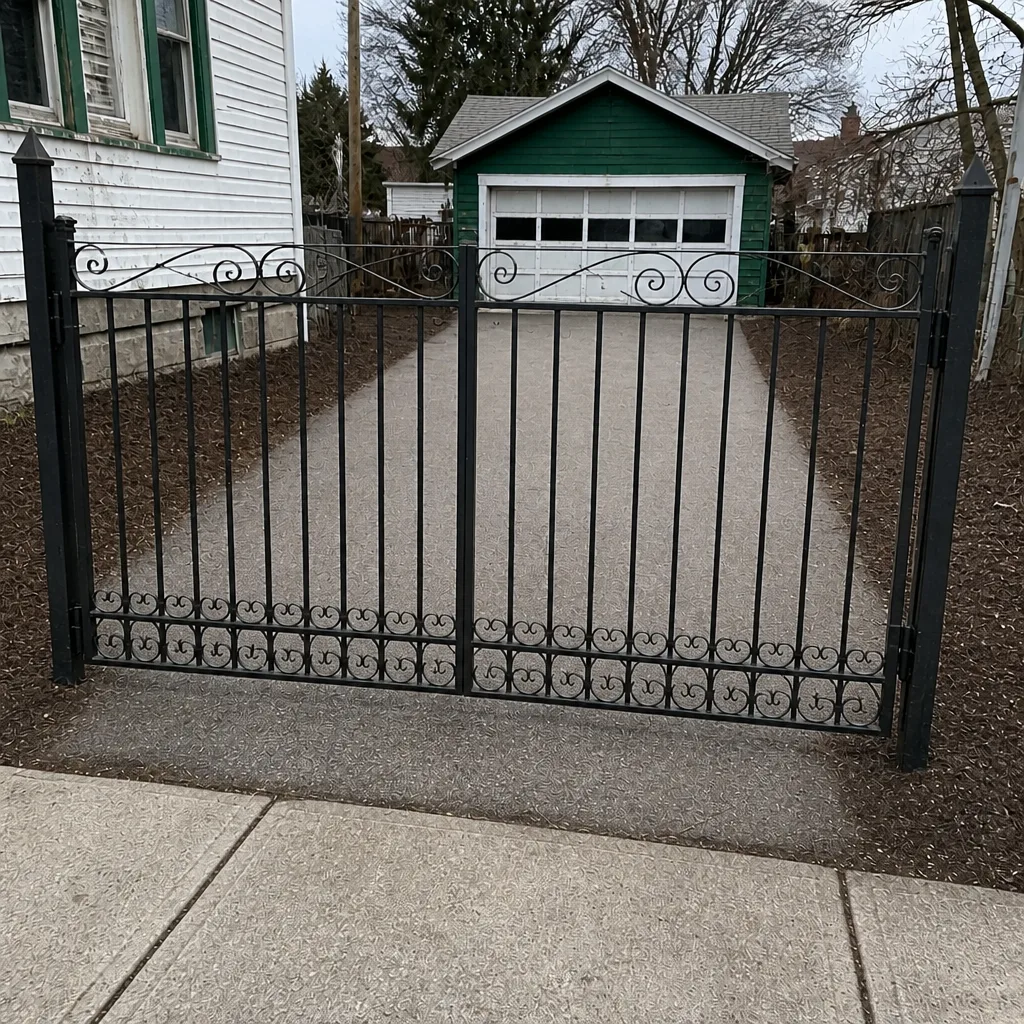 After
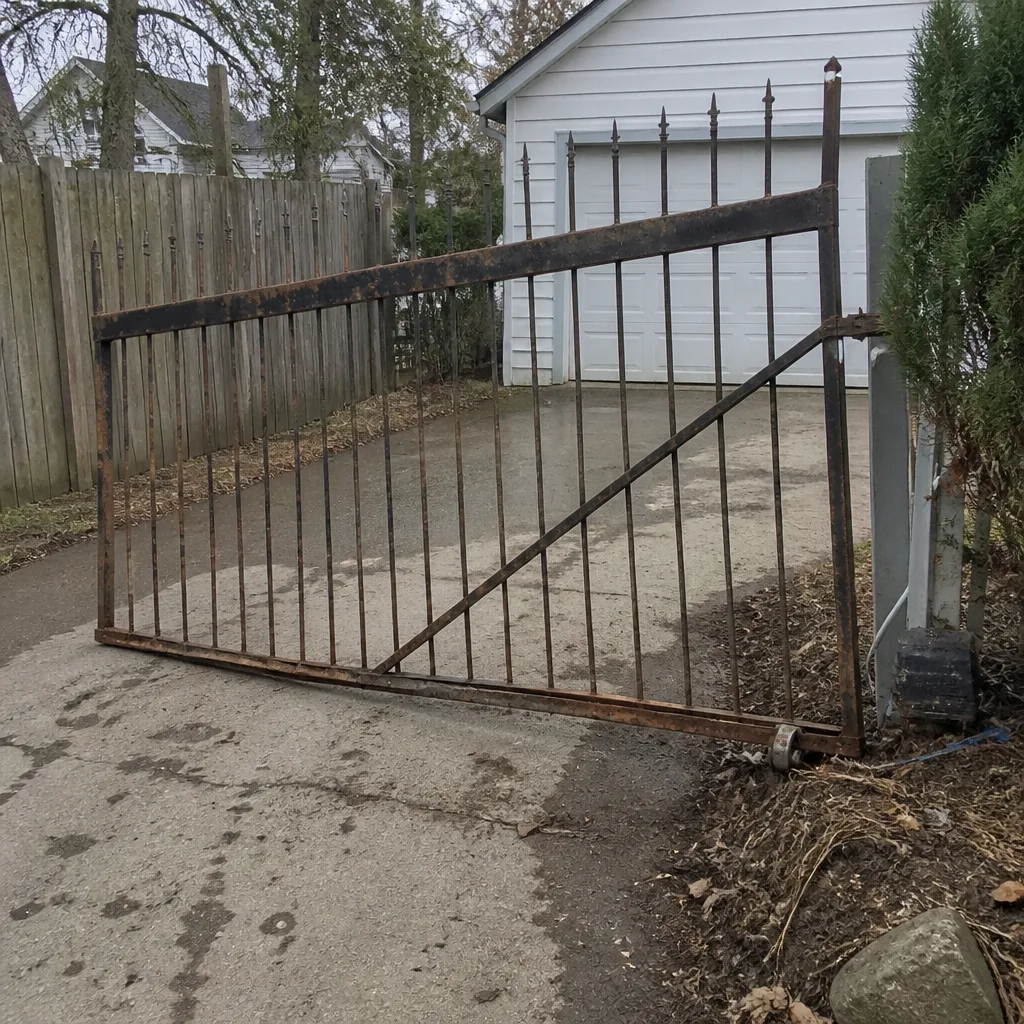 Before
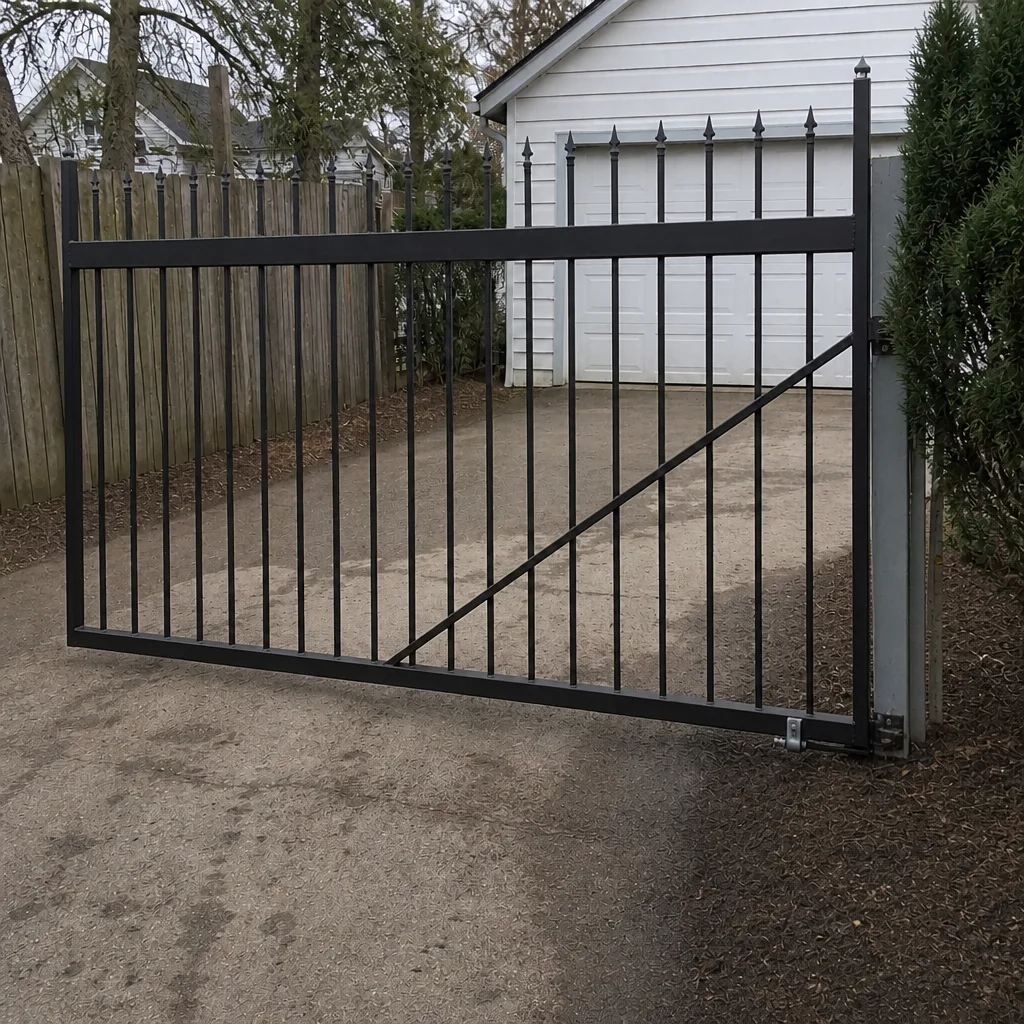 After
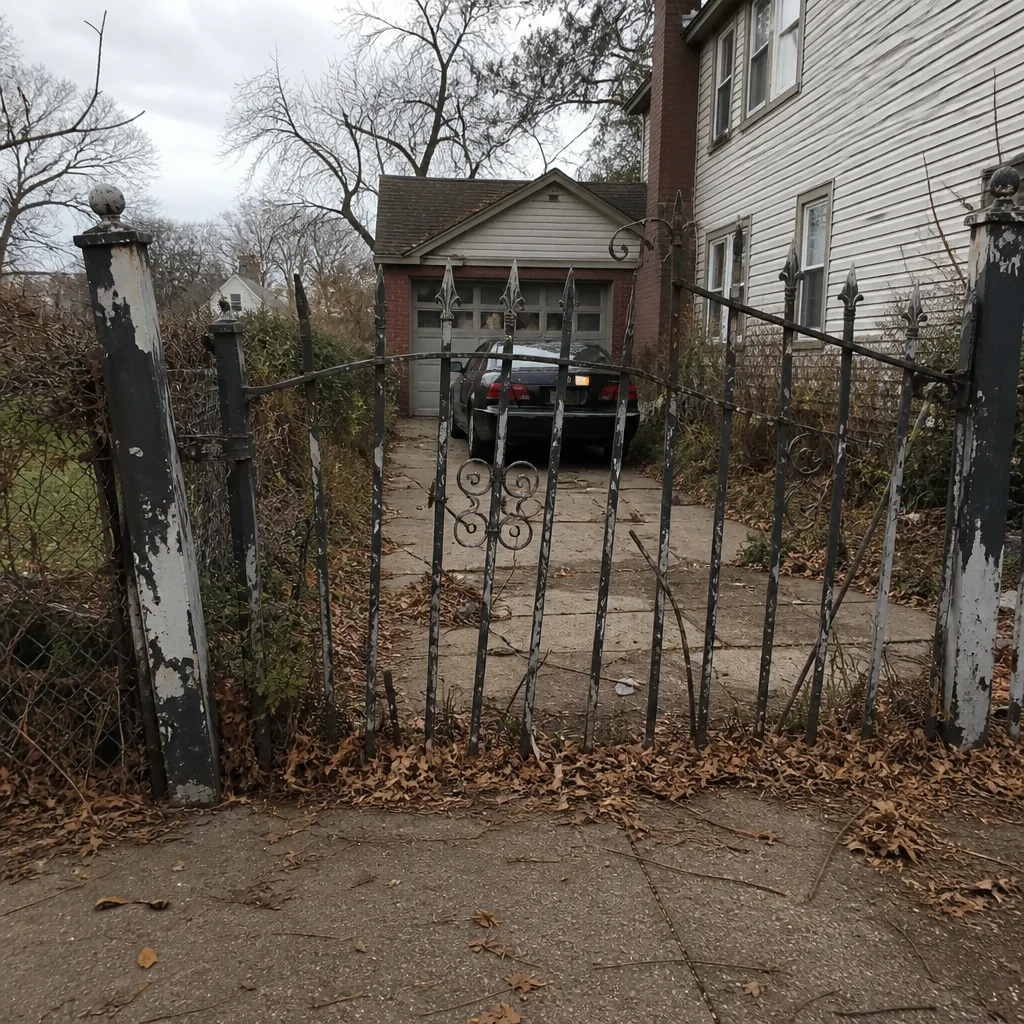 Before
 After
When to Call a Professional
Some gate work is straightforward and some carries real risk, and the difference matters. Call a professional if your gate operator stops responding, if you notice a burning smell or scorch marks near the control box, if the gate reverses unpredictably, if a safety edge is damaged, or if the gate has started dragging on the ground. Those symptoms can indicate electrical faults, board failures, or motor problems that are dangerous to diagnose without proper equipment. Never open a control box, never probe a live circuit, and never attempt a motor swap on your own. If you’re unsure what’s failing, stop using the gate and get eyes on it. Rochester Gate Repair offers free estimates in Rochester, and we’ll tell you what we find. Call (866) 942-8010 and we’ll set up a time.
Frequently Asked Questions
Usually no, if the work is purely mechanical and matching existing parts. Replacing a hinge, adjusting a sagging gate, or repairing a latch generally doesn’t require a permit. The answer changes when the work touches electricity, the motor, or the gate’s structure. Confirm with your local building department before any electrical work begins. Call (866) 942-8010 for a free estimate on the repair side. Estimates are free.
Often yes, depending on the town and whether the motor change affects the electrical circuit or safety devices. A straight like-for-like motor replacement in the same location with the same wiring may not require a permit, but a heavier-duty or different-brand unit usually does. Your building department is the authority here; ask them to compare the old and new equipment specs. If you’re unsure what equipment you have, call (866) 942-8010. We’ll identify it before you call the town.
Unlikely. Adding an automatic operator introduces electrical service, a control system, and required safety devices to a gate that previously had none of those things. Most Monroe County towns treat that as new electrical work and will expect a permit and an inspection. Consider it an installation, not a repair, and plan accordingly. Our electric gate repair work regularly involves this kind of conversion, and we can scope the electrical portion before you call your town.
The unpermitted work can surface during the buyer’s inspection or in a title search, and it typically causes delays or negotiation. In most cases the fix is a retroactive permit and an inspection, though the cost and timeline vary. Talk to your building department early if you suspect there’s a gap in the record. Call (866) 942-8010 and we’ll assess the equipment so you know what remediation looks like before you list.
Yes, often. Commercial and HOA gates usually serve multiple users, which can trigger broader code review, especially for access control systems and emergency egress. DoorKing and similar multi-user systems need to satisfy the town’s requirements and often the HOA’s design review as well. Sequence HOA approval first, then the town permit, then the work. Call (866) 942-8010 for a free estimate that accounts for both review layers.
Your town’s electrical inspector handles the inspection, and the most common failure points are missing safety devices, incorrect grounding, and mismatched power circuits. If it fails, the inspector typically gives you a list of corrections, and the work needs to be corrected and re-inspected. Call (866) 942-8010 if you need a second opinion on what’s failing and what it will take to pass.
The Bottom Line
Gate permitting in Rochester isn’t complicated once you know where the line is. Mechanical repair usually needs no permit. Electrical work, motor replacement, panel changes, new footings, and any change to the gate’s footprint usually do. HOA rules sit on top of municipal code, and they’re often stricter. Like-for-like replacement is a real exemption but a narrow one, and brand swaps tend to widen the scope beyond it. The best time to sort out permitting is before the work starts, not after a buyer’s inspector finds a gap in the record. If you’re not sure which side of the line your job falls on, our team at Rochester Gate Repair can help you scope it. Call (866) 942-8010 for a free estimate.
Written by the team at Rochester Gate Repair.