
Last updated November 14, 2026
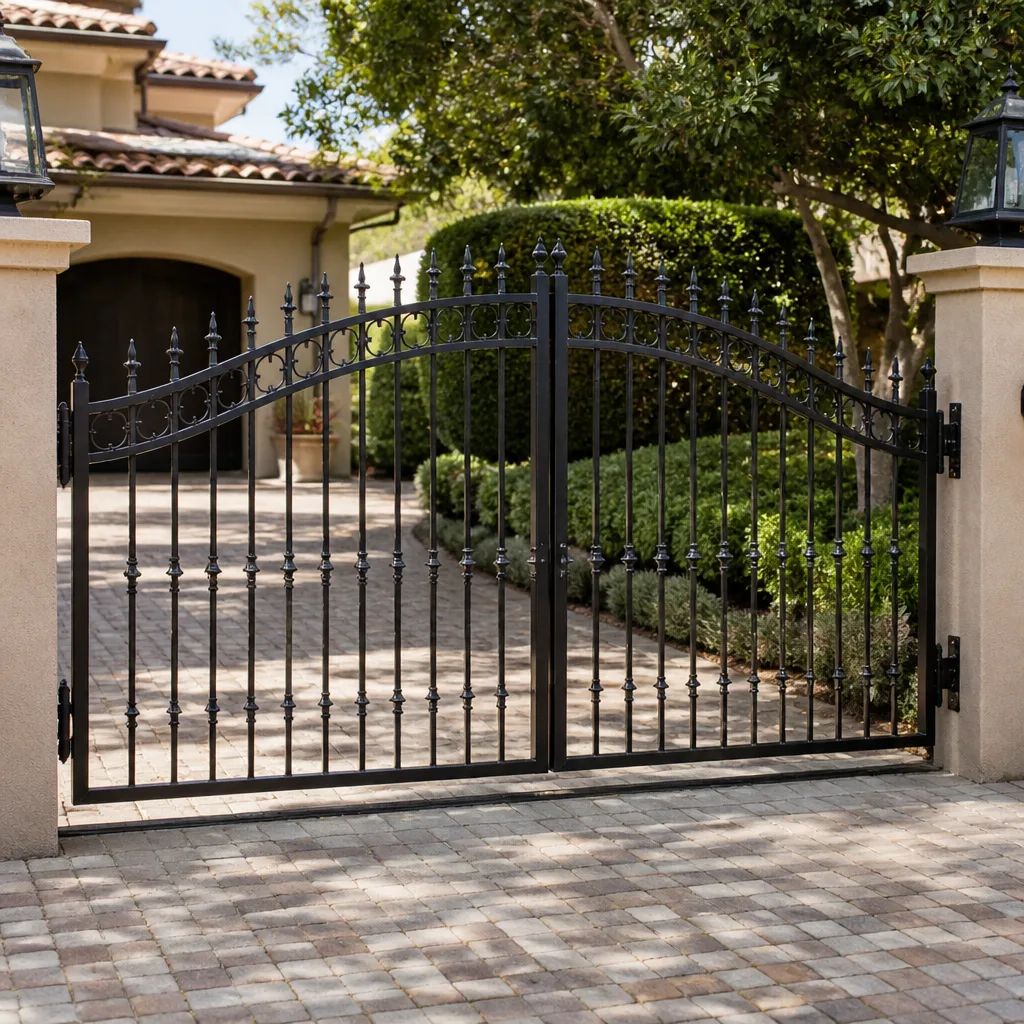 Wrought iron
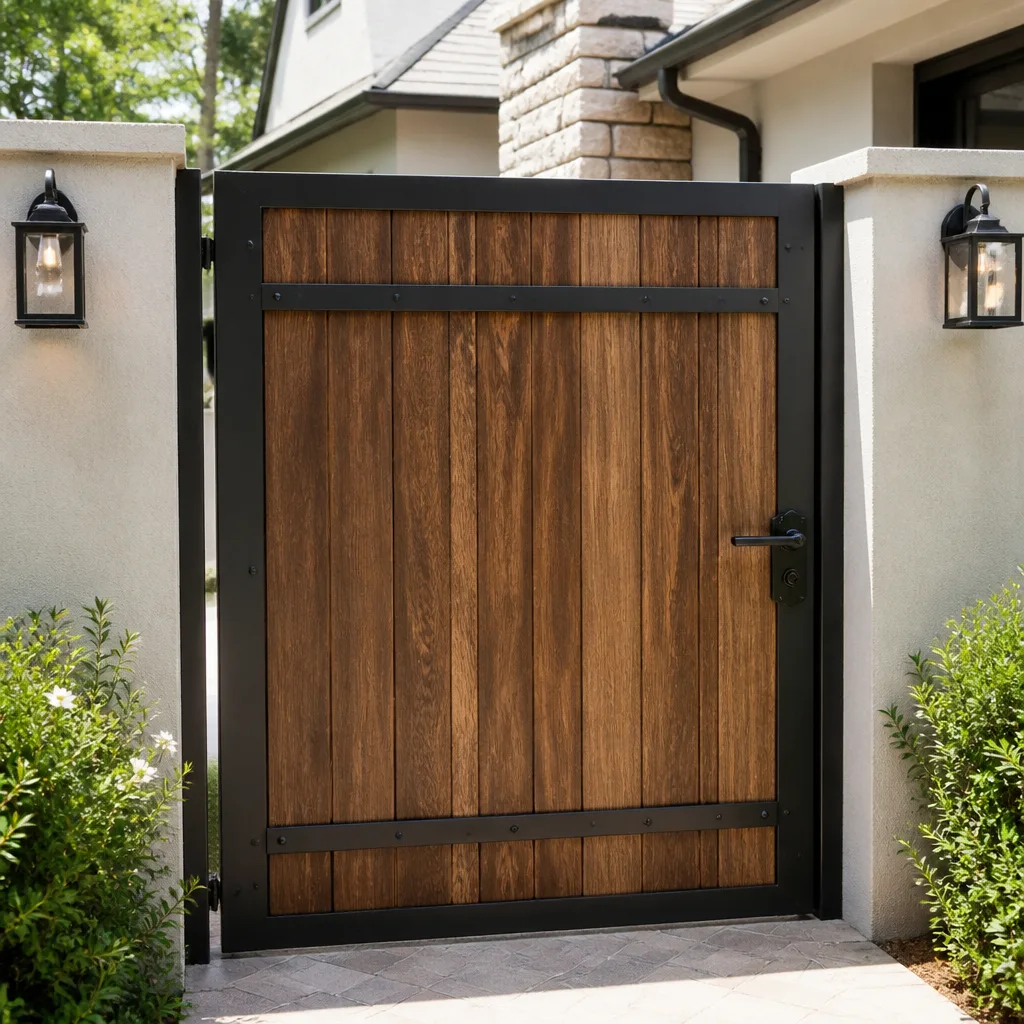 Wood & steel frame
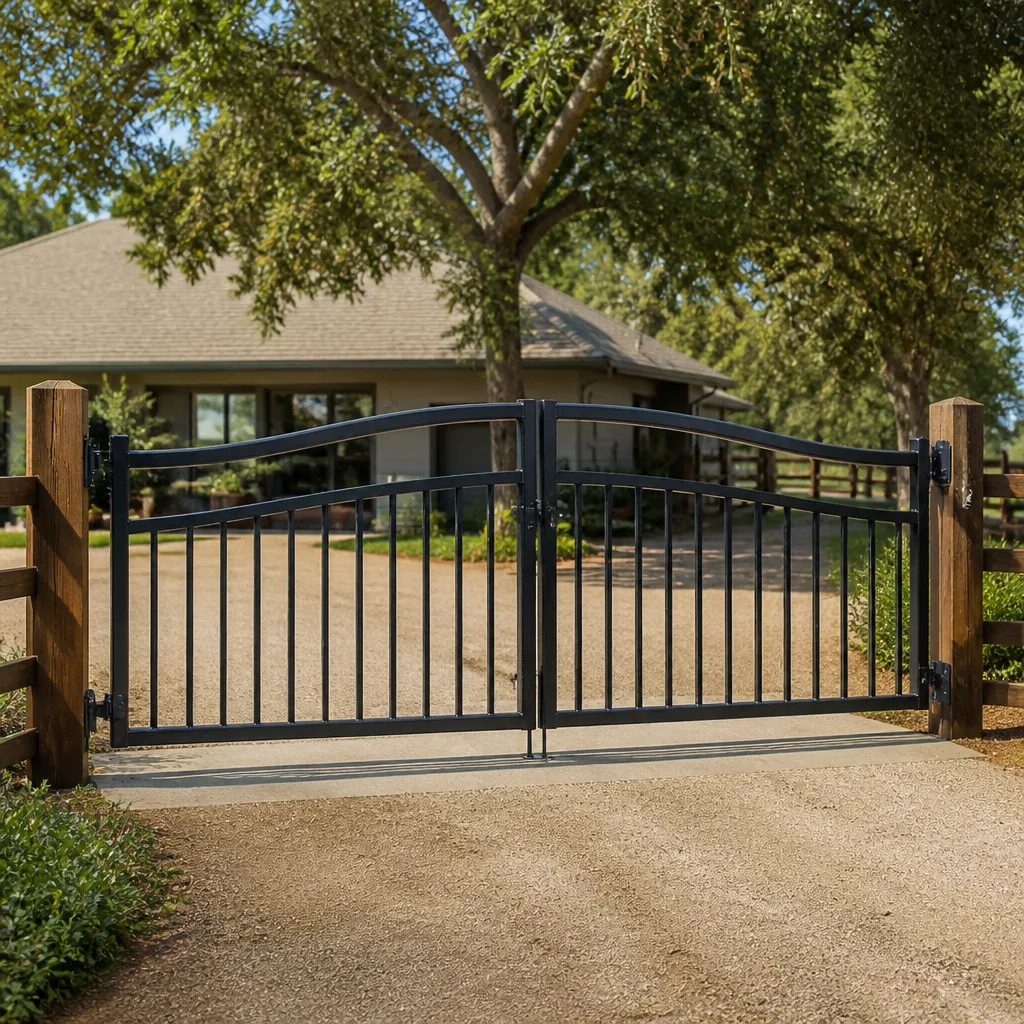 Farm & ranch
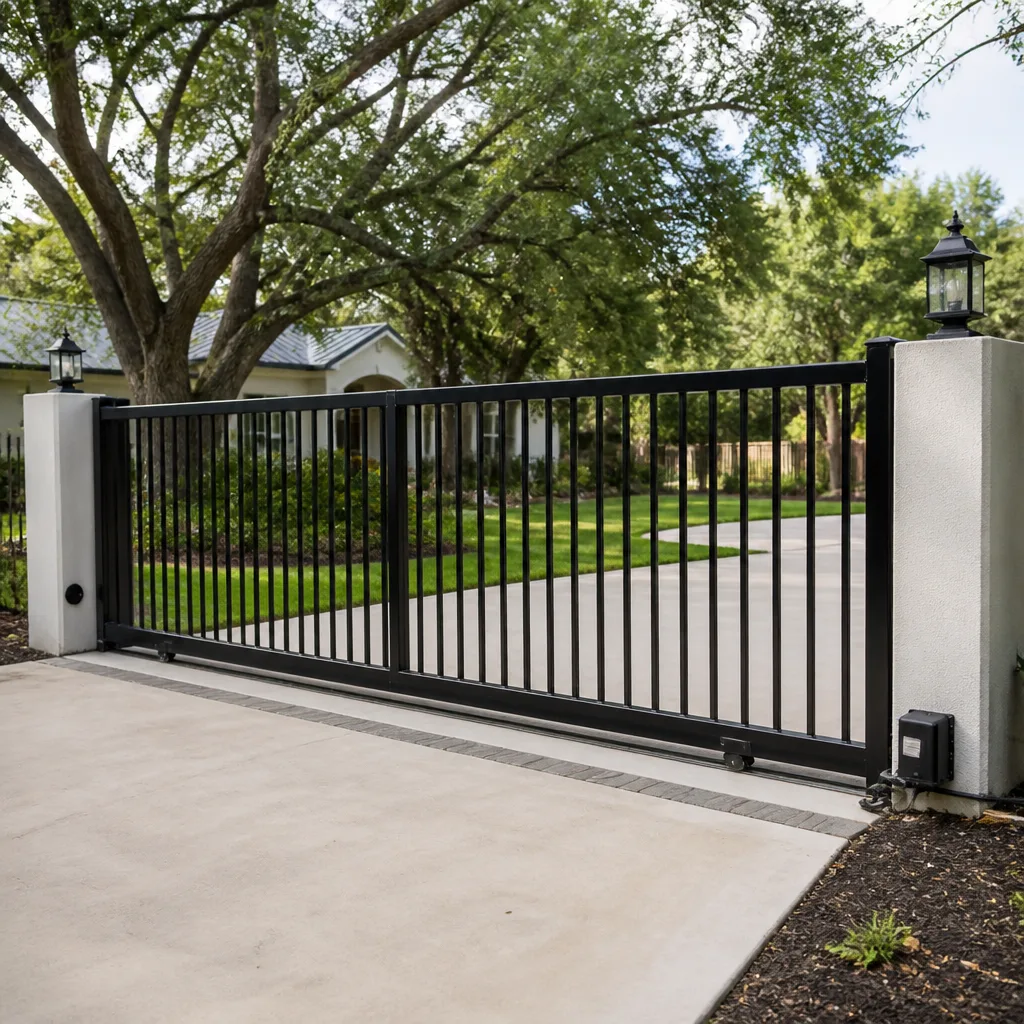 Sliding driveway gates
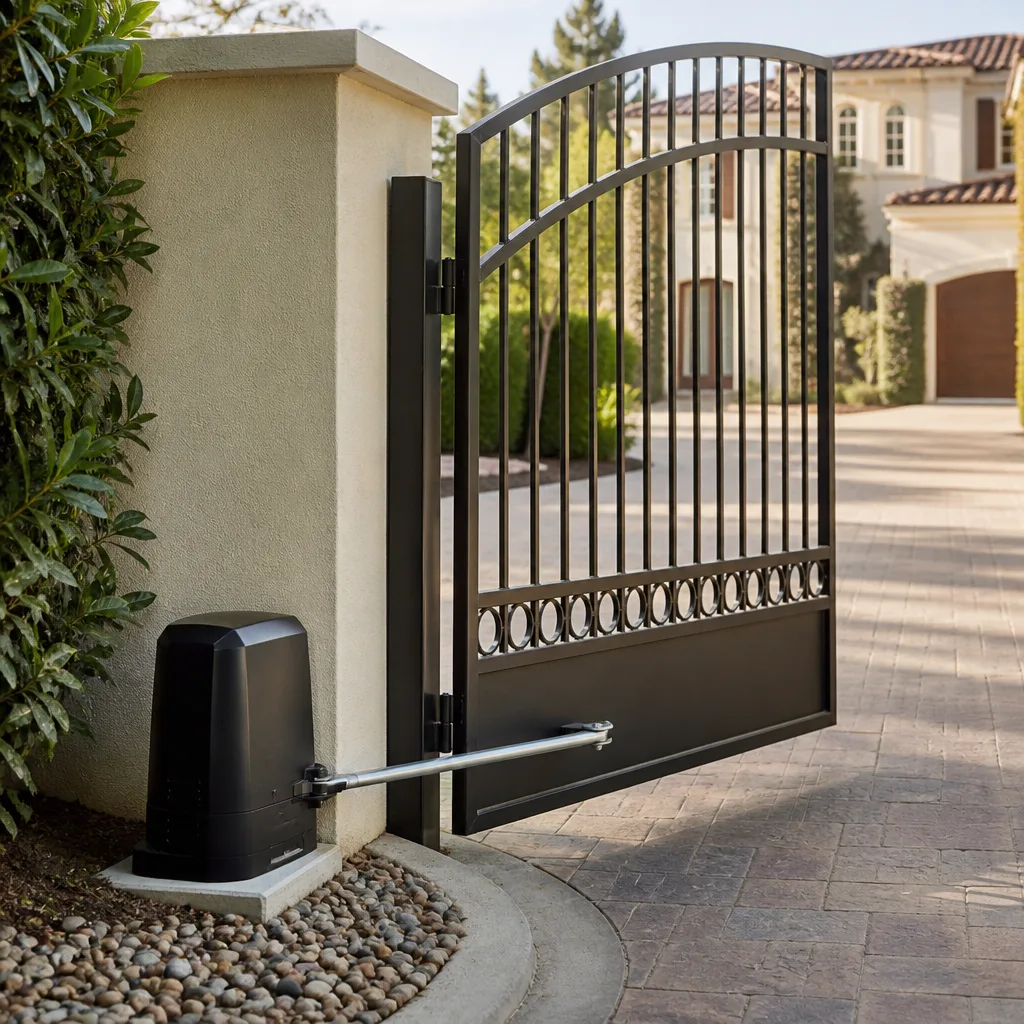 LiftMaster operators
Free on-site gate assessment - hinges, posts, and your LiftMaster or Nice gate operator checked before anything is quoted
The assessment is free and the quote is the invoice.
Get your free estimateHow to Hire a Gate Repair Contractor in Rochester: A Step-by-Step Guide
Ask any contractor you’re considering one question: “Can you service both a FAAC 400 and a LiftMaster LA500 in the same day?” A fence company will hesitate. A real gate specialist will start talking about the differences in their logic boards before you finish the sentence. That gap is the whole problem in this market. Most companies advertising gate repair around Rochester are fence installers or general contractors who treat gates as a side category, and that distinction matters when your problem is operator programming, limit switch calibration, or multi-brand interoperability. This guide gives you a concrete vetting framework so you know who you’re hiring before a truck ever pulls into your driveway in Rochester.
Quick Answer
To hire a gate repair contractor in Rochester, verify three things before you book: that they specialize in gates rather than fencing or general contracting, that they can name and diagnose your specific operator brand, and that they itemize parts, labor, diagnostics, and warranty in writing. Ask what failure modes they expect for your system and how they’ll confirm the diagnosis. A genuine gate specialist answers with specifics about logic boards, limits, and sensors. A generalist answers with a price.
Styles & brands we work with
- Wrought iron
- Wood & steel frame
- Farm & ranch
- Sliding driveway gates
- LiftMaster operators
Table of Contents
- Why Gate Repair in Rochester Isn’t a Fence Company Job
- What Licensing and Insurance Should You Verify in New York?
- Five Technical Questions to Ask Before Booking
- Red Flags of a Generalist Pretending to Be a Specialist
- How to Verify Multi-Brand Experience Beyond the Marketing
- What a Legitimate Gate Repair Quote Should Itemize
- Repair or Replace? How to Get a Straight Answer
- The Parts You Should Never Touch Yourself
Why Gate Repair in Rochester Isn’t a Fence Company Job
A fence contractor builds barriers. A gate technician keeps a powered access point moving safely, day after day, through freeze and thaw. Those are different trades, even though the two overlap on paper. When you search for Rochester Gate Repair, you’re looking for the second kind, and the market doesn’t make that easy to spot.
Here’s what the overlap hides. A fence crew knows posts, panels, and hinges. They may be excellent at installing a gate that swings correctly by hand. But once an operator is bolted on, the job becomes electrical and electronic: control boards, motor windings, limit switches, safety sensors, and sometimes access-control hardware that ties into a keypad or intercom. The gate itself is now the smaller half of the system.
That matters in Rochester specifically because of what winter does to outdoor operators and their hardware. Freeze-thaw cycles work on footings and hinges. Snow and ice load the moving parts. Road salt tracked onto a driveway gets flung onto lower hardware. A gate that binds slightly in July can stall an operator by February, and the fix isn’t always the motor. Often it’s a hinge, a roller, or a limit that drifted because the gate is dragging. A technician who only reads the operator will miss it. A technician who only reads the gate will miss the board fault.
We specialize in gates only: repair, electric gate repair, and new installation. Nothing else. That single focus is why we can tell you within a diagnostic visit whether your problem is mechanical, electrical, or a bit of both. Our technicians have up to 10 years of experience, and the work we do all day is the work you’re hiring for.
When you’re vetting contractors in Rochester, treat a fence company’s gate repair ad the way you’d treat a plumber advertising roof repair. Maybe they can do it. The question is whether you want to find out on your gate.
What Licensing and Insurance Should You Verify in New York?
New York doesn’t hand out a single statewide “gate contractor” license, and that’s exactly why you need to verify credentials yourself. The work involves electrical components, so the relevant questions are about general business legitimacy, insurance, and who is actually qualified to touch wiring.
Start here:
- Business registration. New York businesses should be able to show a current registration or incorporation with the state. It’s a baseline, not a guarantee, but it filters out people operating entirely off the books.
- Liability insurance. Ask for a certificate of insurance naming the work you’re having done. A gate is a heavy moving object with a motor attached. If something goes wrong on your property, you want coverage behind it, not a handshake.
- Workers’ compensation. If anyone other than the person you’re talking to will be on your property, this matters. Ask.
- Local requirements. Rochester and the surrounding towns can have their own rules about permits and inspections, particularly for new installs and any new electrical circuit. Call your city or town building department and ask what applies to your job. Most municipalities require a permit for new gate installation and electrical work, so confirm before work begins rather than after.
- Electrical qualifications. If the job requires running new power to the operator, that’s electrical work. The person doing it should be qualified for it, and if a licensed electrician is needed, a good gate contractor will tell you so rather than wing it.
Ask for these documents before the visit, not after. A contractor who treats that request as an insult is telling you something. A specialist who does this work regularly has the paperwork ready because they’re asked all the time.
We’re licensed and insured, and we’ll be straightforward with you about what a job needs. If your project calls for something outside our scope, we’d rather say so than take it on badly.
Five Technical Questions to Ask Before Booking
This is the core of the guide. Ask these five questions on the phone, before anyone schedules a visit. You’re not testing whether they can recite spec sheets. You’re listening for whether the answer sounds like someone who has actually opened your type of operator. Here’s what to listen for with each.
- “What brand and model is my operator, and how would you identify it?” A technician who’s been in the field will tell you the model is usually printed on the operator housing or the control box, and they’ll ask you to snap a photo of the label. If they say “we work on all brands” without asking you anything, that’s a shrug in a nice shirt. We work on nine named systems, including Ghost Controls and Mighty Mule for residential and DoorKing and Elite for commercial access, and knowing what’s on your gate is step one.
- “What failure modes do you typically see on my type of system?” A real answer names things: limit switches out of adjustment, a failing control board, safety sensors that won’t align, a motor that’s fine but a hinge that’s binding. A generalist says “could be a lot of things, we’ll take a look.” That’s not wrong, but it’s not evidence of experience either.
- “How do you diagnose an intermittent problem?” Intermittent faults are the hardest calls in this trade. Ask how they approach one. Good answers involve checking the operator’s fault codes if the board stores them, testing under load, and looking at the mechanical side for drag that only shows up in certain conditions. Vague answers here are a warning sign.
- “What’s the process for adjusting limits, and what safeguards are involved?” Limit switches control where the gate stops on each cycle. A technician who knows the work will describe calibrating them and testing that the gate stops where it should without slamming. They’ll also mention the safety devices: photo eyes or safety edges that reverse or stop the gate if something’s in the way. If those aren’t mentioned, be concerned. A gate operator without working safety protection is a hazard.
- “Do you repair your own work if something goes wrong on the fix?” A specialist will talk about their warranty on parts and labor clearly. A generalist will get vague. Write the answer down.
Ask all five. You’ll know within a few minutes whether you’re talking to a gate specialist or someone who lists gates to fill out a service menu in Rochester.
Red Flags of a Generalist Pretending to Be a Specialist
Some of these are obvious. Most aren’t, because the language is designed to sound right. Here’s what to listen for:
- “We work on all brands.” This sounds confident but means nothing. Every operator family has its own logic board, its own programming quirks, and its own common failures. A specialist will name brands because they have specific experience with them. When someone won’t name any, they’re hedging.
- No failures described. Ask what typically goes wrong with your operator and get a sentence that describes nothing in particular. If the person can’t describe a single failure mode for your system, they probably haven’t worked on many.
- Quoting before seeing the gate. A price given over the phone before anyone has looked at your system is not a quote. It’s a number pulled out of the air. The right answer is a diagnostic visit, a clear finding, and a written estimate before any work begins.
- “It’s probably the board, we’ll just replace it.” Board replacement is real work and sometimes it’s the answer. But a board swap that skips the mechanical check can leave you with a new board and the same drag or binding that burned out the old one. A specialist tests both sides.
- Pressure to replace instead of repair. Occasionally replacement is the honest answer. But a quote that skips past repair as an option is worth questioning. We’d rather tell you a repair makes sense than sell you a new gate when one isn’t needed.
- No written estimate. If pricing isn’t itemized and written, walk away. This isn’t about distrust; it’s about both parties knowing the scope and avoiding a surprise invoice.
- No license or insurance to show. When you ask and the response is evasive, that’s your answer.
None of these is conclusive on its own. Two or three together means you’re talking to somebody who does gates as an afterthought. Move on.
How to Verify Multi-Brand Experience Beyond the Marketing
Any company can print “multi-brand” on a website. The question is whether the claim holds up under pressure. Here’s how to test it without being obnoxious.
First, give them a specific brand and ask a specific question. “Do you work with DoorKing systems, and how do they differ from a Mighty Mule setup?” Someone with real experience will talk about how DoorKing’s commercial access-control systems are engineered for continuous use in a way residential operators like Mighty Mule aren’t. They’ll mention differences in how the boards are set up, how features are programmed, and what kinds of gates each system is built for. A generalist will say “we can work on those” because the brand name sounds familiar and the sentence is safe.
Second, ask them to walk you through what makes the two systems different in their own experience. You’re not asking for a lecture. You’re checking that the answer isn’t just the brand names repeated back.
A few things to look for that indicate real experience:
- They ask to see the label or the operator before quoting anything.
- They can describe the kinds of failures that come up with a given brand and how they’re approached.
- They distinguish between residential and commercial systems and get the differences right. A system rated for an HOA or a parking access point sees duty cycles a residential gate never will.
- They’re comfortable with access control devices tied to the operator, like keypad entry or intercom, not just the gate itself.
We work on nine brands, and we’re always clear about which ones. If you have an Elite system in Rochester and the person you call has never heard of it, that’s important information. We’ve serviced all nine of those systems and can explain the differences in their control schemes and what typically fails.
What a Legitimate Gate Repair Quote Should Itemize
A proper quote has four parts. Any quote missing one of them is incomplete in a way that can cost you later.
- Parts. What’s being replaced, and by brand and part where possible. Vague descriptions like “control board” without a part number or brand leave the door open for substitutions at installation. Ask for specifics.
- Labor. The work involved and the time estimate. If a repair involves diagnosing an intermittent issue, the labor line should account for that diagnosis, not just the swap.
- Diagnostics. The diagnostic visit and what it includes. If a fee for that visit is charged, it should be stated up front and clearly. The estimate for the repair itself should say what was found and why the fix addresses it.
- Warranty terms. What’s covered and for how long. Is the repair covered if the same fault returns next month? Are the parts covered separately? Get it in writing.
When a quote doesn’t include all four, here’s what to do: ask. A specialist should be able to add the missing item. If the answer is “we don’t really do that,” or if the quote stays vague after you push, consider that information about how the rest of the job will go.
The written estimate sets the final price. That’s not a promise you’ll never see a change order, because sometimes a repair uncovers a second problem. But the scope you agree to before the work starts should be the scope you’re billed for unless something new is found. If a second issue surfaces, we stop and talk to you before doing anything that changes the price. No surprises at the end of the job.
A free estimate means you can get this in writing before committing. Call gate repair at (866) 942-8010 to schedule a free on-site estimate. We answer 24/7. Fast dispatch from 7am to 7pm, Sunday through Friday.
Repair or Replace? How to Get a Straight Answer
The honest answer to “repair or replace” depends on what’s actually wrong, and it’s a question a real specialist will want to look at before answering. That’s not a dodge. There are real dividing lines.
On the repair side of the line:
- A motor that’s fine but a hinge or roller that’s wearing out.
- A control board that failed and can be replaced, where the underlying cause has been checked and addressed.
- Limit switches out of calibration or safety sensors misaligned.
- A single component in an otherwise sound system.
On the replace side:
- An operator that’s beyond its serviceable life and parts are getting hard to source.
- Damage to the gate structure that would require more to fix than a replacement panel.
- A system that no longer fits the use. A residential gate that’s been retrofitted into something beyond its duty rating is a candidate for a proper commercial-grade operator.
The question isn’t whether a new gate is nicer. It’s whether the repair is genuinely viable. If an operator is trouble-free and only one small part failed, we’ll tell you a repair makes sense. We’ll also tell you when it doesn’t. That’s the whole value of a specialist: when you ask “repair or replace,” you’re getting an answer about the actual system, not about the sale.
If your gate is in an HOA or commercial setting in Rochester, the decision has extra weight. A closing gate that’s down affects everyone who uses it. That’s a real argument for the simplest reliable fix, even if it means a one-time repair where replacement would look cleaner on paper.
The Parts You Should Never Touch Yourself
This section is short and direct because the stakes are real. There are parts of a gate system you shouldn’t open, adjust, or attempt to repair yourself. Not because we want your business. Because these components can hurt you badly, and some can be lethal.
The high-voltage wiring feeding an operator is not a do-it-yourself project. The gate operator’s control board and the electrical enclosure often carry live wiring, and you don’t need to be touching the board directly to end up in an unsafe situation. This doesn’t get better if the power was “turned off” and nobody confirmed it. The gate operator runs on regular mains power, not low-voltage DC from a battery pack, so treat the supply as live.
The gate itself is the other risk. A moving gate panel weighs hundreds of pounds, and a slide gate that comes off its track can crush whatever’s in its path. A swing gate that reverses unexpectedly or fails to stop at the limit can hit a person, a pet, or a vehicle. Safety sensors and safety edges exist to prevent exactly this. If they’re not working, the gate should not be cycling until they are.
And we’ll say this plainly: leave the operator open to look inside, and you may find yourself in a situation you can’t safely exit. If you see smoke, smell burning, see frayed cable, or the gate is hitting something or missing its stop point, stop using it and call. We’d rather you call us than try to fix it and end up hurt. And if you’re unsure whether your safety sensors are functioning, test the gate deliberately with a clear path and nothing in the way, and watch whether it reverses when an object crosses the beam. If it doesn’t react, don’t trust it around anyone.
Common Mistakes to Avoid
- Hiring a fence company because they’re closest. Close doesn’t fix gates. Call someone whose whole job is the operator and the mechanics together, not just the barrier around it.
- Accepting a phone quote. A price given before anyone sees your gate is not a real price. A specialist will want to look at the system and give you a written estimate before starting.
- Skipping the brand question. If your operator is a DoorKing and the contractor doesn’t know the model, keep looking. The right technician will recognize the system and tell you what typically fails on it.
- Not asking for the certificate of insurance. Small ask, big protection. In Rochester, hail isn’t the issue; liability is.
- Letting a repair go forward without a written quote. Four items in that quote, always: parts, labor, diagnostics, warranty. Anything less leaves you open to a surprise invoice.
- Having the gate fixed without checking the safety devices. A gate that stops where it should is the whole point. Ask them to verify the safety sensors and edges while they’re there.
- Waiting for winter to fix a slow or sticking gate. A gate that binds in summer is a gate that will stall in a Rochester January. Have it checked before the cold settles in.
See the difference
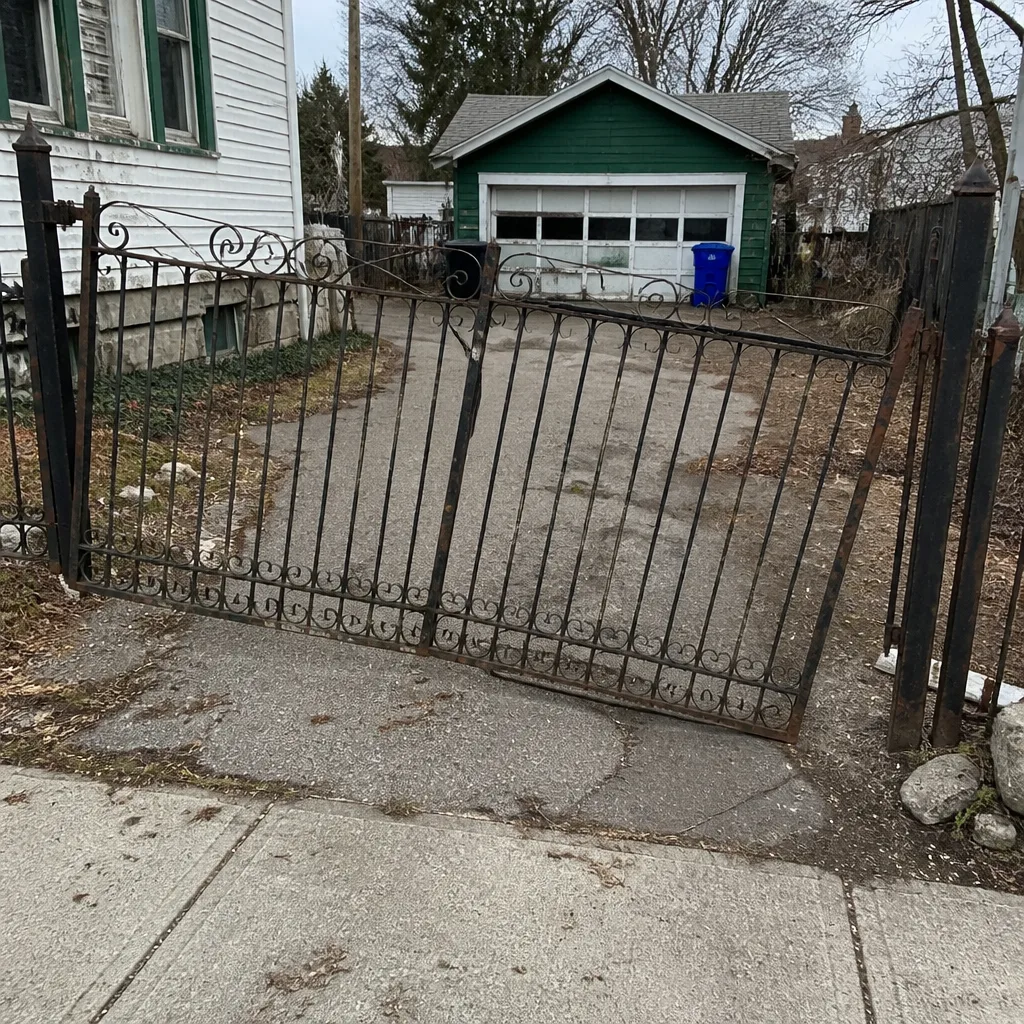 Before
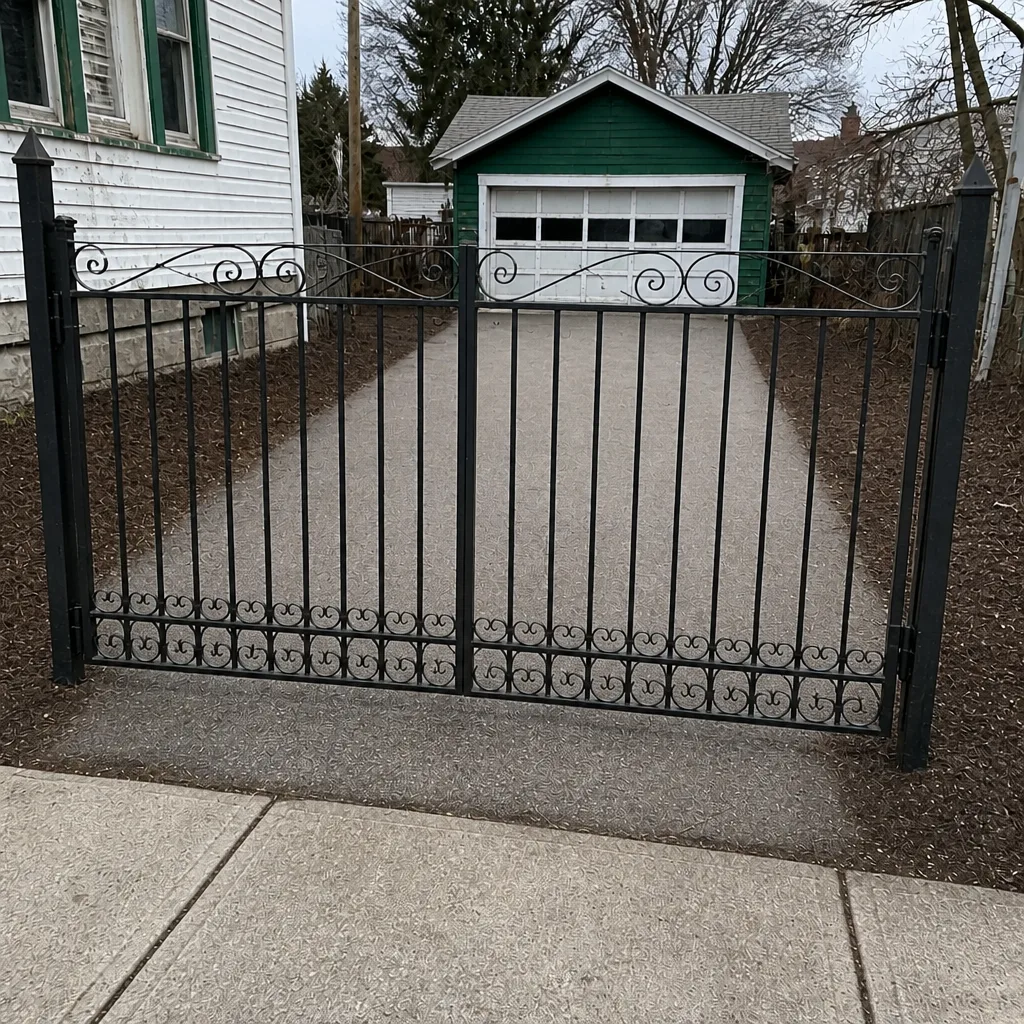 After
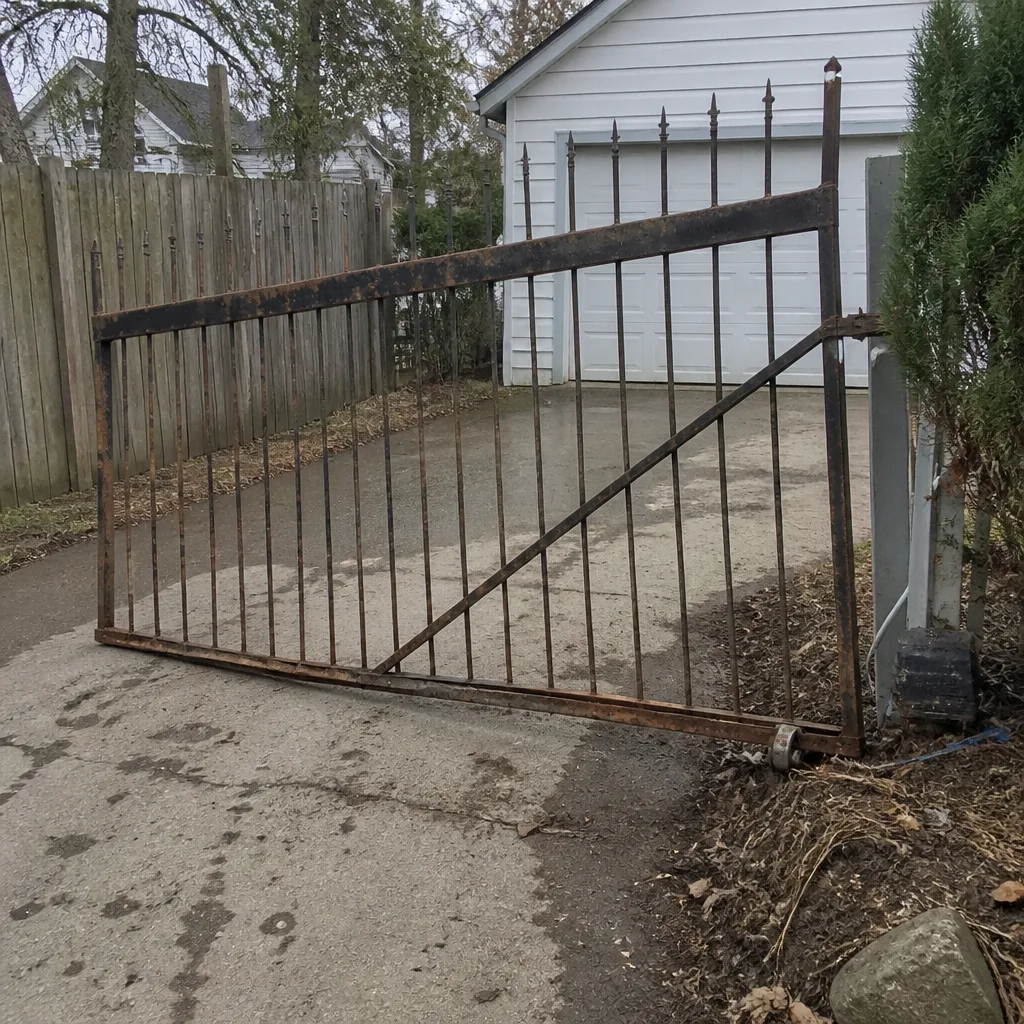 Before
 After
 Before
 After
When to Call a Professional
Call a professional when the gate won’t stop or won’t start, when it stops and reverses at the wrong point, when it runs but strains or moves unevenly, when you see or smell burning from the operator, or when the gate has come off its track or the panels are loose. Call if the safety sensors or safety edges aren’t responding, and call if anyone has been injured or nearly injured by the gate. If you’re a property manager and the gate is the only access for residents or tenants, call before you try a workaround. A gate that’s limping along is a gate that can fail at the worst moment.
Rochester Gate Repair offers free estimates in Rochester. Call (866) 942-8010. We answer 24/7 for the phone, with fast dispatch from 7am to 7pm, Sunday through Friday. Our technicians have up to 10 years of experience working on both residential and commercial gate systems across Rochester.
Frequently Asked Questions
Gate repair pricing depends entirely on what’s wrong: a sensor alignment and a control board replacement are very different jobs. Rather than quote a number we’d have to walk back, we look at the gate, diagnose the fault, and give you a written estimate before any work begins. That estimate breaks out parts, labor, and warranty. Call (866) 942-8010 for a free estimate.
We dispatch Sunday through Friday, 7am to 7pm, and same-day visits are often possible for repair calls. Call us to check availability and we’ll give you the earliest window. We answer 24/7 by phone. If your call comes in outside dispatch hours, we book you into the next opening, Sunday through Friday, 7am to 7pm.
Stop using the gate and call us. A gate that fails to stop or misses its limit is a safety issue, especially if there’s a drive, sidewalk, or child nearby. In our experience this is often a limit switch problem, a programming issue, or safety sensors out of alignment. It needs a diagnostic visit before it’s used again. Call (866) 942-8010.
We work on nine brands, including LiftMaster, FAAC, BFT, Linear, Viking, Ghost Controls, DoorKing, Elite, and Mighty Mule. If you can read the model off the operator or the label on the box, tell us what it says when you call and we’ll confirm. We’d rather be clear about your brand upfront.
A full gate installation includes the site assessment, the gate and operator selection for your property, footings and mechanical installation, electrical work for the operator, programming, and a full safety check on sensors and safety edges before handover. It’s measured and scheduled work, not a same-day fix, and we give you a written price before anything starts. Call (866) 942-8010 for a free estimate.
Yes, power runs and safety edge work are part of the job. The wiring feeding an operator and the safety devices that protect the gate are not optional add-ons; they’re the difference between a working gate and a safe one. If a licensed electrician is needed for part of the work, we’ll tell you before we begin. Call (866) 942-8010 to talk it through.
The Bottom Line
Gate repair in Rochester is a trade with actual requirements: who’s trained on which operators, who can diagnose an electrical fault and a mechanical fault in the same visit, and who will tell you whether repair makes sense. Use the five questions. Watch for the red flags: no brand names, no failure modes, no written estimate. Verify the license and insurance. And when you get a quote, make sure it lists parts, labor, diagnostics, and warranty. The bottom line is that a specialist is worth finding before a breakdown forces you to call the first number that answers. That’s why we’re dedicated to gates only, from residential openers to commercial access systems.
Call Rochester Gate Repair at (866) 942-8010 for a free estimate on gate repair, electric gate repair, or installation. We answer 24/7. Fast dispatch from 7am to 7pm, Sunday through Friday.
Written by the team at Rochester Gate Repair.