
Last updated November 14, 2026
 Wrought iron
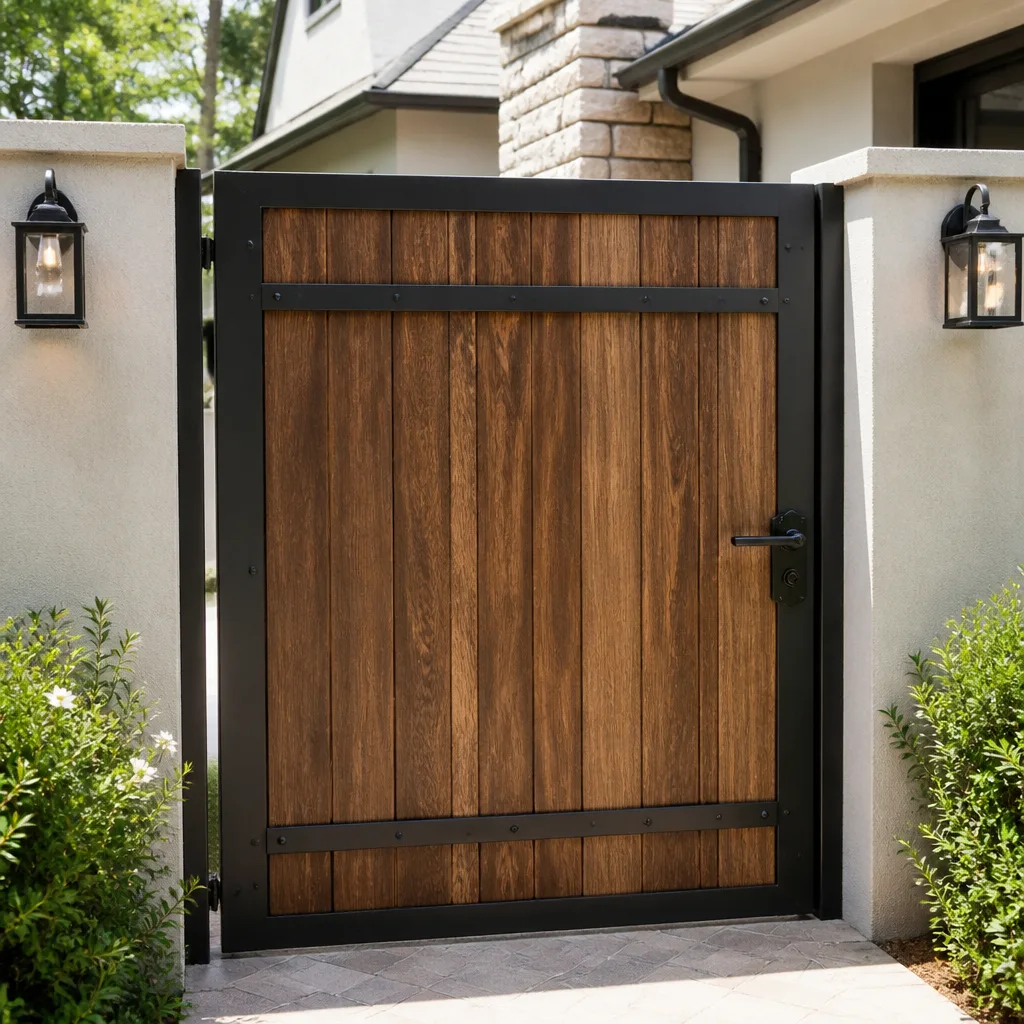 Wood & steel frame
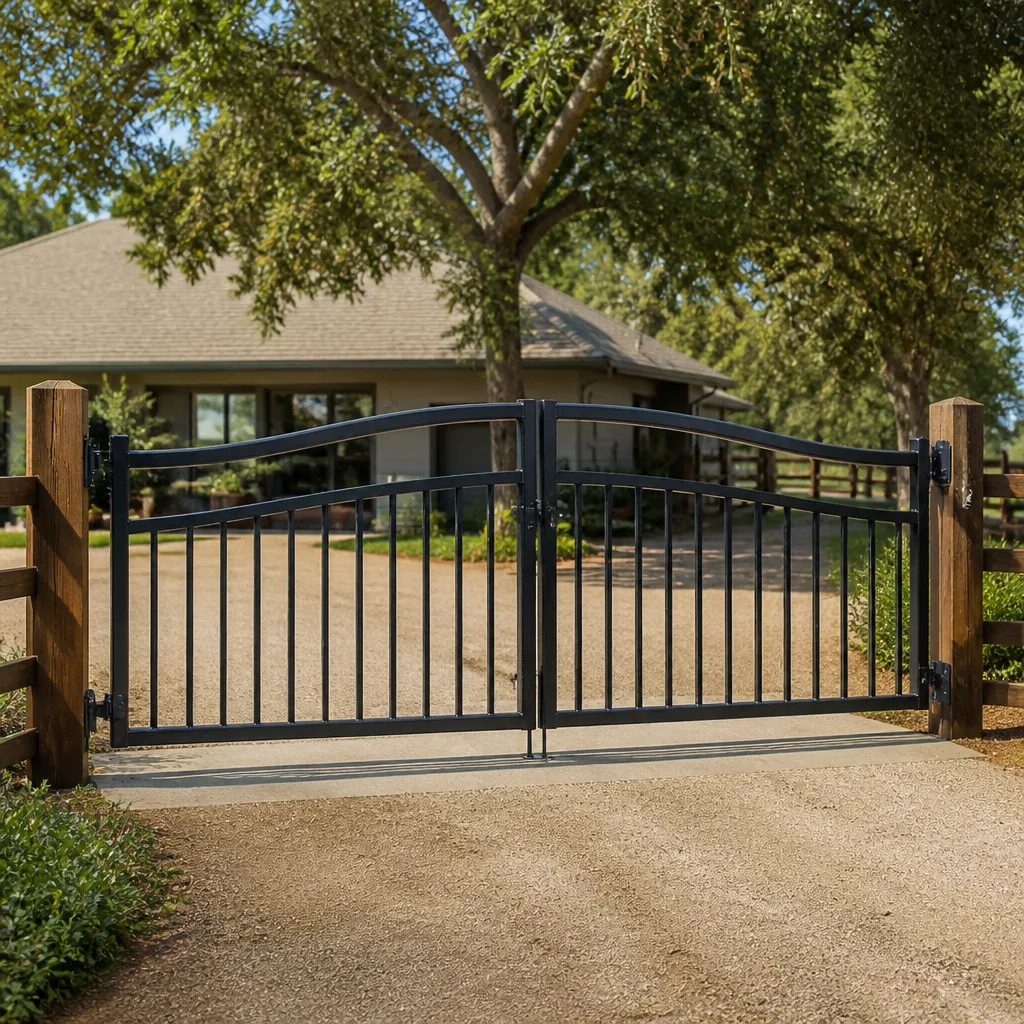 Farm & ranch
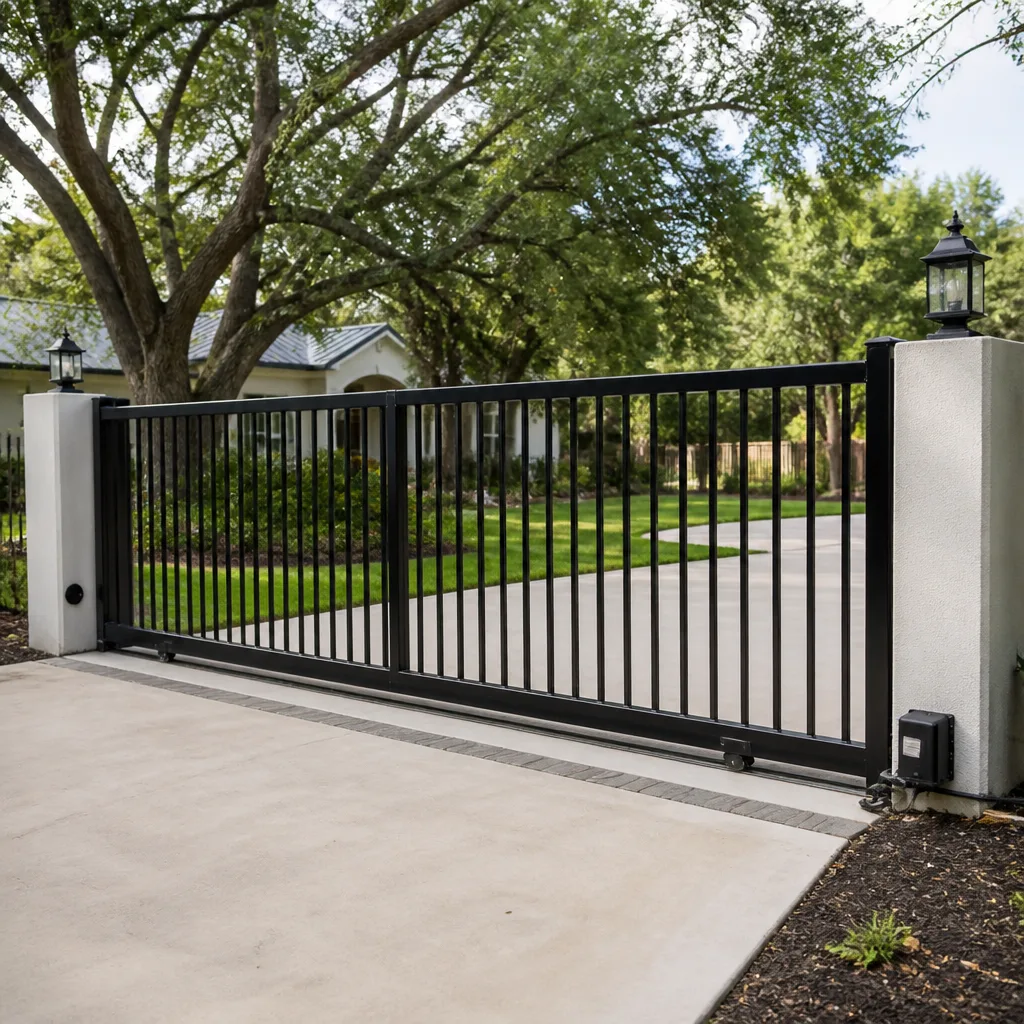 Sliding driveway gates
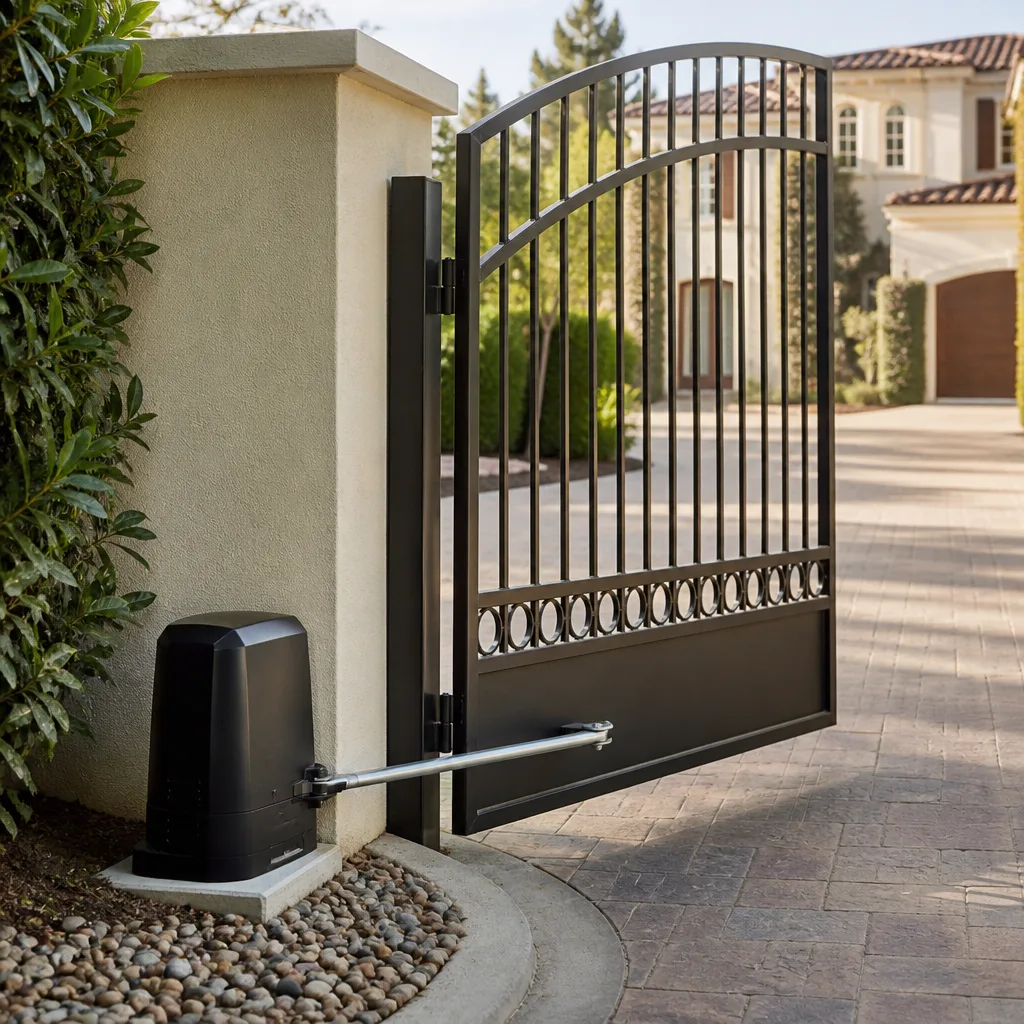 LiftMaster operators
Free on-site gate assessment - hinges, posts, and your LiftMaster or Nice gate operator checked before anything is quoted
The assessment is free and the quote is the invoice.
Get your free estimateSeasonal Gate Repair Care for Rochester: Year-Round Homeowner’s Guide
Most homeowners treat gate repair as a reaction: something breaks, you call someone. That’s the wrong model for this climate. Gates in Rochester don’t fail on a random schedule. They fail on a seasonal one, driven by the same weather that shapes everything else here: deep snow, a long freeze-thaw cycle, a humid summer, and a wet, leafy fall. Each season loads a different part of the system, and each one leaves a diagnosable signature behind. If you know the order those stresses arrive in, you can inspect and intervene during the quiet window before each failure, instead of paying for a breakdown in the middle of a Rochester winter. This guide walks through all four seasons, what to check in each, and how to build a simple service log that makes every future repair faster and cheaper to diagnose.
Quick Answer
Gates in Rochester need four seasonal checkpoints: a pre-freeze operator test and winterization in late fall, a post-heave post and hinge inspection from mid-March to late April, a humidity and UV check on boards and wiring in summer, and a full operator service with battery load testing and photo-eye alignment before winter. The single highest-value habit is a written seasonal log, because it turns scattered repairs into a service history that helps any technician diagnose intermittent faults and supports warranty claims.
Styles & brands we work with
- Wrought iron
- Wood & steel frame
- Farm & ranch
- Sliding driveway gates
- LiftMaster operators
Table of Contents
- Why Rochester Gates Fail on a Schedule
- Winter: Testing the Operator Under Load Before the First Failure
- Spring: The Post-Heave Inspection Window (March 15 to April 30)
- Summer: Humidity, UV, and What They Do to Electronics
- Fall: The Pre-Winter Operator Service Checklist
- Building a Seasonal Gate Log That Actually Helps
- What Brand You Own Changes the Seasonal Routine
- Common Mistakes to Avoid
Why Rochester Gates Fail on a Schedule
Rochester averages around 99 inches of snow a year and more than 100 freeze-thaw cycles, which is more than almost any comparably sized American city. That number isn’t trivia. It’s the reason the same gate hardware ages faster here than it would in a milder market, and it’s why maintenance intervals written for a national audience often don’t match what a Rochester gate actually needs.
Here’s the mechanical story behind those cycles. Water gets into a hinge pin, a track channel, a post footing, or a control enclosure. It freezes overnight, expands, and pushes the joint slightly out of true. It thaws the next day, drains, and leaves a small void. Repeat that a hundred times through a winter and you get a gate that sags on one side, a slide gate that drags, or a limit switch that no longer trips where it used to. None of that is visible in July. All of it is diagnosable in late March and April.
Meanwhile the electronics live through a completely different stress cycle. Rochester’s summers are humid enough that condensation forms inside control enclosures as temperatures swing between day and night. Boards corrode at their terminals, wire insulation stiffens and cracks under UV, and painted steel on the gate frame chalks and eventually lets moisture in at the welds. Add leaf debris in fall and you have a system that’s been asked to survive four different threat environments inside twelve months. That’s the case for treating each season as its own inspection window rather than waiting for a symptom.
- Winter stress: freeze-thaw movement, snow load on panels, cold-soaked motors and batteries.
- Spring stress: heaving posts, shifted hinges, ground settling around footings and conduits.
- Summer stress: humidity inside enclosures, UV on insulation and paint, expansion in tracks.
- Fall stress: leaf debris in tracks and photo-eyes, wet leaves, then the first hard freeze.
If you want the underlying repair side of this in more depth, our gate repair work covers the mechanical failures these seasons produce.
Winter: Testing the Operator Under Load Before the First Failure
The season’s most common mistake happens in the first week of a hard freeze: the operator is tested with a person standing next to it, opening and closing, and everything looks fine. It isn’t fine. A gate that cycles smoothly in mild weather can be nearly stalled under load once the temperature drops, the grease thickens, and a track has a half-inch of ice in it. You don’t want to discover that by watching the gate stop halfway and the control board throw a fault code. You want to test it deliberately, before the stress arrives.
Test under load, not in a vacuum. That means running the gate through several full cycles after the first hard freeze and watching how it behaves at the heaviest point of travel, usually where the panel is furthest from the operator and the track has the most resistance. Listen as much as you watch. A motor that strains audibly, a gate that hesitates for a beat, or an operator that reverses on its own during the closing run are all signs the system is working near its limit. Those are the conditions that burn out a motor or blow a board later in the season.
If you have a hydraulic operator, winterization is its own job. Hydraulic fluid thickens in the cold and stresses seals and hoses, so the pre-winter service should confirm fluid condition and check for weeping at the fittings, not just run the gate once. Cold oil also asks more of the pump, which is exactly the component that fails when the gate is used heavily in January. These are the checks that separate a gate that survives the season from one that gets patched in February.
- Run the gate through several full cycles after the first hard freeze and watch for hesitation or self-reversal.
- Clear and inspect the track or the swing path for ice buildup before every cold snap.
- For hydraulic operators, confirm fluid condition and check fittings and hoses for weeping.
- Check battery backup condition before the season, since cold reduces available reserve.
- Keep snow clearance consistent around the gate’s travel so you’re not shoveling ice into a track.
When the electronics themselves misbehave in the cold, that’s a job for our electric gate repair specialists rather than a general handyman.
Spring: The Post-Heave Inspection Window (March 15 to April 30)
Spring is the only window in the year when frost damage becomes visible and structurally diagnosable. The ground here heaves through the winter and settles through April, and a gate post that moved a fraction of an inch in January is now sitting visibly out of plumb. Between mid-March and the end of April, you can actually see what the winter did. By June, the soil has settled around the damage and the symptom is gone even though the cause remains.
The first thing to inspect is post plumb, especially on swing gates where one post carries the hinge load. A post that leans pulls the gate out of alignment, and the gate then loads the hinges unevenly, which wears them faster. On slide gates, check the track for heaved sections and the gate’s roller path for new resistance. Check that the ground around each footing hasn’t opened into a void, and look for cracks radiating from the base of a post, both on masonry and in the surrounding pavement or concrete. Cracks around a footing are worth investigating because they tell you the ground moved, not just that the finish aged.
Spring is also when hinges, latches, and strike alignment should be verified. A hinge that’s seized from a winter of grit and moisture is easy to spot: the gate binds instead of swinging freely. Grease or lubricate moving parts, confirm that latches actually catch the strike plate cleanly, and check the gate’s close position against the framing on a slide gate. If the operator has been fighting misalignment for three months, spring is when you stop that and correct the root cause instead of resetting the limits again. These steps matter to any automatic gate here in Rochester, whatever the operator brand.
- Check each post for plumb, using a level on two faces.
- Look for new cracks or voids around each footing and report any that appear structural.
- Inspect the track (slide gates) or hinge path (swing gates) for heave and drag.
- Test that hinges, latches, and stops operate without binding.
- Verify the gate closes and sits correctly against its framing.
- Recheck operator limits only after the mechanical issues are corrected.
Summer: Humidity, UV, and What They Do to Electronics
Summer is when GATE systems fail in ways that look like they’re not the weather at all. A control board that works perfectly in May starts throwing intermittent faults in August, and the cause is usually moisture and heat inside the enclosure, not the board being defective. Rochester’s humid continental summers swing hot and cool across the day, and the air inside a sealed box condenses on the cool metal of the board and terminals. Over a few summers that shows up as corrosion at the connector pins, which means intermittent open circuits that a technician can chase for hours if they don’t know the condition.
UV is the other slow factor. Wire insulation that runs from the operator to the photo-eyes, keypad, or loop can stiffen and crack where it’s exposed to direct sun, which then lets in moisture. Painted steel on the gate frame chalks and lets water into the weld seams, which is where rust starts, not on the flat panels. Your summer inspection should include a look at the enclosure for signs of condensation, a visual check on exposed wire runs for cracking or UV damage, and a check on the paint at the welds and bottom rails, where rust usually begins. If you can, confirm the enclosure seals are still doing their job and that the board is dry inside.
The photo-eyes deserve special attention in summer because they’re the safety feature most often defeated by environmental conditions: direct sun flooding the receiver, condensation on the lens, or insects in the housing. If the gate reverses unexpectedly, the photo-eye is a prime suspect before the board. Keep the lenses clean and check that the alignment hasn’t drifted. If you need the full picture of what these systems demand, our Rochester service guide covers how we approach them locally.
- Open the control enclosure (power off) and look for condensation or corrosion on the terminals.
- Inspect exposed wiring for cracked or stiffened insulation.
- Check paint at welds, bottom rails, and seams for the first rust blooms.
- Clean and realign photo-eye lenses, and check for insects in the housings.
- Confirm enclosure seals are intact so moisture and pests stay out.
For sensor, board, and safety-edge issues, Rochester Gate Repair handles the diagnostics through the electric gate repair side of our work.
Fall: The Pre-Winter Operator Service Checklist
Fall is the last opportunity to prepare the operator for the season that actually breaks it. The checklist here is specific, because the failure modes are specific: a battery that seemed fine in September has less reserve when it’s cold, a limit switch that trips a little late in October may not trip at all when the grease stiffens in January, and a photo-eye that’s slightly out of alignment will be blocked by leaves constantly. Doing this work in the dry, mild weeks before the first hard freeze is far cheaper than doing it in February.
The core of the fall service is a battery load test, not just a battery voltage check. Voltage tells you the battery is present; a load test tells you whether it can still deliver current when called on. Backup batteries age quietly and a cold snap is when they’re discovered to be weak. Next, verify the limit switches that tell the operator where to stop and reverse. Test the full travel, confirm the stopping points are correct, and confirm the gate reverses properly at the safety edges. Then check and realign the photo-eyes, clean the housings, and make sure nothing in the seasonal leaf fall is likely to interrupt the beam. Finally, clear leaf debris from the track, the hinge points, and the drainage around the footings before the freeze sets it in place.
- Load-test the backup battery rather than checking voltage alone.
- Run full travel and verify limit switch stopping points and reversal.
- Test safety edges and photo-eye interruption response.
- Clean and realign the photo-eyes for leaf season.
- Clear leaf debris from the track and moving parts.
- Confirm drainage around footings and enclosures is clear.
- Test the operator under a heavier load once cold weather arrives, as described above.
Building a Seasonal Gate Log That Actually Helps
A gate log is a simple paper or note-app record of what was checked, what was found, and what was changed, dated by season. It costs a few minutes a year, and it pays for itself twice: it supports warranty claims by documenting when a failure first appeared, and it gives any technician a history for those intermittent faults that never reproduce when someone’s standing there. An intermittent fault is only diagnosable with a timeline. A gate that reverses once a week in August, stopped doing it in October, and started again in January is a completely different diagnosis than one that only misbehaves in the cold.
Here’s what belongs in the log. Date each entry with the season it represents, and keep it in a place that survives the weather, since an enclosure inside the gate box isn’t always dry. Note the operator model, any fault codes displayed, and the exact symptoms in plain language. Note what was serviced or changed and by whom. Then keep it for the life of the gate. If the operator is a FAAC, BFT, Linear, or Viking system, note the brand clearly in every entry, because diagnosis depends on the system and the correct manuals, which most generalists don’t have.
- Date and season for every entry, so patterns over years are visible.
- Operator brand and model, so anyone servicing it knows what they’re looking at.
- Fault codes and symptoms exactly as they appeared, including when they stopped.
- What was checked, changed, or repaired, with parts and service notes.
- Weather conditions at the time of the fault, since most here are freeze- or humidity-driven.
What Brand You Own Changes the Seasonal Routine
Not every operator takes the same seasonal abuse in the same way, and being familiar with the brand changes what to check first. A residential opener like Mighty Mule or Ghost Controls handles its own logic and battery backup in-house, so the fall load test and photo-eye alignment matter a lot. A commercial-grade system like FAAC, BFT, or DoorKing often has separate control architecture and may use loops, keypads, and safety edges that each need their own check. Linear and Viking systems sit across residential and light commercial use, which changes the load the operator sees and how hard the gate stresses it.
That’s the reason we work with nine brands rather than a single product line: LiftMaster, FAAC, BFT, Linear, Viking, Ghost Controls, DoorKing, Elite, and Mighty Mule. It lets us diagnose by system instead of guesswork, and it means that a seasonal routine for a commercial access-control gate isn’t just pasted over onto a residential swing gate. Being independent also matters because we’re not tied to one manufacturer’s routine. Our technicians have up to 10 years of experience, and the seasonal checklists here are refined from what we’ve seen fail under real Rochester conditions rather than from a manual written for a milder climate.
If the gate has already failed and you can’t tell brand or board from outside, the summer and fall checklists above are still the right place to start. In our experience, the brand and model wind up confirming the fault, but the symptom and season narrow it down first.
Common Mistakes to Avoid
- Testing the operator in mild weather and calling it good. A gate that runs in October may stall under load in January, so the test has to happen after the first hard freeze, not before it.
- Skipping the spring post inspection because the gate swings fine. A post that’s out of plumb can still swing cleanly until the hinge wears. Spring is the only window when the frost damage is visible.
- Ignoring summer condensation in the control enclosure. Boards don’t die suddenly; they corrode at the terminals over seasons from humidity, and that shows up as intermittent faults later.
- Checking battery voltage instead of doing a load test. A battery at rest can read fine and still fail when it’s cold and asked for current.
- Adjusting operator limits to compensate for a misaligned gate. Reset the mechanical issue first and the limits will be right; reset the limits first and they’ll drift again.
- Leaving leaf debris in the track through the first freeze. Wet leaves packed into a track and frozen will drag the gate, stress the motor, and hide the real cause of a stall.
- Not keeping a written log. An intermittent fault with no history is a slow, expensive process to diagnose, and a missing record can also complicate a warranty claim.
See the difference
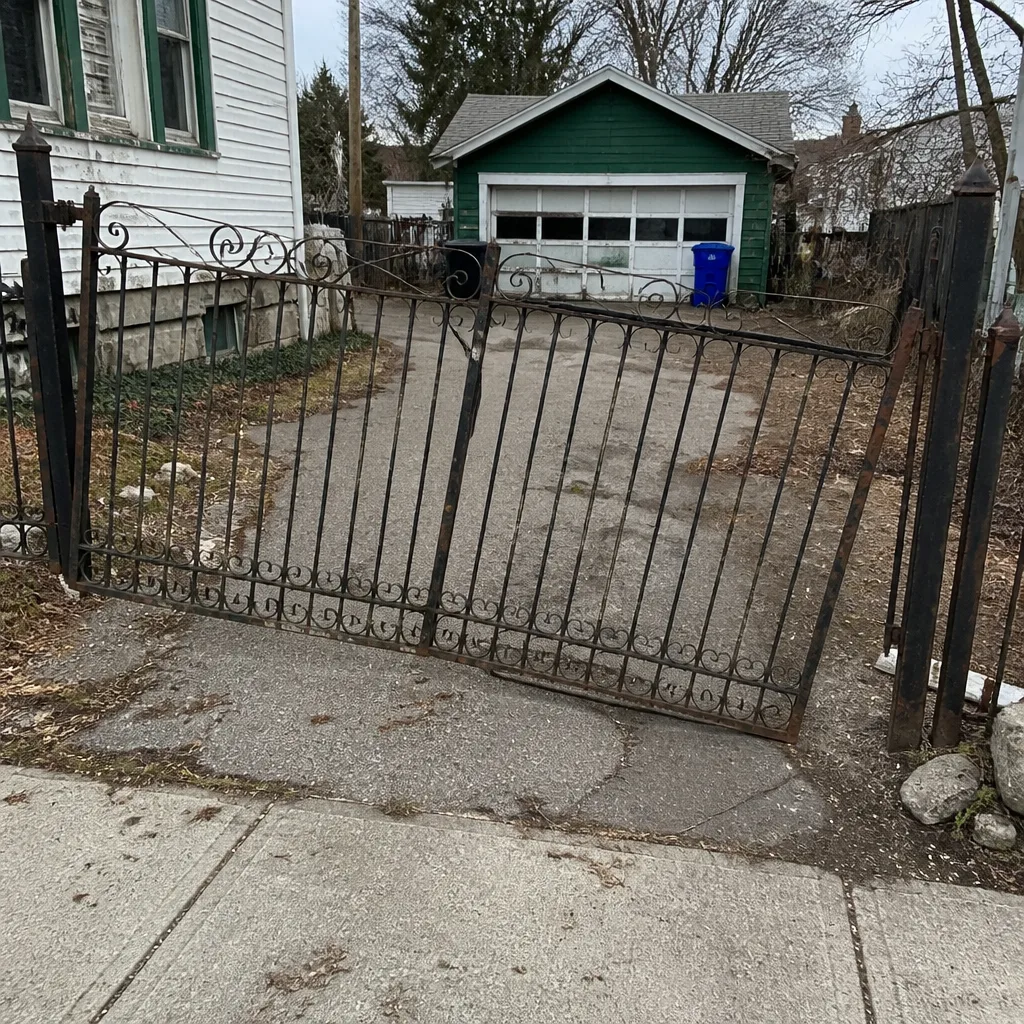 Before
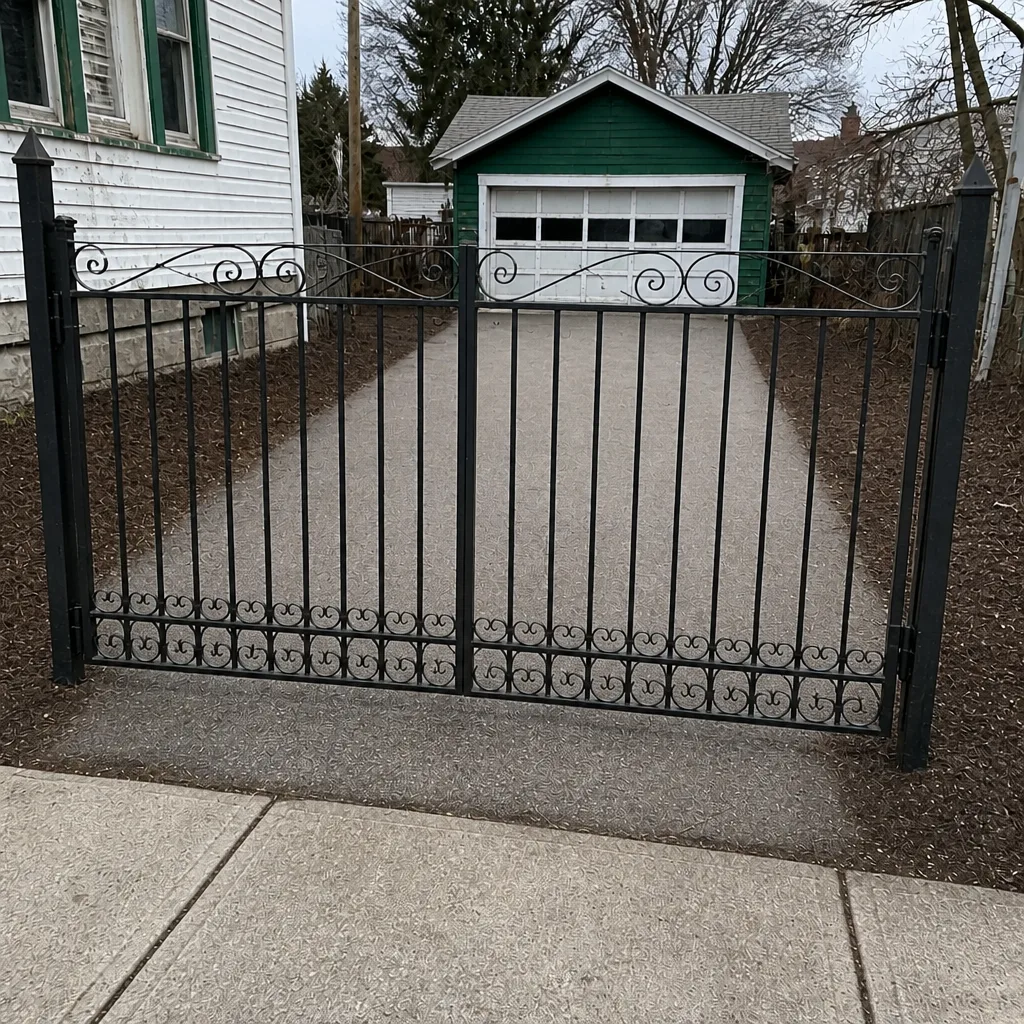 After
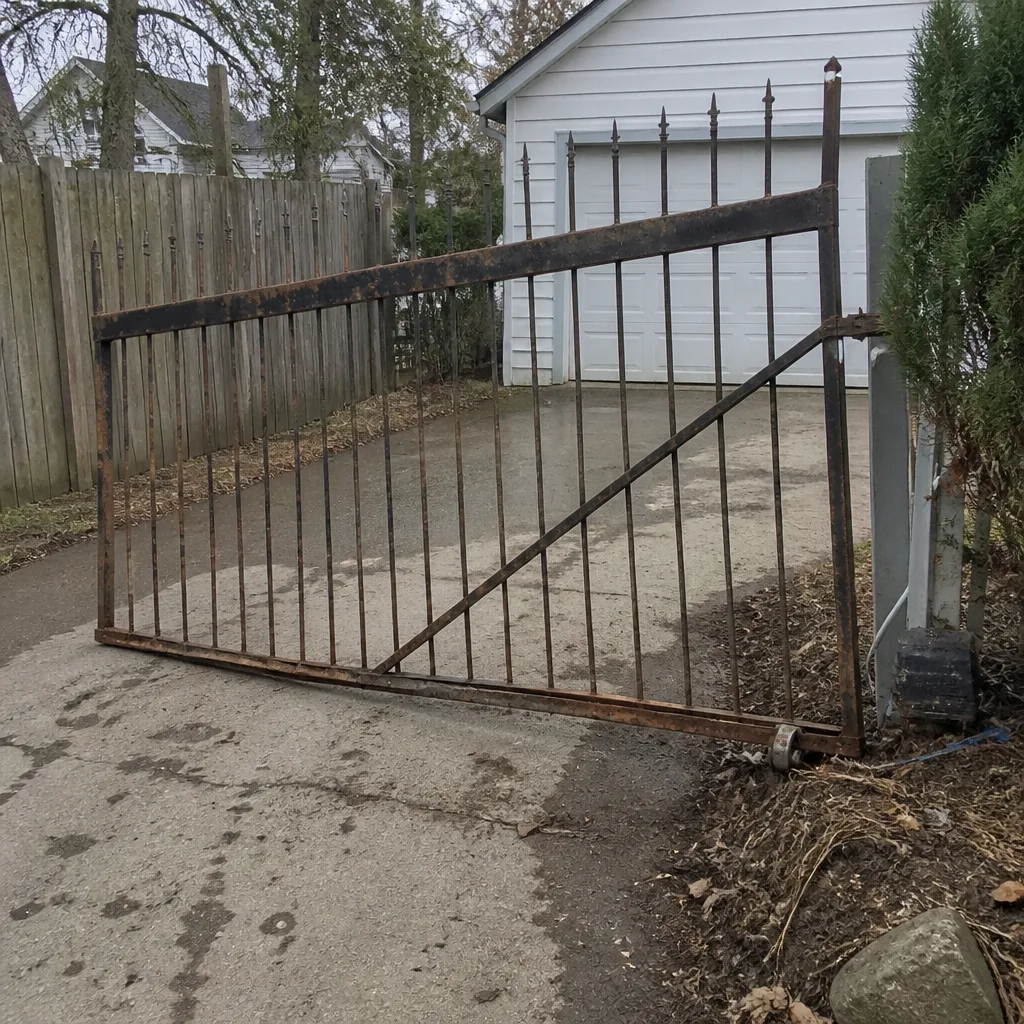 Before
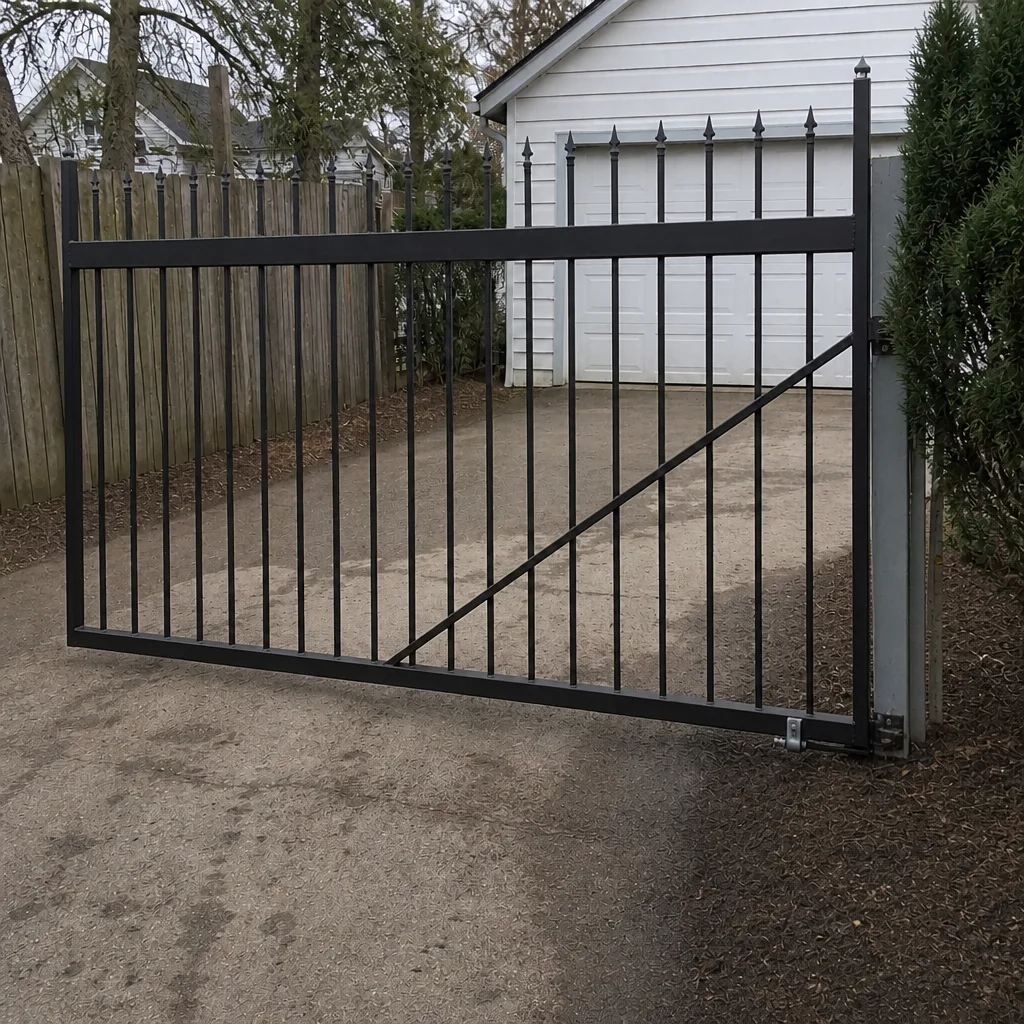 After
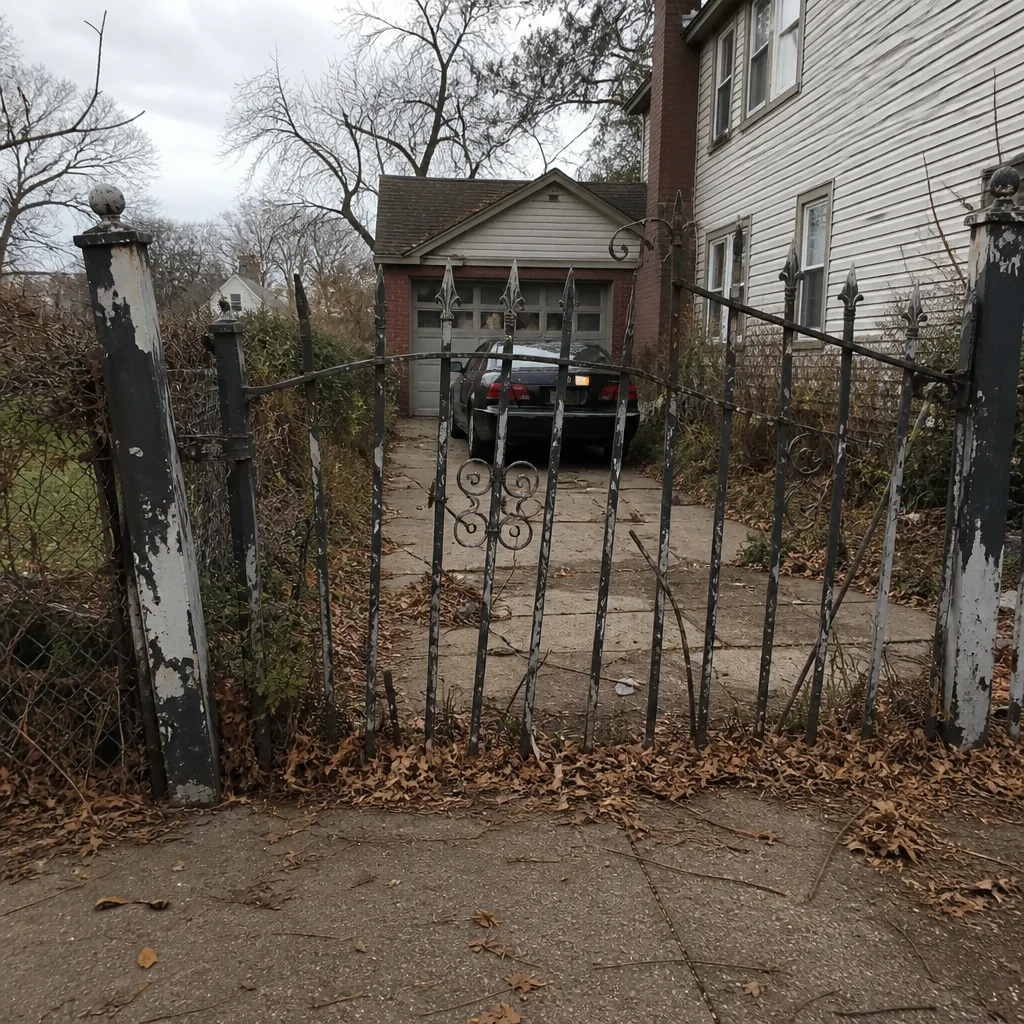 Before
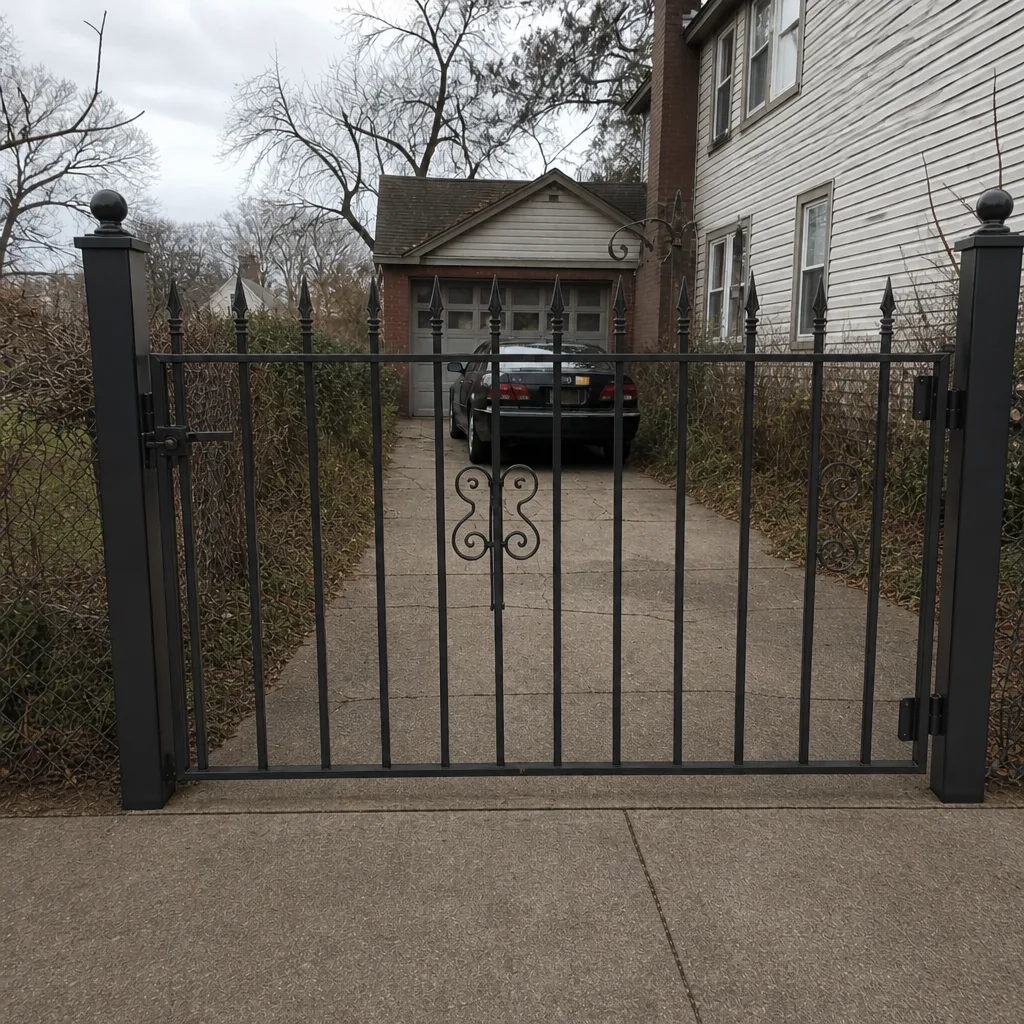 After
When to Call a Professional
Call a professional when the gate shows a safety-related symptom, not just a nuisance one. A gate that reverses unpredictably, a photo-eye or safety edge that doesn’t respond, a gate that drags or stalls mid-travel, an operator that trips a fault repeatedly, a control board that shows corrosion or repeated faults, or a post that has visibly moved or cracked around the footing: these are the cases where a trained technician should be involved. Working on the power side and on heavy, moving panels has real risk of injury, so stay clear of any wiring and out of the gate’s moving path while it’s operating. For anything beyond routine checks like clearing debris and cleaning lenses, it’s worth a professional diagnosis, because the cost of getting it wrong goes well beyond the repair. Rochester Gate Repair offers free estimates in Rochester, whether the gate needs electric gate repair, a mechanical fix, or a professional’s verdict on what season’s damage is behind the symptom. Call (866) 942-8010. We answer 24/7. Fast dispatch from 7am to 7pm, Sunday through Friday.
Frequently Asked Questions
Twice a year is the practical minimum here: once in the fall before the first hard freeze and once in the spring after the ground settles. Fall work is about battery load testing, limit verification, and photo-eye alignment; spring work is about post plumb, hinges, and track condition after winter heave. A summer visual check on the control enclosure and wiring is a useful third checkpoint given the humidity.
Freeze-thaw movement and worn hinge pins top the list, followed by weak backup batteries discovered in the cold and control-board faults from summer condensation. Posts and footings that have heaved also cause gate misalignment and limit-switch drift. Leaf debris in tracks causes drag and false photo-eye trips in fall and early winter.
Cold thickens grease and hydraulic fluid, shrinks clearances, and cuts the available voltage reserve in the backup battery, so the operator works harder just to move the gate. A system already near its limit can stall, throw a fault, or reverse unexpectedly. Testing under load right after the first hard freeze is the way to catch it before it strands you.
You can inspect it, but the fluid and seal check should be done by a technician, because a weeping fitting or degraded fluid leads to pump failure. A hydraulic operator also needs its own pre-winter check on hoses and fittings, separate from the electrical checks on the board. If you’re unsure what your operator needs, a free estimate will clarify it. Call (866) 942-8010 – estimates are free.
Check the posts for plumb, look for cracks or voids around each footing, and inspect the track and hinges for heave and drag. March 15 to April 30 is the window in Rochester when that frost damage is visible, so this is the best time for the spring inspection. Catch it early and the repair is usually simpler.
Yes. A residential operator like Ghost Controls or Mighty Mule has its own battery backup and photo-eye setup to test in fall, while a commercial system like FAAC, BFT, or DoorKing may have separate loop and safety-edge checks. That’s why we work with your specific brand rather than guessing. If you’re not sure what you have, call (866) 942-8010. We answer 24/7.
The Bottom Line
Rochester’s gates fail on a seasonal rhythm, and the fixes are cheapest when they happen in the quiet window before the stress, not after. Test the operator under load after the first hard freeze, inspect posts and footings between mid-March and late April, watch the control enclosure for condensation through the humid summer, and load-test the battery and align the photo-eyes before leaf season. Keep a dated log with the operator brand and the symptoms. If your gate is a FAAC, BFT, Linear, Viking, or any of the nine brands we work on, knowing the system is the difference between diagnosing it right and guessing. Gate repair, electric gate repair, and new installation are the only things we do, which is why we can tell you whether repair or replacement makes sense for your gate.
Call (866) 942-8010 for a free estimate. We answer 24/7. Fast dispatch from 7am to 7pm, Sunday through Friday.
Written by the team at Rochester Gate Repair.