
Last updated November 14, 2026
 Wrought iron
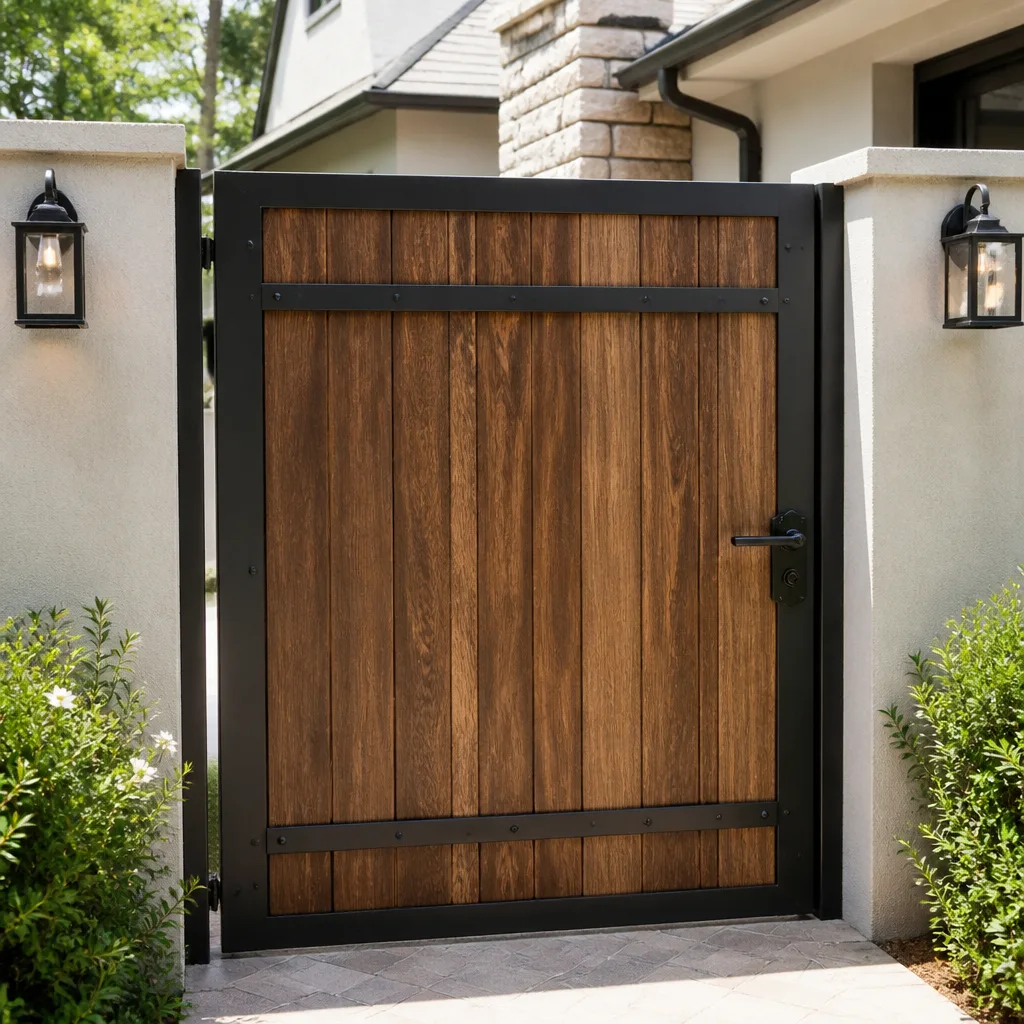 Wood & steel frame
 Farm & ranch
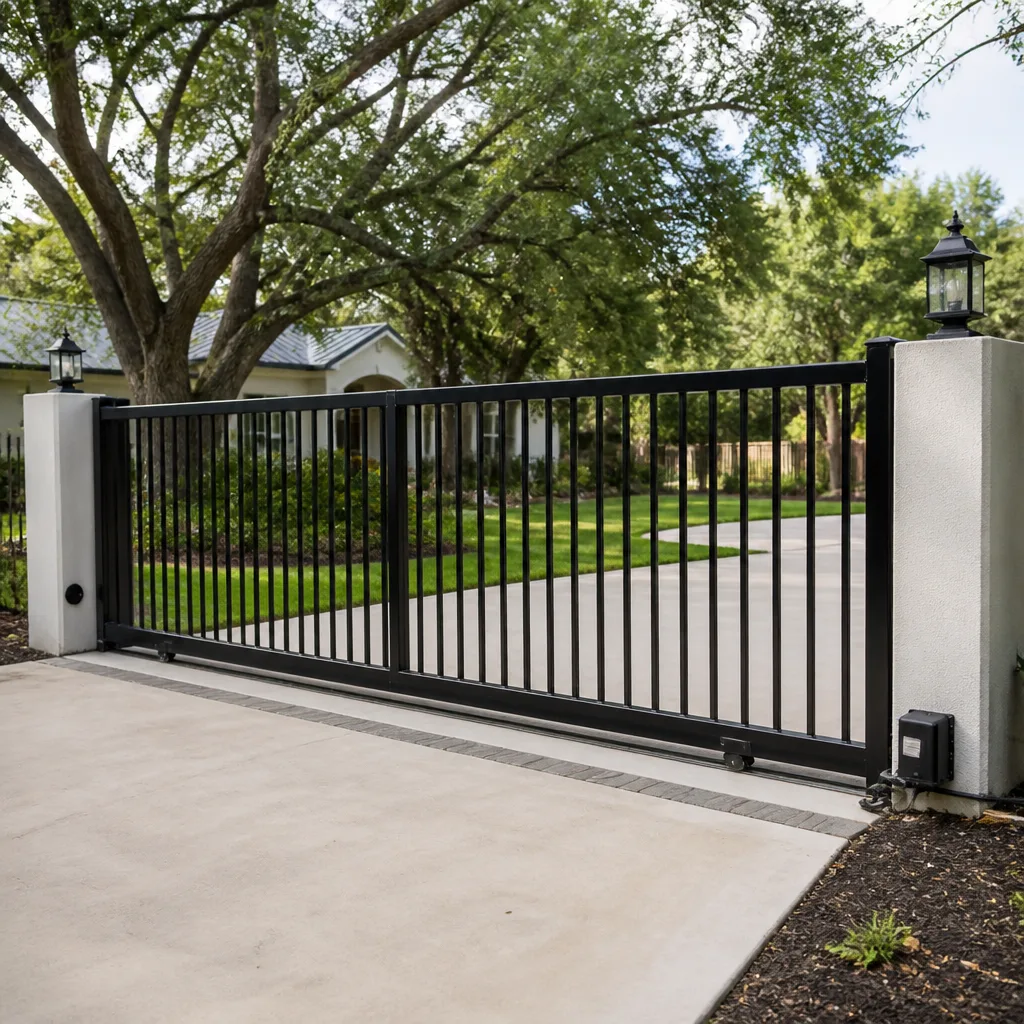 Sliding driveway gates
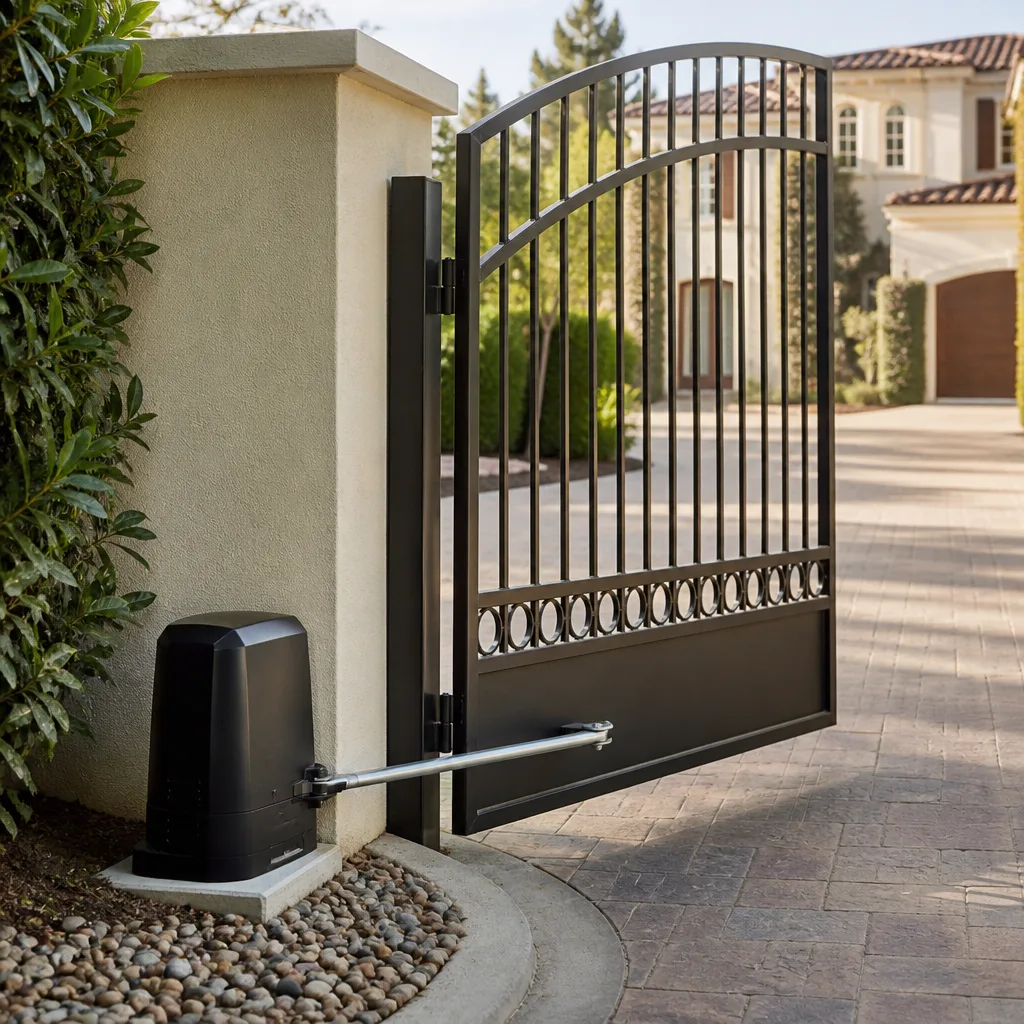 LiftMaster operators
Free on-site gate assessment - hinges, posts, and your LiftMaster or Nice gate operator checked before anything is quoted
The assessment is free and the quote is the invoice.
Get your free estimateGate Repair Maintenance Checklist for Rochester Homeowners
If your maintenance checklist doesn’t mention checking your gate post footings in late March, after the ground has fully thawed, you’re missing the single inspection that prevents the most expensive structural repairs Rochester gate specialists see every spring. Most checklists floating around online were written for warm, dry climates where the ground never freezes and road crews never lay down salt. Rochester is not that place. Our gates fight frost heave, brine spray, and a freeze-thaw cycle that works hardware loose year after year. This guide is built around our actual climate calendar: what to check in March, what to load-test in November, and what to leave to a trained technician.
Quick Answer
A gate maintenance checklist for Rochester should follow the local season rather than a generic schedule: inspect post footings and hardware after the spring thaw, treat electrical connections and hinges before the humid summer, lubricate with salt-resistant products, and load-test the battery backup in November before the first hard freeze. Most of this can be done by a homeowner with eyes and a marker. Anything involving the operator’s wiring, the control board, or a post that has shifted more than a fraction of an inch belongs with a gate specialist.
Styles & brands we work with
- Wrought iron
- Wood & steel frame
- Farm & ranch
- Sliding driveway gates
- LiftMaster operators
Table of Contents
- Why the Post-Thaw Footing Inspection Comes First
- Salt-Specific Lubrication for Rochester Gates
- Measuring Hinge Wear Without Tools
- The Three Electrical Connections That Corrode First
- November Battery Backup Load Testing
- Operator Checks From the Keypad to the Motor
- The Rochester Gate Maintenance Calendar
- Repair or Replace: How to Tell Which Makes Sense
Why the Post-Thaw Footing Inspection Comes First
The most important inspection on any Rochester gate happens once a year, in late March or early April, after the frost has left the ground. Gate posts are set in footings that are supposed to hold them plumb for years. Our soil freezes deeply in winter, and when it thaws, water drains away and the soil settles. A post that was perfect in October can be leaning slightly by April. Left alone, a leaning post puts uneven load on hinges, on the operator, and on the gate frame itself. Correcting a footing is one job. Replacing a twisted gate frame and an overworked operator is several.
Here’s what to actually look for:
- A visible gap between the post and the surrounding soil. After the thaw, soil settles away from the post. A ring of loose, cracked ground around the base is the first sign the footing has moved.
- Plumb check by eye. Stand at the end of the gate, sight down the post, and look for a lean. Compare it to a fence post you know is straight.
- Gate swing or slide alignment. Does the gate still close smoothly, or does it drag, rub, or need a nudge? A gate that suddenly latches differently after winter is telling you the post has shifted.
- Loose anchor bolts on a surface-mounted post. On flange-mounted posts, check that the bolts are tight. If the plate is sitting proud of the concrete, the footing is lifting.
How much movement is acceptable? A post that is visually plumb and holding the gate in alignment is fine. That’s the standard. If the post has leaned enough that you can see it by eye, that the gate no longer aligns with its strike or catch, or that the operator is working harder at one end of its travel, it needs to be looked at by someone who sets footings to proper depth. Don’t try to shim or re-anchor a leaning post on your own. The gate panels on a residential swing gate are heavy and can crush a hand or worse if a post gives while you’re leaning on it.
Salt-Specific Lubrication for Rochester Gates
Rochester roads get salted through the winter, and the spray reaches every gate near a driveway or street. Salt brine is not just a cosmetic problem. It migrates into hinge pins, slide tracks, rollers, and latches, and it holds moisture against metal. Many common household lubricants actually fail in this environment. Thin oils and silicone sprays wash off with the first rain and leave the pin dry. Products that dry to a wax film can trap brine underneath, which is worse than no lubricant at all. White lithium grease works for some applications but hardens in cold weather and picks up grit.
What works in Rochester:
- A salt-resistant, water-displacing penetrating lubricant for hinge pins and latch mechanisms. Apply it, work the hinge through its full swing a few times, then wipe off the excess so it doesn’t attract grit.
- A heavier marine-grade or lithium-complex grease on roller tracks and gate wheels on slide gates, where the load is heavy and a light film won’t hold.
- A dry-film PTFE or graphite lubricant on exposed chains and linkages, where grease would collect salt and dirt into a paste.
- Nothing on the operator’s internal mechanisms. The gearbox and motor are sealed for a reason. Adding lubricant to a sealed operator shortens its life.
Wipe and relubricate hinges and rollers in late fall, before the first salt applications, and again after the last road treatment in spring. Between those points, a quick monthly wipe-down with a damp cloth removes salt residue before it sets. If your gate has an electric gate repair concern you’ve been putting off, the same inspection visit is a good time to raise it.
Measuring Hinge Wear Without Tools
Hinges wear slowly, and by the time you notice a sag, the gate has been loading the operator unevenly for months. There’s a field method that requires nothing but a marker and a straightedge, and it takes about five minutes on a swing gate with two hinges.
- Close the gate and let it rest in the closed position.
- Hold a straightedge vertically against the hinge edge of the gate, running past both hinges.
- Mark the gate at the top and bottom of the straightedge with the marker so you can find the same spot next season.
- Look for a gap between the straightedge and the gate at each hinge. Any gap means the gate edge is no longer straight, which usually means the top hinge has elongated or the bottom hinge is dropping.
- Repeat next spring. Compare the marks. A gap that has grown by a quarter inch in a year is a hinge that’s failing.
On a slide gate, watch the gate wheels instead. Roll the gate through its full travel by hand and feel for any point where it lifts or grinds. A wheel that has worn flat will show as a slight rise and drop every revolution. That’s a wheel replacement, and doing it early protects the track.
Loose hinges are usually a bolt-tightening job with the right hardware, but a hinge that has pulled out of the gate frame or the post is a structural issue. Overloaded hinges on a heavy gate are a real crushing risk if a weld or bolt lets go while someone is working under the gate. If you feel any real movement in the hinge itself, stop and call a specialist.
The Three Electrical Connections That Corrode First
Rochester’s humid summers do a specific kind of damage to gate operators. Moisture from the air, combined with the salt residue that stays on hardware year-round, attacks exposed electrical connections. On almost any automated gate, three connections corrode before anything else:
- The battery terminals inside the operator housing. Even a sealed enclosure breathes. Battery terminals build a white crust that blocks current and makes the battery look dead when it isn’t.
- The connection to the safety edge or photo-eye. These are usually low-voltage and exposed at the gate. Corrosion here makes the operator behave as if the safety edge is tripped, so the gate won’t close.
- The main power connection at the transformer or control box. This is usually the hottest, most exposed connection, and the one most likely to work loose as well as corrode.
An inspection here means look, don’t touch. Look for green or white crust on terminals, for discolored wire insulation, and for any connection that feels loose or looks melted. Treating those connections proactively means cleaning the battery terminals with a terminal brush and applying a battery terminal protector, checking that the photo-eye and safety-edge wiring is seated fully and dry inside its housing, and confirming the control box seal is intact. Anything involving the 120-volt side of the system is not a homeowner job. The power has to be off at the breaker, the operator has to be de-energized, and a trained technician should do that work. Our gate repair team can check every connection on a visit and tell you what’s aging out early.
November Battery Backup Load Testing
A battery backup that passes a summer test will often fail its first real demand in a Rochester winter. Here’s why. Lead-acid batteries in a gate operator lose capacity as they age, but the loss is invisible in warm weather when they’re only lightly used. A cold-morning power outage in January is the first time the battery has to perform at full load in low temperature, and cold reduces battery capacity significantly. A battery that shows a green light in August can be flat by December.
The November check is a load test, not a status-light check. On most operators, that means:
- Confirm the operator is in battery-backup mode and that the battery is fully charged.
- Open the gate manually to release any stored load, then trigger the operator to run the gate on battery alone.
- Watch the operator cycle the gate fully open and fully closed on battery power, without the main supply connected.
- If the gate slows noticeably, stops short, or the operator beeps a low-battery warning, the battery is due for replacement before winter.
Replacement is a job for a technician on most operators, because the battery sits inside the housing next to the control board and wiring. If your model uses a LiftMaster or Linear operator, the battery part number matters, and a wrong battery can damage the charging circuit. Book the load test into your fall schedule, not the first cold week of December.
Operator Checks From the Keypad to the Motor
Automated gates have a chain of components, and the failure usually starts at the weakest link. A monthly five-minute check of the whole chain catches most of them before they cost you a day without access.
- Keypad and entry devices. Test the keypad, the remote, and any intercom one at a time. A keypad that works intermittently is usually a corroded terminal, not a dead unit.
- Photo-eyes and safety edges. Block the beam or press the edge by hand and confirm the gate reverses. If it doesn’t, stop using the operator until a technician checks it. A gate that won’t reverse on a safety input is a serious hazard.
- Limit switches. Watch the gate open and close. It should stop at the same position every time. Drifting stops mean the limit switches are wearing or the arm has moved.
- Manual release. Test the manual release on the operator. You should be able to move the gate by hand. If the release is stiff or won’t turn, you’ll have no way to open the gate in a power failure.
- Motor and gearbox sound. Listen for grinding, whining, or a change in pitch. A gearbox that’s getting noisy is asking for service before it fails.
Brand matters here. A technician who works on your brand every week diagnoses by sound and by symptom, not by trial and error. We work on operators from Rochester Gate Repair-familiar names like FAAC, BFT, LiftMaster, and Linear regularly, and that familiarity is what gets a gate back to working on the first visit instead of the third. If your system is one we haven’t listed, call and describe it. We’ll tell you honestly whether we’re the right team for it.
The Rochester Gate Maintenance Calendar
Here’s how the checklist maps to a Rochester year. This is built around our climate, not a generic national schedule. Adjust the exact weeks to your site, but keep the sequence.
Late March / Early April
- Post-thaw footing inspection on every gate post.
- Hinge wear check with a marker and straightedge.
- Wipe down salt residue from hardware, tracks, and rollers.
- Relubricate hinges and rollers with a salt-resistant product.
May / June
- Clean the operator’s enclosure and confirm the seal is intact before humid weather sets in.
- Inspect the three corroded connections: battery terminals, safety-edge wiring, and main power connection.
- Test every entry device and the safety reverse.
September
- Full operator cycle and limit-switch check.
- Update the hinge marks and compare to spring.
November
- Battery backup load test.
- Pre-winter lubrication with a heavier grade for cold weather.
- Test the manual release.
- Confirm the operator will be ready for its first cold-weather cycle.
Between the scheduled checks, a quick monthly look at the gate’s alignment and a listen to the operator will catch most problems early. The rest of the year, if something seems off, that’s the moment to call. A gate that’s just starting to hesitate is a repair. A gate that’s been hesitating for two months is often a repair plus a replacement part that could have been saved.
Repair or Replace: How to Tell Which Makes Sense
Every gate reaches a point where repair stops making financial sense. In Rochester, that point usually comes after a footing failure, a motor failure on an aged operator, or a series of small repairs across several seasons. A few signs that replacement deserves a conversation:
- The post has failed and the gate frame is out of square. Replacing the footing on a bent frame is one repair; keeping the bent frame is a false economy.
- The control board has failed on an older operator and the replacement board is no longer available. Older systems sometimes can’t be repaired, and a new operator is the practical answer.
- The gate has had three or more repairs in the last two years. That’s a signal the system is aging out as a whole.
- You’ve outgrown the gate. If your household needs automatic operation, video entry, or intercom access, the existing operator may not support an upgrade.
A good specialist will tell you honestly which path makes sense. Repair if the part is available and the rest of the system is sound. Replace if the repair will be outrun by the next failure. We handle both – diagnostics and repair on existing systems, and full new installation when replacement is the right call. There’s more on the Rochester service page about how visits are scheduled and what to expect.
Common Mistakes to Avoid
- Waiting until the gate fails to check the footings. The footing inspection is a five-minute check that saves a repair costing several times as much. Doing it in late March, after the thaw, catches movement before it damages the frame.
- Using the wrong lubricant on a salt-exposed gate. Thin oils wash off. Wax films trap brine. In Rochester, the salt load is high enough that a lubricant picked for a dry climate will fail by February.
- Skipping the November battery test. A battery that shows green in summer is not the same battery that will run the gate in a January power outage. Load-test in November, not December.
- Shimming a leaning post. Shims under a footing hide the problem and make the next failure worse. A post that has moved measurably needs the footing redone to proper depth.
- Ignoring a change in the way the gate closes. If the gate used to latch cleanly and now needs a nudge, something has moved. That’s the first sign that alignment, hinge, or footing work is needed.
- Poking at the operator’s wiring without powering down. The 120-volt side of a gate operator can hurt you badly. Anything inside the control box, or any live-wire connection, is a technician’s job.
- Using any general handyman for an automated gate. Gate operators are a specific trade with specific failure modes on specific brands. A generalist will guess. A gate specialist will diagnose system by system.
See the difference
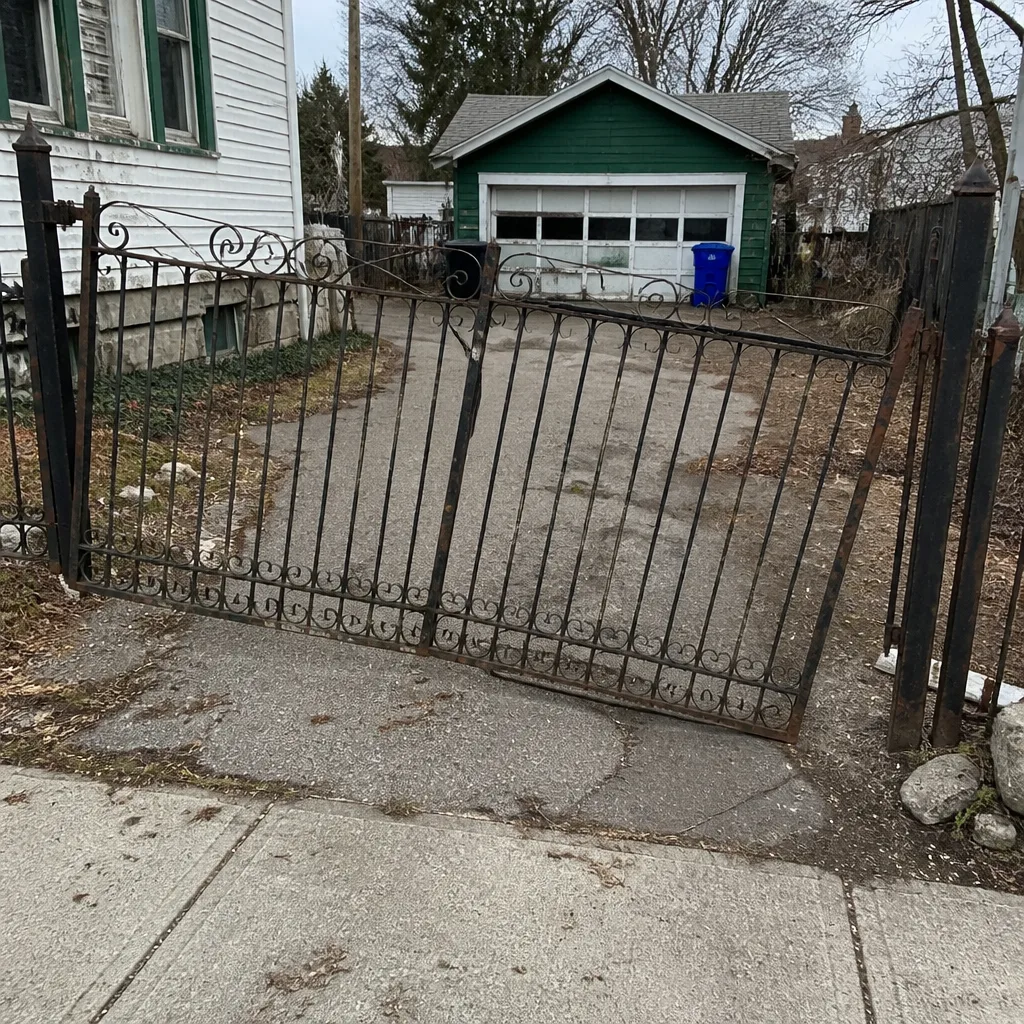 Before
 After
 Before
 After
 Before
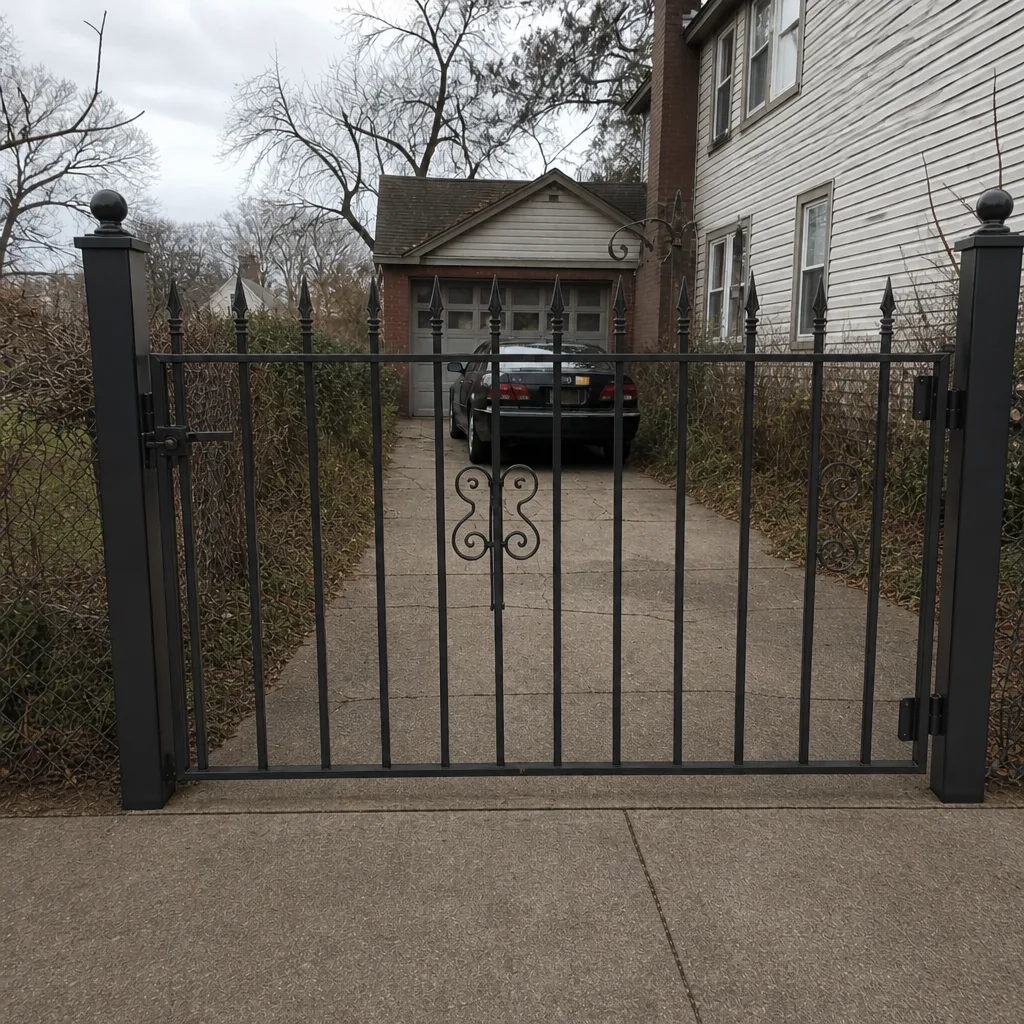 After
When to Call a Professional
Some things on this checklist are homeowner work: a visual footing check, a hinge measurement, a wipe-down. Others are not. Call a gate specialist if the gate has visibly moved out of alignment since last season, if the operator is failing its reverse test on the safety edge, if the control board or any 120-volt connection is suspect, if the battery won’t hold a charge for a full cycle, or if the manual release is stuck. If you hear grinding from the motor or the gate stalls partway through a cycle, stop using it and call. We answer 24/7, and we send a fast dispatch from 7am to 7pm, Sunday through Friday. Rochester Gate Repair offers free estimates in Rochester – call (866) 942-8010. The price is quoted and agreed before any work starts, so you know the repair cost before we touch the gate.
Frequently Asked Questions
Twice a year for a full inspection, with a light monthly check in between. In Rochester, the two key visits are the post-thaw inspection in late March and the pre-winter battery and lubrication check in November. Monthly checks are your own visual spot-check on alignment, hinge wear, and operator sound. Call (866) 942-8010 for a free estimate if you want a technician to run the full checklist on your gate.
A post that is visually plumb and holding the gate in alignment is fine. If you can see a lean by eye, if the gate no longer latches cleanly, or if the operator is working harder at one end of its travel, the footing has moved and needs assessment. Shimming a moving post doesn’t fix the footing and usually makes it worse. Call (866) 942-8010 and we’ll look at it.
A water-displacing penetrating lubricant for hinge pins and latches, a heavier marine-grade or lithium-complex grease for slide-gate roller tracks and wheels, and a dry-film PTFE or graphite lubricant for chains and linkages. Thin oils and wax-film products fail in salt-brine conditions. Never add lubricant to a sealed operator gearbox. Call (866) 942-8010 if you want to know the right product for your specific gate.
Because cold cuts battery capacity, and a summer status-light test doesn’t simulate the cold-weather load. A battery that shows green in August can be flat by the first cold January outage. The fix is a November load test: run the gate fully open and closed on battery power with the main supply off. If it slows, stops, or beeps, replace it before winter. Call (866) 942-8010 to book a battery check.
You can visually check for corrosion on the battery terminals and safety-edge connections, and confirm the housing seal is intact. You should not open the control box or work near the 120-volt side without powering the operator down at the breaker – that’s a technician’s job. Gate operators carry enough current to injure. Call (866) 942-8010 for the wiring check.
Likely yes. We work on nine major brands in daily rotation, including LiftMaster, FAAC, BFT, Linear, Viking, Ghost Controls, DoorKing, Elite, and Mighty Mule, across residential and commercial systems. Brand familiarity matters – a technician who knows your operator diagnoses by symptom, not by guesswork. Call (866) 942-8010 and describe your system, and we’ll tell you straight whether we’re the right fit.
The Bottom Line
The right gate maintenance checklist for Rochester is built around our seasons, not a generic template. Post-thaw footing checks in late March catch the most expensive failures before they compound. Salt-resistant lubrication keeps hinges and tracks moving through the salt season. A November battery load test is the only thing that tells you if your backup will actually run the gate in January. Everything else on the list – hinge measurements, electrical inspections, operator testing – is scheduled around these four points. If you’d rather hand the checklist to a specialist who does this every day, call us. The repair you avoid is always cheaper than the one you didn’t see coming.
Call (866) 942-8010 for a free estimate. We answer 24/7 with fast dispatch from 7am to 7pm, Sunday through Friday. Our technicians have up to 10 years of experience, and repair or replace, we’ll tell you which one makes sense for your gate.
Written by the team at Rochester Gate Repair.