
Last updated November 14, 2026
 Wrought iron
 Wood & steel frame
 Farm & ranch
 Sliding driveway gates
 LiftMaster operators
Free on-site gate assessment - hinges, posts, and your LiftMaster or Nice gate operator checked before anything is quoted
The assessment is free and the quote is the invoice.
Get your free estimateDIY vs Professional Gate Repair: The Rochester Homeowner’s Decision Guide
Replacing a gate hinge yourself is a legitimate DIY repair. Reprogramming a gate operator’s limit switches yourself, when the previous settings are unknown, is a legitimate way to create a gate that closes on a car. The difference isn’t skill level. It’s knowing which category the repair falls into before you pick up a tool. Most guides on this topic hand you a single verdict, “call a pro” or “give it a shot,” and skip the part that actually matters: sorting the repair by risk. This guide draws those lines precisely for Rochester homeowners, so you can make the call intelligently instead of defaulting to either extreme. You’ll learn which fixes are genuinely yours to make, which need caution and research, and which belong to a trained technician.
Quick Answer
Mechanical repairs on a manual gate, like swapping rollers, cotter pins, or a worn hinge, are reasonable DIY territory for a careful homeowner. Anything touching the gate operator’s electrical system, the 120-volt power feed, or the safety sensors is professional-only work, and in New York that includes liability considerations that go beyond skill. The gray middle, things like track alignment, latch adjustment, and post movement, is where research matters most: get the diagnosis right and the repair is often quick, get it wrong and a small problem turns into a structural one.
Styles & brands we work with
- Wrought iron
- Wood & steel frame
- Farm & ranch
- Sliding driveway gates
- LiftMaster operators
Table of Contents
- The Three-Category Framework: Sort the Repair First
- Confidently DIY-Able Repairs on a Rochester Gate
- Requires Caution and Research: The Gray Zone
- Why Electric Gate Operator Work Is a Liability Issue in New York
- The Parts That Are Genuinely Homeowner-Replaceable
- How a Failed DIY Attempt Changes the Professional Repair
- Intermittent Electrical Faults: When DIY Costs More
- Common Mistakes to Avoid
- When to Call a Professional
The Three-Category Framework: Sort the Repair First
Before you research a single part number, sort the repair into one of three risk categories. This single step prevents most of the expensive mistakes we see on gates around Rochester. The categories aren’t about how hard the job looks. They’re about what happens if you get it wrong.
- Confidently DIY-able. Low-voltage or no-voltage mechanical parts with no stored energy and a failure mode that’s annoying but not dangerous. A sticking roller, a loose hinge pin, a rattling latch. If the worst outcome is a gate that still opens by hand but squeaks, you’re in this category.
- Requires caution and research. Repairs where a failure mid-job could drop a heavy panel, pull a slide gate off its track, or leave the gate in a state that’s harder to diagnose. Track alignment, post movement, operator arm geometry, and limit switch adjustment live here. The work is doable but the sequence matters, and the wrong sequence can cause injury or a bigger repair.
- Professional-only. Anything connected to line voltage, the operator’s control board, the safety edges or photo-eye sensors, and the motor itself. A gate panel can crush. Operator wiring can shock. A misadjusted safety sensor can let a gate close on a person or a vehicle. These are not skill judgments. They’re hard limits.
The rest of this guide drills into each category with the specifics that apply to gates in Rochester’s housing stock, from older manual swing gates on city lots to automated systems on suburban properties and HOA entrances.
Confidently DIY-Able Repairs on a Rochester Gate
These are the repairs a careful homeowner with basic tools can make without special training. They’re all mechanical, they involve no stored energy, and they can be done with the gate secured in an open or fixed position and the operator powered down.
- Replacing a worn roller. On a slide gate, a seized or chipped roller makes the gate drag and jump. Unbolt the old roller, match the size and load rating, and bolt the new one on with the gate propped so the weight is off the wheel.
- Swapping cotter pins and clevis pins. These are the small fasteners that hold linkage together. If one is rusty or missing, replacing it is a five-minute job and prevents the linkage from working loose.
- Replacing a standard hinge. On a swing gate, a sagging hinge or a hinge with a broken pin can be swapped out with the gate supported on blocks. Match the hinge style to the gate’s weight and swing direction.
- Cleaning and lubricating moving parts. Rusted pivot points cause most of the “my gate is stiff” complaints we hear. A solvent and a proper gate-rated lubricant on hinges, rollers, and latches resolves a surprising number of them.
- Tightening visible fasteners. Bolts that hold brackets, hinges, and guides can loosen over a Rochester winter. A torque check is free and prevents wobble from becoming a structural failure.
- Clearing debris from the track. On a slide gate, a track full of grit, leaves, or ice-melt residue makes the gate bind. Clearing it and inspecting for bent sections is basic upkeep.
The rule of thumb: if the part is mechanical, has no wires attached, and the gate can be safely supported while you work, the repair is likely yours to make. If you’re unsure whether a part is structural, that uncertainty itself is the signal to move up to the next category.
Requires Caution and Research: The Gray Zone
These are repairs a mechanically confident homeowner can tackle, but only after understanding the failure and the sequence. The work involves heavy parts, alignment geometry, or settings that interact with the operator. Get them right and the fix is fast. Get them wrong and the gate can go from “works with a grind” to “won’t move at all.”
Track alignment on a slide gate
A gate that drifts or rubs on one side usually has a track or guide issue, not a roller issue. Before you replace rollers, check whether the track is straight, level, and clear. A bent track section can be straightened or replaced, but replacing it requires loosening the anchors and re-leveling, which is a two-person job on a heavy gate panel.
Post movement on a swing gate
A swing gate that sags or drags usually points to a hinge post that has shifted, not a hinge that’s worn out. Posts move because of soil movement, frost heave cycles, or a footing that was never deep enough. Replacing the hinge is easy; fixing a settled post means digging, re-setting the post to proper footing depth, and re-hanging the gate, which is well past most DIY comfort zones.
Limit switch adjustment on an operator
This is the classic “in-between” repair that worries us most. Limit switches tell the operator where to stop. If you adjust them by trial and error without knowing the current travel envelope, you can create a gate that stops short, over-travels, or reverses unpredictably. On a residential operator like a LiftMaster or Linear, the settings are documented and recoverable. On an older system where the previous settings are unknown, this adjustment belongs to a technician.
Operator arm geometry
If you’re replacing an actuator arm on a swing gate, the mounting geometry controls how the gate travels. A wrong angle creates strain on the motor, uneven speed, and premature wear. Measure the mounting points before you remove the old arm, and photograph everything.
In our experience, the gray-zone repairs are where a Rochester homeowner’s confidence most often outruns the information they have. The fix is research first: identify the exact failure, understand the sequence, and only then start.
Why Electric Gate Operator Work Is a Liability Issue in New York
An electric gate operator is a piece of automated equipment that can crush, pinch, or trap. That’s why the manufacturer’s installation and safety standards for automated gates exist, and why local inspectors and insurers take them seriously. When an unqualified person works on the operator’s electrical system, the exposure isn’t just “did I get it right” – it’s “who is responsible if the gate injures someone later.”
The parts of an automated gate that fall under this rule:
- Line-voltage wiring. The 120-volt feed to the operator, the disconnect, and any conduit runs. This is licensed-electrician territory in most jurisdictions. A homeowner working on this is putting themselves at shock risk and, in many cases, running afoul of local electrical code.
- Control board work. The board is low voltage, but a short or a miswired accessory can burn out the board or, worse, defeat a safety input. Board-level work on a FAAC or BFT commercial-grade controller is not a homeowner repair.
- Safety edges and photo-eye sensors. These are the parts that stop the gate from hitting a person, a pet, a car, or a package delivery. A misaligned or bypassed sensor is not a minor malfunction – it removes the gate’s primary safety. Sensor work belongs to a technician, full stop.
- Motor and gearbox service. Replacing a motor isn’t complicated in principle, but the sequence, the load handling, and the post-replacement safety test all need to be right.
The safety point is simple: an automated gate is a machine that moves thousands of pounds on command. The wiring and sensors that control it aren’t a place to save on a service call. If you’re not sure whether a repair crosses into this category, assume it does. Our electric gate repair work exists because these jobs need a technician who knows the system, not a generalist.
The Parts That Are Genuinely Homeowner-Replaceable
Here’s what a careful homeowner can replace without special tools or training. These parts share three traits: no stored energy, no connection to the operator’s electrical system, and a failure mode that leaves the gate in a safe state. Match the specification to your gate before you buy – a replacement roller rated for a lighter panel will fail early, and a hinge sized for a thinner gate will sag.
- Rollers. On a slide gate, match the wheel diameter, axle size, and load rating. Bring the old roller to the supplier if you’re unsure. Inspect the axle for wear at the same time.
- Cotter pins and clevis pins. Standard hardware. Match the pin diameter and length. Replace any that are bent, rusty, or missing rather than reusing them.
- Hinges. Replace like-for-like. Match the hinge’s gauge thickness and swing direction. If the gate has developed sag, fix the post first – a new hinge on a settled post won’t fix the sag.
- Latches and catches. Mechanical latches on a manual gate are straightforward swaps. Note the gap and the strike alignment before you remove the old one.
- Guide posts and rollers on a slide gate. The small rollers or posts that keep the gate tracking in line can be replaced individually. Match the size and regrease after installation.
- Visible fasteners. Bolts, screws, and brackets holding non-structural components are maintenance items, not scope creep. Check them as part of routine upkeep.
What’s not on this list: motor brushes, control boards, encoder modules, receiver units, safety sensors, and any wiring. Those parts connect to the operator’s control system and interact with the gate’s safety behavior. We work on the brands you’re most likely to have – LiftMaster openers on residential driveways, FAAC and BFT controllers on HOA and commercial entrances, and Linear equipment on a range of residential installations. Parts availability for those brands is generally good, but the installation sequence matters more than the part.
How a Failed DIY Attempt Changes the Professional Repair
A wrong repair doesn’t always stay wrong – a technician can usually fix it. But an incorrect intervention raises the cost and time of the repair that follows. Here’s how.
Unknown settings become unknown states
When an operator is set up correctly and then a homeowner adjusts the limit switches or travel settings without recording the originals, a technician arrives to a gate whose current settings are unknown. The original envelope has to be re-created from scratch, which means more diagnostic time and more test cycles. Photograph every adjustment before you touch it.
Wrong parts create secondary failures
A roller that’s the wrong load rating can wear quickly and damage the track. A hinge that’s too light for the gate can fatigue and pull out of the post. Each wrong part is a small repair that becomes a bigger one.
Electrical interventions can void warranties
Many operator manufacturers specify that work should be performed by qualified technicians. A documented third-party electrical intervention, especially one that burned out a board or a motor, can complicate any remaining warranty coverage. That’s a cost the homeowner absorbs.
Safety systems get bypassed
When a photo-eye or safety edge stops working, the temptation is to bypass it to get the gate moving again. A technician who arrives to a bypassed safety system has to restore the safety path as part of the repair, and that’s the part you don’t want to live without.
None of this is a reason to avoid the DIY repairs that make sense. It’s a reason to stay in your lane on the parts where a wrong repair has downstream consequences. Our gate repair team has seen every version of a well-intentioned mistake, and a good technician will tell you what changed rather than just what it costs.
Intermittent Electrical Faults: When DIY Costs More
There’s one category where calling a professional is faster and cheaper even for a mechanically confident homeowner: an intermittent electrical fault. The gate works fine for days, then refuses to open on a cold morning, or reverses halfway through a cycle, or trips the operator’s error code and then clears itself. The temptation is to keep adjusting until the problem goes away.
Intermittent faults are the hardest thing to diagnose without a meter, a documented error log, and the diagnostic tools the manufacturer specifies. Here’s the arithmetic. A homeowner spends a weekend adjusting the safety sensors, cleaning the track, and re-teaching the operator, and the fault disappears – because the conditions that triggered it aren’t present at that moment. Then the temperature drops, the gate fails again, and the homeowner has now changed several variables without knowing which one mattered. A technician with a meter traces the fault to a failing photo-eye, a loose connection in the operator’s wiring, or a marginal power supply in a few hours. The cost of that diagnostic visit is lower than the parts and time spent guessing.
The other reason this category matters: an intermittent fault can be a safety problem in disguise. A gate that reverses unpredictably is a gate that can hit something it shouldn’t. If your gate ever behaves differently from one day to the next, stop adjusting and get it diagnosed. Our technicians have up to 10 years of experience tracing faults across LiftMaster, FAAC, BFT, and Linear systems, and a free estimate tells you what the repair actually needs before you commit.
Common Mistakes to Avoid
- Working on the operator without cutting power at the disconnect. Turning the operator off at the remote or the keypad isn’t the same as cutting line power at the disconnect. If the operator is fed from a breaker, shut that breaker off and verify with a meter before touching anything inside the housing.
- Bypassing a safety sensor to “test” the gate. A bypassed photo-eye or safety edge removes the gate’s primary protection. If a sensor is faulty, replace it – never leave it bypassed, even temporarily. This is the single most common dangerous shortcut we see.
- Adjusting limit switches without recording the originals. Photograph the current settings, count the turns, and write down where the gate stopped before you change anything. If you can’t restore the original state, you’ve turned a diagnosis into an unknown.
- Replacing rollers, hinges, or pins with undersized hardware from a general hardware store. Match the load rating and gauge to the gate. A Rochester winter punishes marginal hardware quickly, and a failed part under a heavy gate panel is a real hazard.
- Chasing an intermittent fault by adjusting until it “seems fine.” Intermittent electrical faults don’t go away when the symptom does. If a gate behaves differently day to day, the safe move is a diagnostic, not trial and error.
- Working on a gate without supporting the panel. A swing or slide gate panel can weigh hundreds of pounds and move once a fastener is removed. Block and support the gate before you start any hardware work.
- Assuming a sagging gate is a hinge problem. On many Rochester gates, the hinge is fine and the post has settled. Replacing the hinge won’t fix a post that needs to be re-set. Diagnose before you buy parts.
When to Call a Professional
Call a technician when the repair touches the operator’s electrical system, the control board, the safety edges or photo-eye sensors, the motor, or the line-voltage wiring. Call when the gate panel is heavy enough that supporting it safely isn’t realistic, or when a sag or misalignment points to a post or structural problem rather than a part. Call when the fault is intermittent. And call when you’ve already attempted a repair and the gate isn’t behaving the way it did before – restoring a known state is faster than continuing to experiment.
Rochester Gate Repair offers free estimates in Rochester, and we’ll tell you straight whether a repair or replacement makes sense for your gate. We work the brands you own, from residential openers to commercial access systems, and we diagnose by system rather than by guesswork. Rochester Gate Repair is gate-only: every part, every technician, every diagnostic is oriented around gates. Call (866) 942-8010. We answer 24/7. Fast dispatch from 7am to 7pm, Sunday through Friday.
See the difference
 Before
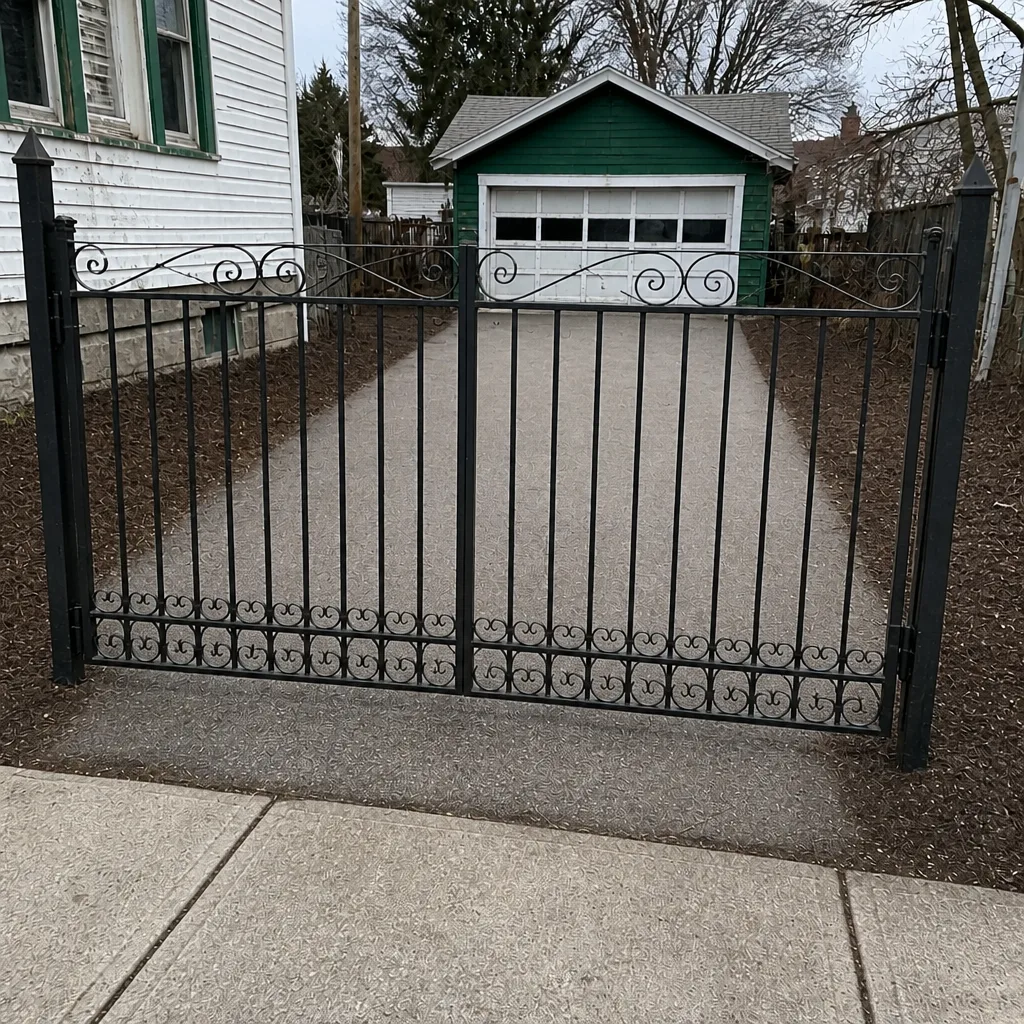 After
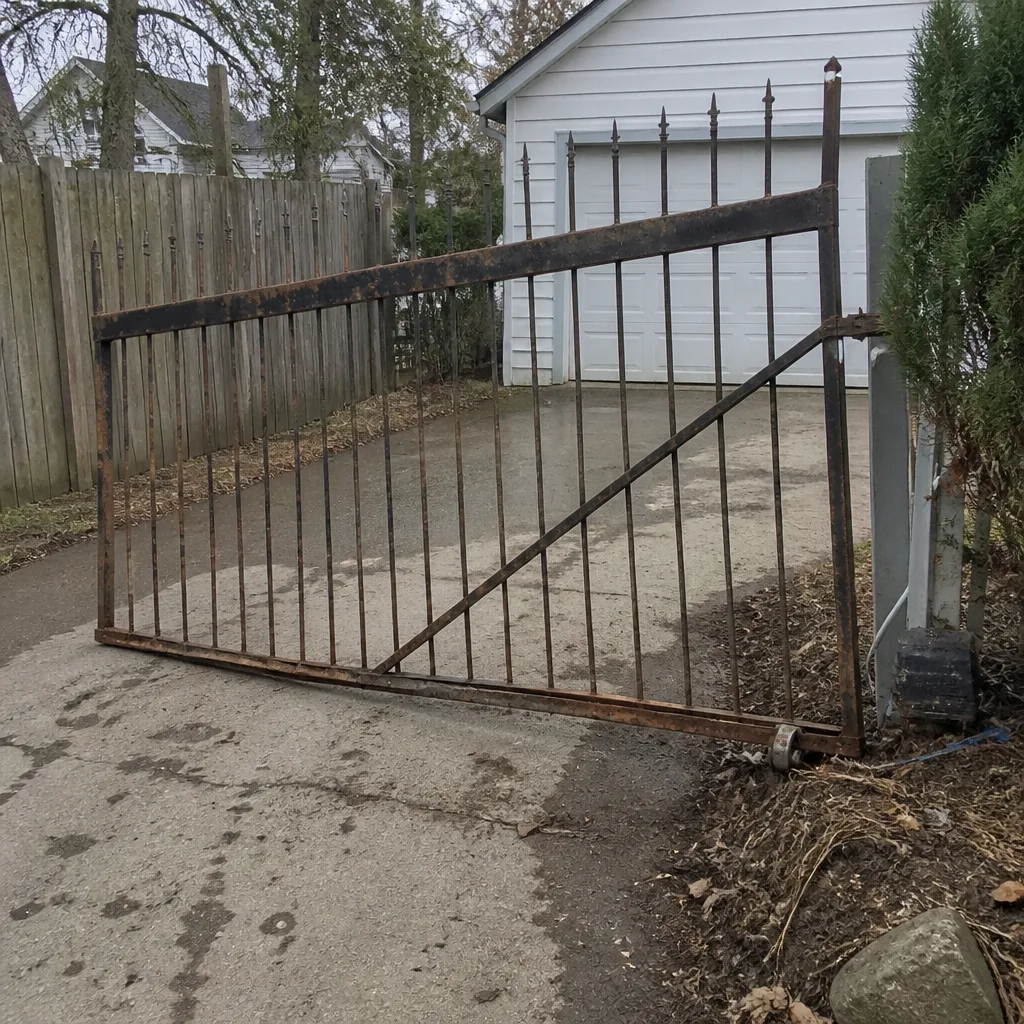 Before
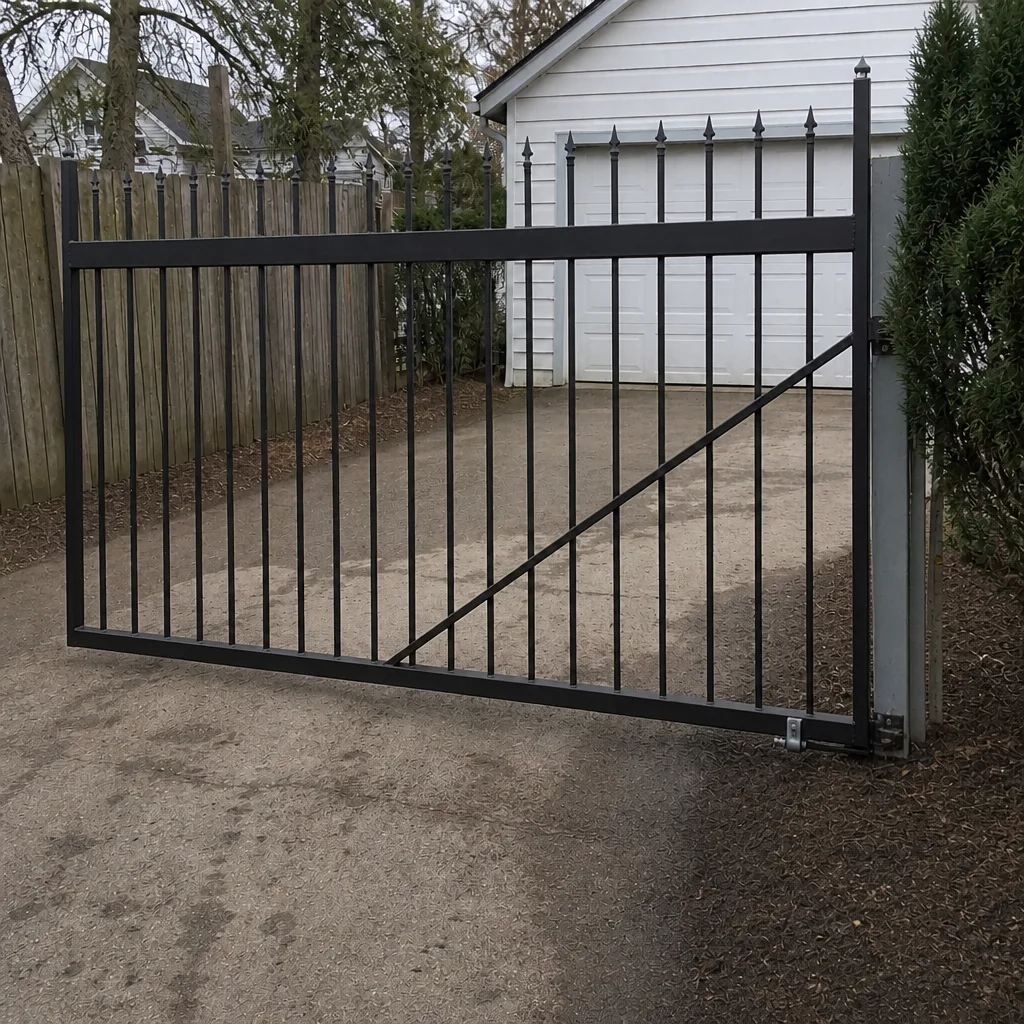 After
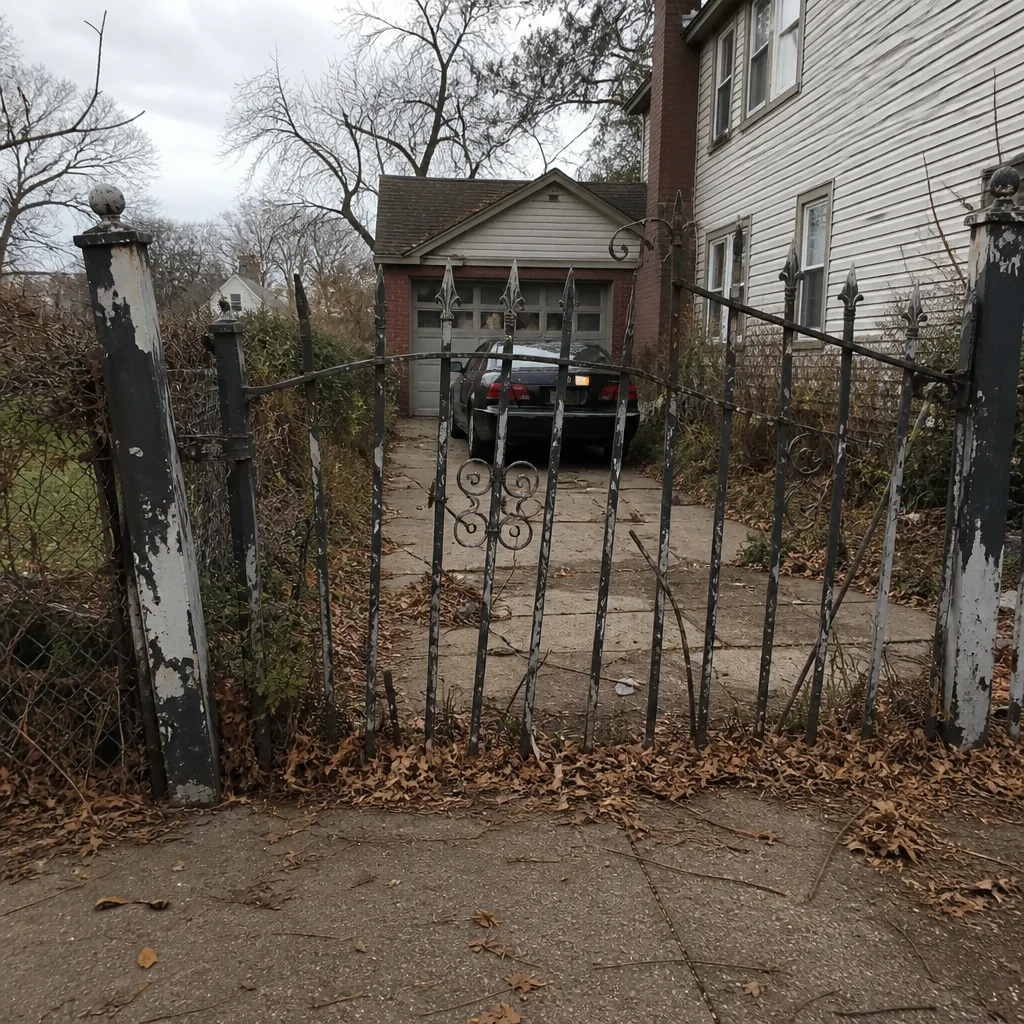 Before
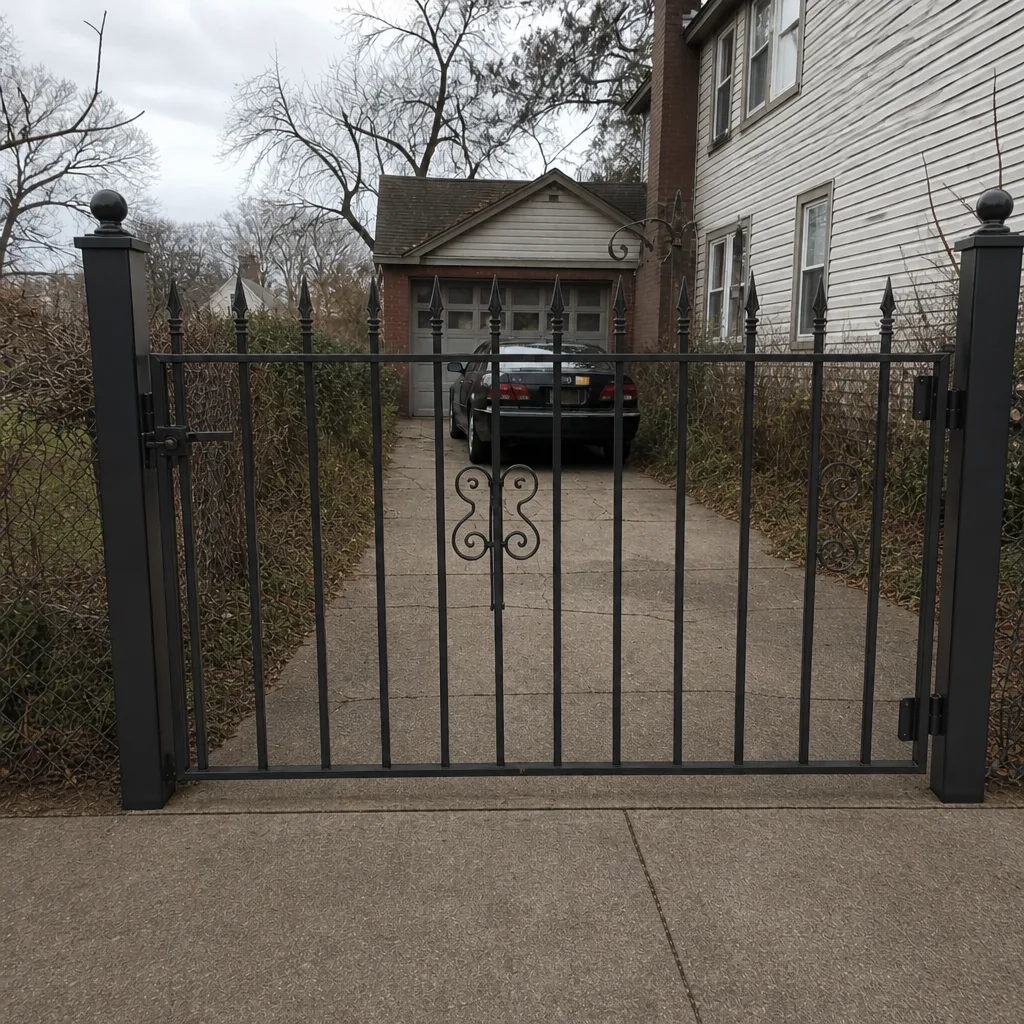 After
Frequently Asked Questions
Mechanical repairs on a manual gate, such as rollers, cotter pins, hinges, and latches, are reasonable DIY work for a careful homeowner who supports the gate and matches the parts correctly. Electrical work on the operator, the control board, or the safety sensors is never DIY – it’s a liability and safety issue, not just a skill one. If a repair involves a wire, treat it as professional-only.
No. Safety edges and photo-eye sensors control whether the gate stops for a person, a pet, or a vehicle, and a misaligned or miswired sensor can defeat that protection. The sensor work also has to be tested against the operator’s settings, which is diagnostic work. This category is professional-only, and we won’t work around it. Call (866) 942-8010 for a free estimate.
Call a professional. A gate that reverses unpredictably is almost always an intermittent electrical fault, and adjusting it by trial and error removes the evidence you need to trace it. A technician with a meter can find the faulty photo-eye, loose connection, or marginal power supply faster than repeated adjustments can hide the symptom.
Often, yes, though not always. The cost goes up when a wrong part causes secondary damage, when original operator settings are lost, or when a safety sensor is bypassed and the technician has to restore the safety path as part of the repair. If the repair is in the confidently DIY-able category, doing it yourself won’t cost you anything later. If it’s in the gray zone, a free estimate first will save you time and parts.
Yes. We work on LiftMaster, FAAC, BFT, Linear, Viking, Ghost Controls, DoorKing, Elite, and Mighty Mule systems, covering both residential openers and commercial access-control-grade equipment. If we don’t recognize a component, we don’t guess – we trace it. Call (866) 942-8010 for a free estimate.
Any repair that starts with “sometimes it works and sometimes it doesn’t.” Intermittent faults are the case where a homeowner’s time and parts cost more than a diagnostic visit, because the fault disappears when the trigger conditions aren’t present. A meter and a documented error log find the cause in hours rather than weekends.
The Bottom Line
The DIY vs. professional question isn’t about capability. It’s about risk category. Mechanical parts on a manual gate – rollers, pins, hinges, latches – are reasonably yours to replace if you support the gate and match the parts. Track alignment, post movement, and operator settings sit in the gray zone where research and sequence matter. Anything touching the operator’s electrical system, the safety sensors, the control board, the motor, or the line-voltage wiring is professional-only, and in New York that’s a liability line, not just a skill line. Sort the repair before you start. If you’re unsure which category your gate’s problem falls into, that’s the moment to get a free estimate from a gate-only specialist who’ll tell you straight. Explore our electric gate repair work and the rest of what we do, or call (866) 942-8010. We answer 24/7. Fast dispatch from 7am to 7pm, Sunday through Friday.
Written by the team at Rochester Gate Repair.