
Last updated November 14, 2026
 Wrought iron
 Wood & steel frame
 Farm & ranch
 Sliding driveway gates
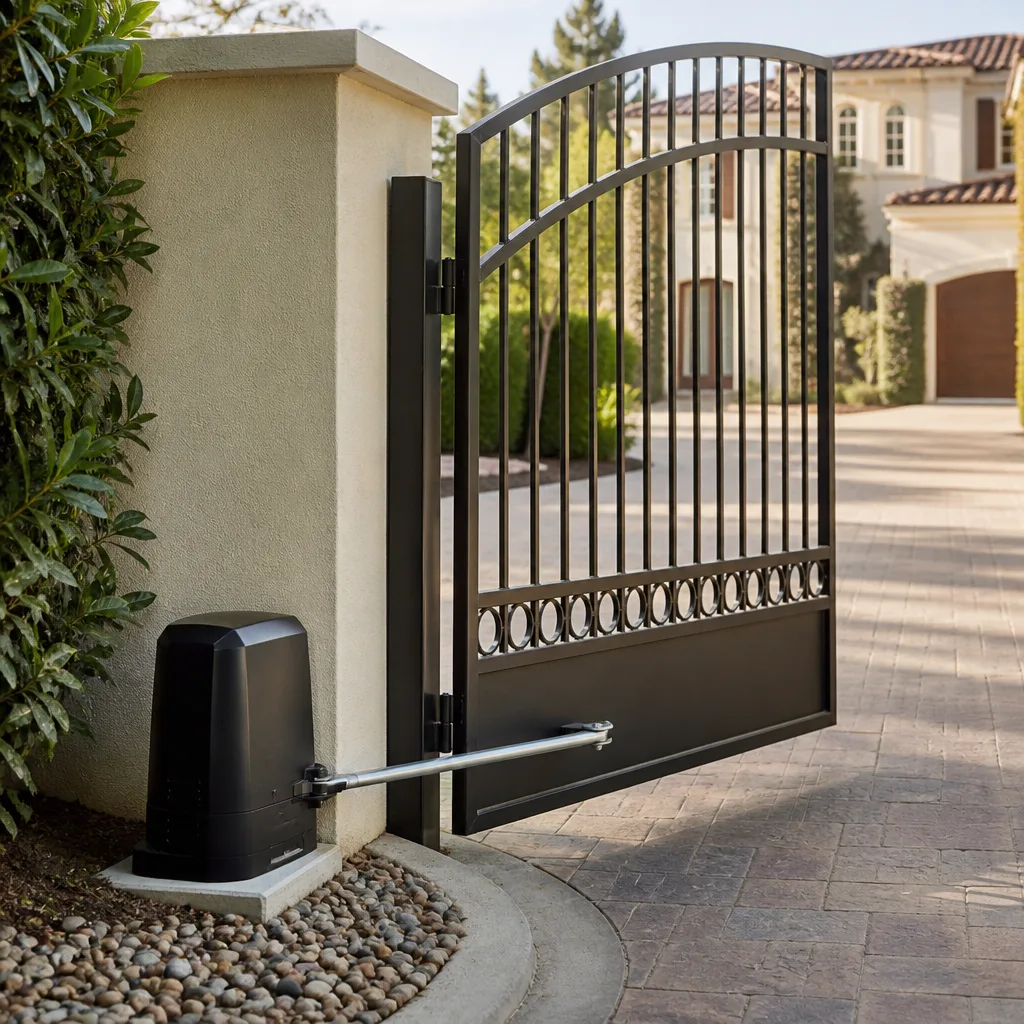 LiftMaster operators
Free on-site gate assessment - hinges, posts, and your LiftMaster or Nice gate operator checked before anything is quoted
The assessment is free and the quote is the invoice.
Get your free estimateGate Repair Emergency Preparedness Guide for Rochester Homes
Most Rochester gate failures we hear about don’t start with a broken motor. They start with an owner standing in the dark who has never touched the manual release. That’s the part nobody prepares for. The operator was working fine for months, then a storm or an outage hit and the gate became a wall. This guide is about the prep work you can do now, when nothing is wrong, so that the next failure is a fifteen-minute inconvenience instead of a three-hour ordeal. We’ll cover manual release, battery backup, emergency documentation, stuck-open versus stuck-closed decisions, and how to reach a gate technician fast.
Styles & brands we work with
- Wrought iron
- Wood & steel frame
- Farm & ranch
- Sliding driveway gates
- LiftMaster operators
Quick Answer
A gate emergency in Rochester is rarely about the gate breaking and almost always about not knowing how to release it. If you can locate and use your operator’s manual release before you need it, most failures become a short inconvenience rather than a locked-in or locked-out situation. The four things that matter most are a tested manual release, a working battery backup, a written emergency contact sheet, and a clear understanding of what to do when the gate is stuck open versus stuck closed.
Table of Contents
- Why Rochester Gate Emergencies Start Before the Storm
- How to Find, Test, and Use Your Manual Release Before You Need It
- The Emergency Access Documentation Package
- Battery Backup Systems for Rochester’s Power Outage Profile
- Stuck Closed vs. Stuck Open: Two Different Problems
- How to Reach a Gate Technician During Rochester’s Worst Weather
- The Pre-Emergency Checklist: What to Check Before Winter
- Common Mistakes to Avoid
- When to Call a Professional
- Frequently Asked Questions
Why Rochester Gate Emergencies Start Before the Storm
A gate emergency in Rochester has a specific character. It typically happens during a winter storm, at night, or during a power outage. The gate didn’t fail on a sunny Tuesday afternoon when someone was home and the driveway was clear. It failed when the wind was up and the temperature was down and no one had time to figure out how the operator worked.
The Buffalo-area blizzard of November 2022 shut down a big stretch of western New York and strained services across the region. The lessons from that weather aren’t about gate parts. They’re about preparation. The people who got through it with the least drama weren’t the ones with newer equipment. They were the ones who had already learned how to release their own gate.
The counterintuitive part: your manual release is the most important piece of equipment you own, and it’s the one most homeowners have never touched. That handle has been sitting on the operator since day one. If you know where it is and how to use it, an outage is a nuisance. If you don’t, an outage is an emergency, and you’re waiting on a technician who has to drive through whatever the weather is doing.
Rochester’s climate leans toward long winters with lake-effect snow events, freeze-thaw cycles that stress gate hardware, and power outages that arrive with the same storms that drop the snow. That’s the profile this guide is built around. Not Florida, not Arizona. Rochester. When you plan for this city’s weather, the rest is easier.
The single biggest mistake we see in Rochester isn’t a broken part. It’s an operator that nobody in the household has practiced releasing. That one gap creates more emergency calls than any motor failure we see.
How to Find, Test, and Use Your Manual Release Before You Need It
The manual release lets you disconnect the operator from the gate and move the gate by hand. Every powered gate has one. It might be a lever, a pull handle, a keyed release, or a chain hoist on a slide gate. The mechanism varies by brand and by gate type, but the principle is the same: it’s the override that lets you open the gate when the operator won’t.
Here’s the prep routine we recommend. Do this once, during daylight, when nothing is wrong:
- Locate the release on your specific operator. On a LiftMaster swing operator, look for the release handle or key below the housing. On an Elite or Mighty Mule unit, the release lever is on or near the arm. On a DoorKing slide operator, it may be a manual disconnect lever with a padlock. Read the label on the operator itself, not a forum online.
- Read the release instructions on the operator housing. Most manufacturers print a small diagram on the case. Take a photo of it with your phone so you have it later.
- Test the release in daylight. With the operator powered off at the control box or breaker, release the mechanism and push the gate open by hand. It should move. If it takes both hands and a lot of force, the gate’s mechanical condition needs attention, and that’s a repair call before winter, not after.
- Re-engage the release and restore power. Run the operator through one full open and close cycle. Confirm it re-engages properly and the gate travels normally.
- Teach everyone in the household who needs access. Including older kids, regular visitors, and anyone who housesits. A release only helps if the person at the gate knows it exists.
- Practice once in the dark with a flashlight. This is the step most people skip. The release feels different when you can’t see it. Fumbling in the cold is how people break something.
Some releases are designed to be operated only with a key, and some are mechanical levers that can be knocked loose. If your release sits outside the fence line in a position where anyone can reach it, that’s a security conversation to have with a gate professional. Convenience and access control pull in opposite directions, and the right answer depends on where the gate sits on your property.
The five most common gate operators we see in Rochester homes and HOAs are from LiftMaster, FAAC, BFT, Linear, and Mighty Mule. Their releases work differently enough that reading the right diagram matters. If you’re not sure which one you have, the model label is usually inside the housing. Write down the model before you call anyone, including us.
The Emergency Access Documentation Package
A documentation package is a single folder, physical or digital, that gives anyone at your property the information needed to handle a gate failure without calling you first. It sounds like bureaucracy. It isn’t. It’s the difference between a neighbor opening your gate for a delivery during an outage and that delivery getting turned away while you’re out of town.
What belongs in the package:
- Operator make and model. A photo of the label on the housing is enough. For a LiftMaster swing unit or a Mighty Mule residential opener, that label tells a technician what parts family to expect before arrival.
- The manual release instructions. A printed copy of the manufacturer’s release procedure, ideally with your own photo of the mechanism.
- Your gate technician’s number. That’s Rochester Gate Repair at (866) 942-8010 if you’re calling us. We answer 24/7. A call outside dispatch hours is booked into the next opening, Sunday through Friday, 7am to 7pm.
- Emergency contacts. Who to call when the gate is stuck, in what order, and what each person is authorized to do. If you’re a property manager, this list is your liability limiter.
- Access codes and keys. In a sealed envelope, in a location known to two people. Not taped inside the operator housing.
- A gate diagram. A simple hand sketch of the gate, the operator location, the control box location, and the property entrance. Any technician will thank you.
- Service history. What’s been repaired, when, and by whom. This shortens diagnosis dramatically, and electric gate repair on an unfamiliar system takes longer than on one with a paper trail.
Where to store it: a labeled folder in a kitchen drawer, a copy in a fireproof safe or lockbox, and a digital version shared with one other person who has access to the property. For HOAs and commercial properties, the package belongs in the property management file and with the on-site contact. Update it whenever the operator changes.
Battery Backup Systems for Rochester’s Power Outage Profile
A battery backup keeps your gate operator running for a set number of cycles after the power drops. This matters more in Rochester than in many cities because winter storms here tend to bring outages with them. The question isn’t whether your operator needs a backup. It’s how many cycles yours should deliver and how often it needs replacement.
Most residential gate operators with a backup battery deliver somewhere in the range of 20 to 50 open and close cycles on a full charge, but that range depends heavily on the operator, the gate’s weight, and the temperature. A single-vehicle residential swing gate and a long commercial slide gate are very different loads. Check your operator’s manual for its rated cycle count. If you can’t find it, call and we’ll look it up by model.
Temperature is the bigger variable. Battery capacity drops in cold weather, and Rochester winters test that limit. A battery that delivers its full rated cycle count at 70 degrees will deliver meaningfully fewer when the temperature drops well below freezing. That’s not a defect. It’s chemistry. The takeaway is that a battery backup sized for mild weather is undersized for a Rochester winter.
What kills gate batteries fastest:
- Sustained cold. Repeated cold-soaking shortens battery life. If the operator sits in an unprotected location, expect shorter battery intervals.
- Long outages followed by a partial recharge. A battery that gets drained and then recharged only briefly stays in a degraded state.
- Age. Most gate backup batteries reach a replacement point well before the operator itself does. A backup that hasn’t been checked in a couple of seasons is worth testing before winter.
- Corroded terminals. Easy to check, easy to ignore. Clean terminals are a five-minute project.
Testing a battery is a job for a technician with a load tester. A voltage reading on a resting battery tells you almost nothing. If your operator has a battery status indicator on the control board, check it now, before you need it. If the backup has never been tested, schedule a check before the cold settles in.
Stuck Closed vs. Stuck Open: Two Different Problems
A gate stuck closed and a gate stuck open look like the same failure from the outside. They’re not. The decision-making behind each is completely different, and getting it wrong creates a security problem or a safety problem.
Stuck Closed: The Access Problem
A gate stuck closed blocks access. Nobody gets in, nobody gets out. The immediate concern is safety and daily function, then security. Here’s how to think about it:
- Is anyone trapped inside? If a vehicle or person needs out and the gate won’t open, the manual release is the answer. If you haven’t tested it, this is exactly the moment the prep work pays off.
- Is this a deliberate security condition? Some access control systems default to closed on power loss as a security feature. A DoorKing access control setup, for example, may be configured to fail secure. Check your documentation before assuming the gate is broken.
- Can you safely release the gate by hand? On a swing gate, releasing the operator and pushing by hand works if the gate’s mechanical condition is sound. On a slide gate, the same applies, but heavy panels and track condition matter. Never force a slide gate off its track to get it open. Stop and call a technician.
- What’s the access priority? Medical access, emergency vehicles, and people going to work all outrank a cautious approach to the machinery. Release the gate manually. Get people through. Then schedule the repair.
If the gate is stuck closed because the operator has no power and no battery backup, the manual release is the whole solution until power returns. That’s the reason we put manual release first in this guide.
Stuck Open: The Security Problem
A stuck-open gate is an access control failure. The gate is now an open driveway, and anyone can walk or drive in. Security outranks convenience in this scenario, but safety still outranks everything.
- First, don’t panic and force it. Forcing a stuck gate closed can damage the operator, the gate arm, or the track, and it can crush fingers or arms if the gate is heavy. Never put your hands near the hinge side or the travel path.
- Second, check the sensor path. Many stuck-open conditions are caused by a safety sensor that thinks something is in the gate’s path. Leaves, snow piles, and debris at the photo-eye location will do it. Clear the sensors visually before doing anything else.
- Third, check for a stuck limit switch or a control board fault. If the operator has a fault indicator light on the board, note the pattern and look it up in the manual. That fault code saves diagnostic time.
- Fourth, secure the property by other means. Close the driveway with a vehicle, a temporary barrier, or on-site personnel until a technician arrives. This matters most on commercial and HOA properties where access control is the point of the gate.
- Fifth, plan for the repair. Stuck-open conditions are frequently board-level or sensor-level failures, not simple mechanical fixes. That’s why we treat electric gate repair as a distinct specialty. Our technicians have up to 10 years of experience diagnosing exactly these faults on systems from both residential opener lines and commercial access-control brands.
How to Reach a Gate Technician During Rochester’s Worst Weather
Getting a technician out to your gate during a storm is easier when you have the right information ready before you call. Gate work in heavy weather is dispatch-sensitive. The fewer questions a technician has to ask you, the sooner someone is scheduled.
Before you pick up the phone, have the following ready:
- Your operator’s make and model. For example, “a LiftMaster swing operator” or “a Mighty Mule single-leaf swing unit.” If you don’t know, the label inside the housing or under the cover has it.
- A one-sentence description of the failure. “Gate won’t close, single leaf, operator running but the gate doesn’t move” is far more useful than “the gate is broken.”
- Whether the gate is currently stuck open or stuck closed. This shapes the triage priority and whether you need help immediately or can wait for a scheduled visit.
- Whether anyone is at the property. Someone needs to be there to let a technician in, release the gate if relevant, and demonstrate what happens when it’s operated.
- Your contact information and address. This sounds obvious. In the middle of a storm, the calls that take longest are the ones where the caller has to find their address mid-conversation.
- Any fault codes or indicator patterns you saw. Note them on your phone before calling.
- What you’ve already checked. Sensor path, power, breaker, manual release status. This skips the basics and saves diagnostic time.
When you call, reach us at (866) 942-8010. We answer 24/7. Fast dispatch, 7am-7pm, Sunday through Friday, closed Saturday. A call that comes in outside the dispatch window is booked into the next opening. We keep the phones live around the clock so that a call during a storm still gets answered, even when the roads aren’t passable.
One expectation worth setting: heavy snow and ice slow everyone down. We can tell you when a technician is scheduled, but weather delays during a lake-effect event are real for anyone driving in western New York. Booking early in the storm window is the difference between a technician the same day and a technician a day or two out.
We work on the brands we know best: LiftMaster, FAAC, BFT, Linear, Viking, Ghost Controls, DoorKing, Elite, and Mighty Mule. If your operator is one of those, you’re not going to spend the first twenty minutes of a diagnostic explaining your system. We’re familiar with it. If your gate is a brand we don’t normally service, we’ll still tell you plainly whether we can help before you book a visit.
The Pre-Emergency Checklist: What to Check Before Winter
The best gate emergency is the one you avoid. Run this check every fall, before the first hard freeze, and again in spring:
- Test the manual release. Power off, release, move the gate by hand, re-engage, restore power. Confirm the gate moves freely and the operator re-engages cleanly.
- Test the battery backup. Have a technician load-test it. Replace if the cycle count is meaningfully below the operator’s rating.
- Clear the sensor path. Check that the photo-eye or safety sensor has an unobstructed line of sight. Clear leaves, snow, and debris.
- Inspect the gate hardware. Hinges, rollers, tracks, and stops. Freeze-thaw cycles in Rochester loosen hardware. Loose hardware causes motor strain, which causes early failure.
- Lubricate per the manufacturer’s spec. Not more than the spec, not less. Extra grease attracts grit and does more harm than good on some tracks.
- Review your documentation package. Update the operator make and model if anything changed, and confirm the technician number is current.
- Brief everyone in the household. Manual release, who to call, and where the folder lives.
This takes an hour, once. It turns gate emergencies into routine repairs.
Common Mistakes to Avoid
- Never testing the manual release. The release is the most important safety feature on your operator and the one most homeowners have never touched. Test it in daylight before winter. Then test it once in the dark.
- Assuming the battery backup is fine because the gate worked last month. A backup battery degrades silently. A working gate on grid power tells you nothing about battery condition. Load-test it before the cold season.
- Forcing a stuck gate. A swing or slide gate that’s jammed against a stop, a snowdrift, or a track obstruction will damage the operator if forced. The same force can crush hands and arms near the hinge and track. Stop and look before you push.
- Ignoring a fault code on the control board. The board on a FAAC, BFT, DoorKing, Elite, or LiftMaster operator reports specific fault patterns. A technician can diagnose most of these in minutes with the code in hand. Without it, diagnosis becomes guesswork.
- Calling without the operator make and model. During a storm, the technician who saves the most time gets there first. That technician is the one whose customer already knows what equipment they have.
- Leaving the gate in the released position after the storm passes. Once power returns, re-engage the release and run a full cycle. A gate left manually released is a security failure whether you notice it or not.
- Hiring a general contractor for gate-specific work. Board-level diagnostics, operator wiring, and access control configuration are specialist work. A gate-only technician will diagnose by system, not by trial and error.
When to Call a Professional
Some gate conditions are safe to handle with a manual release and a scheduled visit. Others warrant a call today. Here’s the line:
Call a professional immediately if the gate is stuck open on a commercial or HOA property, if the operator is making a grinding or clicking sound it never made before, if you smell buring at the control box, if the gate has come off its track or is hanging, or if the manual release won’t disengage the gate. Call us for a scheduled visit if the battery backup hasn’t been tested recently, if the gate is slow or struggling on one direction, if the operator has thrown a fault code, or if you’re heading into winter without having tested the release. gate repair is core work for us. When in doubt, call (866) 942-8010 and describe what’s happening. A short conversation usually sorts the urgent cases from the routine ones. Rochester Gate Repair offers free estimates in Rochester. Call (866) 942-8010. We answer 24/7. Fast dispatch from 7am to 7pm, Sunday through Friday, closed Saturday.
Frequently Asked Questions
Use the manual release on your operator to disconnect the motor from the gate, then push the gate open by hand. The release handle or key is on the operator housing; if you haven’t used it before, the manufacturer’s diagram is printed on or inside the cover. If the gate moves freely by hand, the operator will re-engage once power returns. If you can’t find or operate the release, call (866) 942-8010 and we’ll walk you through the location for your specific brand. We answer 24/7. Fast dispatch from 7am to 7pm, Sunday through Friday, closed Saturday.
Yes, if your gate is a primary access point and power outages are a regular winter event on your street, a battery backup is close to essential. Most residential operators with a backup deliver roughly 20 to 50 open and close cycles per charge, but cold weather reduces that rating meaningfully. Size the backup for winter, not for fair weather. If yours hasn’t been tested in a couple of years, schedule a check. Call (866) 942-8010 for an estimate, free.
Call a gate-only specialist who knows your operator’s brand, and have your make, model, fault code, and address ready before you dial. That gets you on the schedule faster than a referral service that dispatches a generalist. We work on LiftMaster, FAAC, BFT, Linear, Viking, Ghost Controls, DoorKing, Elite, and Mighty Mule. Call (866) 942-8010. We answer 24/7. Fast dispatch from 7am to 7pm, Sunday through Friday, closed Saturday.
Secure the property by other means until a technician arrives: a vehicle in the driveway, a temporary barrier, or on-site staffing. A stuck-open gate is an access control failure, so treat it as a security issue rather than an inconvenience. Check the sensor path first, since a blocked photo-eye is a common cause and a quick fix to try before you call. If the gate still won’t close, call (866) 942-8010. We answer 24/7 and can book you into the next dispatch opening, Sunday through Friday, 7am to 7pm.
Yes. Cold weather is hard on gate hardware and batteries. Frozen hinges, stiffened grease, low-tire-pressure debris in the track, and reduced battery capacity all contribute to failures in cold weather. None of them are design defects; they’re normal cold-weather conditions that a modest amount of preparation reduces. If your gate struggles every winter, the fix is mechanical or battery-related, and it’s worth scheduling a look before the season. Call (866) 942-8010 for a free estimate.
We are closed Saturday and open Sunday through Friday, 7am to 7pm. If your gate fails on a Saturday, you can still call us and we’ll book you into the next opening, Sunday through Friday, 7am to 7pm. If you need immediate help on a Saturday, try the manual release first: power off the operator, release the gate by hand, move it to the position you need, and call for a scheduled repair. We answer 24/7 at (866) 942-8010.
The Bottom Line
Gate repair emergencies in Rochester come down to preparation, not luck. If you’ve tested your manual release, checked your battery backup before winter, written down your operator’s make and model, and stored a simple documentation folder where anyone can find it, the worst-case scenario is a fifteen-minute inconvenience. If you haven’t, the same failure becomes a multi-hour ordeal that starts in the dark during a storm. Do the prep work once. The gate was fine yesterday, and it will be fine tomorrow. The question is whether you know how to release it if it isn’t.
Ready to take the next step? Call (866) 942-8010 for a free estimate. We answer 24/7. Fast dispatch from 7am to 7pm, Sunday through Friday, closed Saturday.
Written by the team at Rochester Gate Repair.
See the difference
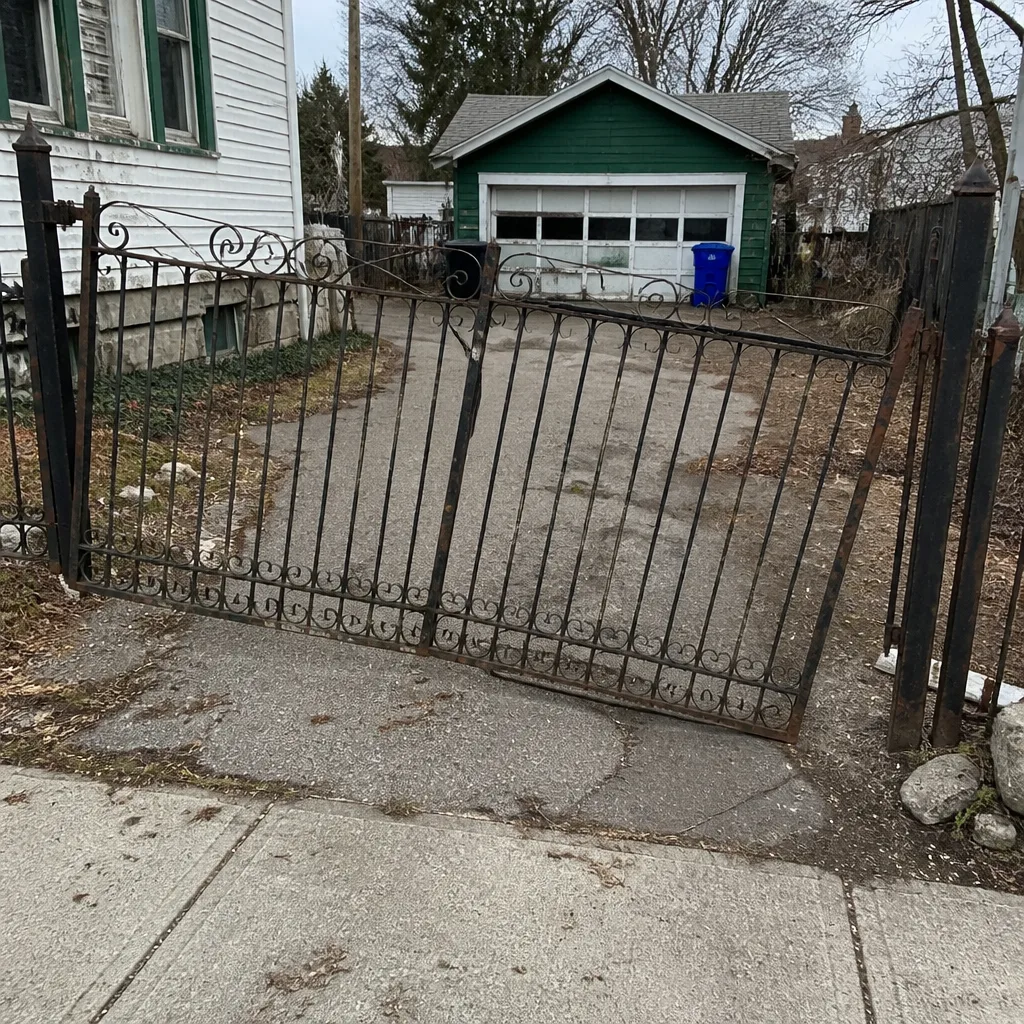 Before
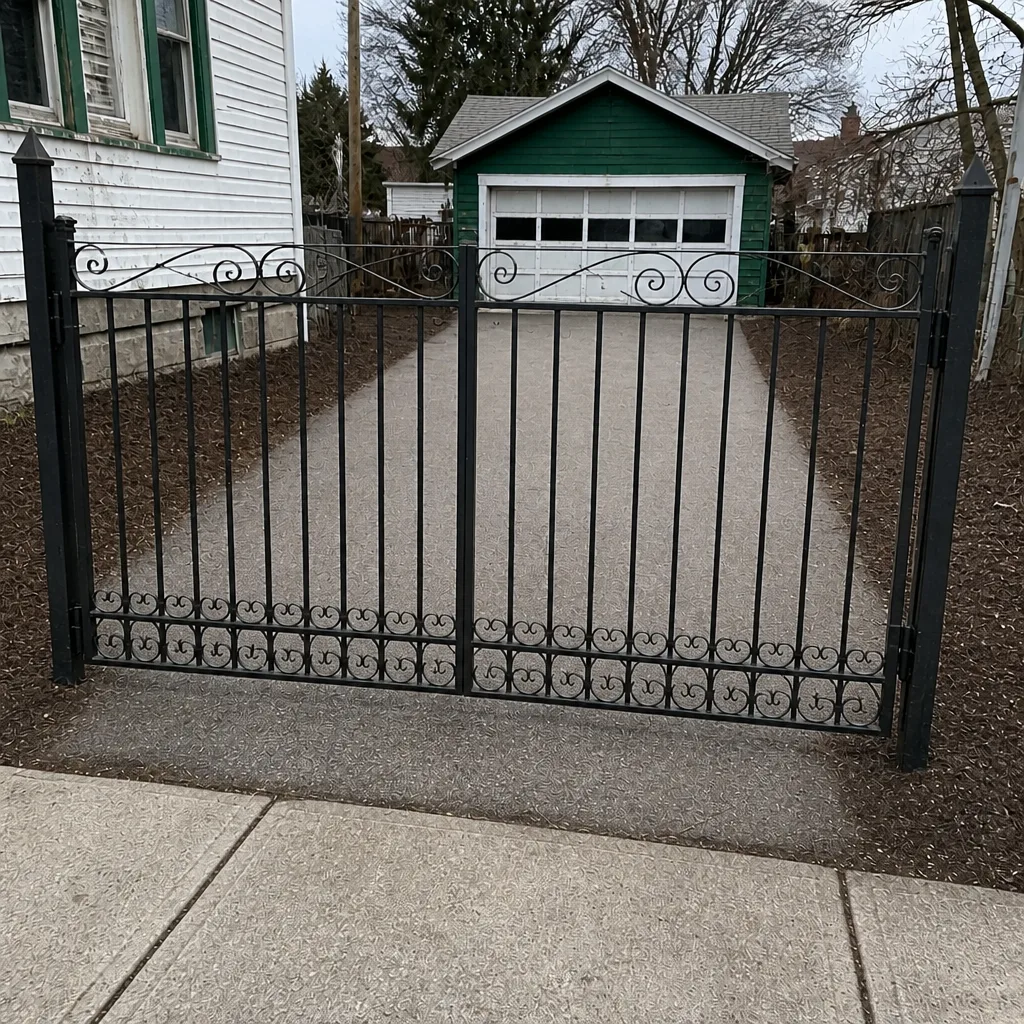 After
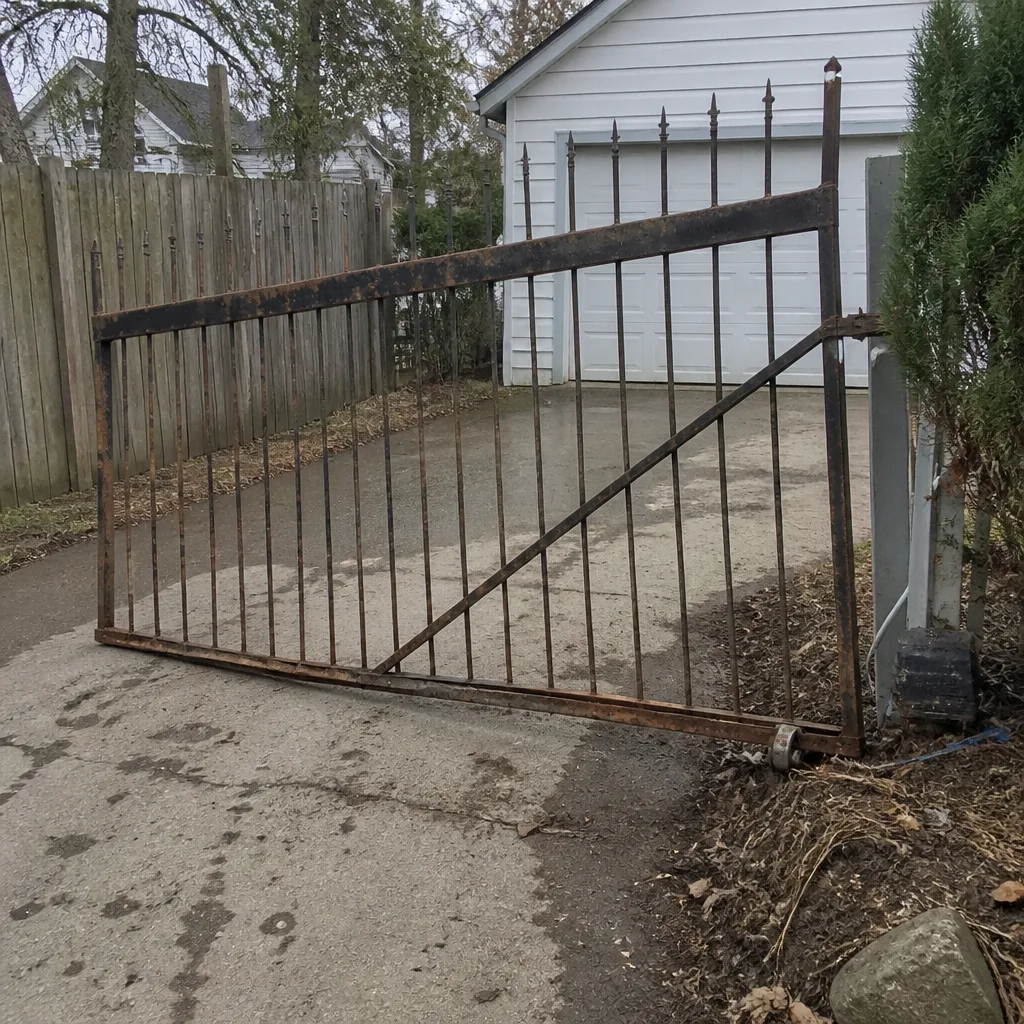 Before
 After
 Before
 After